 0
0
 0
0
OMKARESHWAR, Madhya Pradesh — In a major breakthrough for public health, President Droupadi Murmu announced on Friday that India is on track to eliminate sickle cell disease well before its official 2047 target. Speaking at a state-level event marking World Sickle Cell Day, President Murmu revealed that the nation has already surpassed its ambitious screening milestone, testing over 70 million (7 crore) people ahead of schedule. The massive initiative is part of the National Sickle Cell Anaemia Elimination Mission, launched by Prime Minister Narendra Modi in July 2023, which originally aimed to eradicate the genetic blood disorder by the centenary year of India’s independence.
Early Triumph: Screening Targets Surpassed
The national mission has recorded unprecedented operational success by completing more than 70 million screenings targeting individuals from newborns up to age 40. This achievement outpaces the federal timeline originally set for the 2025–2026 fiscal year.
Data from the sweeping diagnostic drive has provided crucial epidemiological clarity. Out of the population screened, health workers identified more than 2 million (20 lakh) carriers of the sickle cell trait and diagnosed over 215,000 individuals living with active sickle cell disease (SCD).
The coordinated campaign spans 17 states characterized by dense tribal populations, including Maharashtra, Odisha, Chhattisgarh, Jharkhand, Uttar Pradesh, Bihar, Gujarat, and Rajasthan. To date, Madhya Pradesh and Odisha have recorded the highest concentrations of affected individuals.
Understanding the Genetic Burden
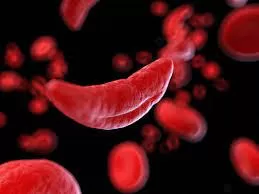
Sickle cell disease is an inherited blood disorder caused by a specific mutation in the $\beta$-globin chain of hemoglobin. This genetic abnormality alters the structure of red blood cells. Instead of maintaining their flexible, round shape to travel smoothly through blood vessels, the cells become rigid and crescent- or “sickle”-shaped.
These misshapen cells frequently logjam small blood vessels, obstructing oxygen delivery to tissues. The clinical results are severe: excruciating episodes known as vaso-occlusive crises, chronic anemia, heightened susceptibility to life-threatening infections, and cumulative organ damage.
In India, the disease disproportionately clusters within marginalized indigenous and tribal communities. According to research published in the International Journal of Community Medicine and Public Health, the prevalence of the sickle cell trait among these populations is dramatically higher than the national average. In high-burden pockets of Madhya Pradesh and Chhattisgarh, between 10% and 30% of tribal groups carry the sickle cell trait, with an overall regional carrier prevalence of roughly 10% and a homozygote (diseased) rate of 0.5%.
A Shift Toward Early Intervention
Medical experts emphasize that the sheer scale of the screening mission fundamentally changes the prognosis for thousands of vulnerable children.
“Routine newborn screening has completely transformed this disease,” said Dr. Thenral S. Geetha, Principal Scientist at the genetic testing laboratory MedGenome. “What used to be a fatal childhood illness is now a condition where most patients survive well into adulthood.”
Expanding diagnostics to remote locations has required a shift toward localized, decentralized healthcare infrastructure. Dr. Rasmi Palassery of Ramaiah Memorial Hospital in Bengaluru noted the logistical hurdles, stating, “In tribal regions with limited healthcare infrastructure, we need point-of-care diagnostics that community health workers can easily use on the ground.”
To sustain this momentum, the Indian Council of Medical Research (ICMR) is maintaining its aggressive focus on geographic hotspots. “We aim to screen the entire population under 40 years in these high-burden regions,” emphasized Dr. Manisha Madkaikar, Director of ICMR-CRHCM Nagpur.
The Four-Pillar Eradication Strategy
The federal government’s strategy to eliminate SCD relies on a joint campaign run by the Union Health Ministry and the Union Tribal Affairs Ministry. The intervention framework balances scientific innovation with community outreach through four core pillars:
-
Public Awareness: Launching large-scale educational campaigns to dismantle widespread ignorance regarding the inheritance of the disease.
-
Genetic Counseling: Providing pre-marital and pre-conception counseling to help carriers make informed reproductive choices, preventing transmission to future generations.
-
Point-of-Care Testing (POCT): Deploying rapid, validated field-test kits to diagnose infants and young adults immediately within their communities.
-
Continuity of Care: Establishing structural linkages between rural screening camps and district hospitals to guarantee sustained disease management.
Evolving Treatment Options and Indigenous Breakthroughs
For decades, standard medical management for sickle cell disease was restricted to frequent red blood cell transfusions and the daily administration of hydroxyurea (hydroxycarbamide). Hydroxyurea works by stimulating the production of fetal hemoglobin, which prevents cells from sickling. A key milestone of the current mission was securing expedited approval from the Drugs Controller General of India (DCGI) for pediatric and adult formulations of hydroxyurea specifically tailored for sickle cell patients.
Advanced therapeutics like voxelotor, crizanlizumab, and L-glutamine have also entered the global clinical landscape, successfully lowering the frequency of painful vaso-occlusive crises. While allogeneic hematopoietic stem cell transplantation (bone marrow transplant) remains the sole widely available cure, its implementation is severely bottlenecked by the scarcity of matched tissue donors and the high risk of immunologic graft rejection.
The CRISPR Revolution
The long-term horizon of the mission relies heavily on cellular engineering. Recent international clinical trials evaluating CRISPR-based gene-editing therapies—such as reni-cel—have demonstrated historic efficacy. Data showed that 27 out of 28 treated patients remained completely free of painful sickle cell crises post-therapy, achieving what hematologists classify as a “functional cure.”
However, at a commercial price tag hovering around USD 3 million (approximately ₹26 crore) per patient due to steep international licensing fees, these therapies remain entirely out of reach for the public.
To bridge this gap, Indian scientists are developing an indigenous, cost-effective CRISPR gene-editing alternative. The technology, pioneered by the CSIR-Institute of Genomics and Integrative Biology (CSIR-IGIB), has been officially transferred to the Serum Institute of India for scalable manufacturing. Clinical trials are currently underway in coordination with the DCGI and the Department of Biotechnology. Once commercialized, this domestic technology is projected to drive costs down to roughly ₹50 lakh, making curative therapy vastly more accessible.
Societal Hurdles and Public Health Realities
Despite rapid scientific and logistical advances, significant systemic barriers persist. Clinicians report that social dynamics often pose a greater challenge than clinical delivery.
“The stigma associated with sickle cell disease is often a bigger barrier than the disease itself when it comes to genetic screening,” explained Dr. Shweta Pathak, a pediatric hemato-oncologist practicing in Jabalpur. Fear of social isolation or marital disqualification frequently prevents individuals from coming forward for public screening drives.
Furthermore, generations of families in isolated belts have suffered from chronic pain and premature mortality without ever receiving a formal diagnosis, underscoring a deep historical awareness deficit. Healthcare authorities acknowledge that passing the 70 million screening mark is only the initial phase; the long-term success of the mission hinges on maintaining robust, multi-year tracking, psychological counseling, and equitable treatment access for identified carriers and patients alike.
Medical Disclaimer
This article is for informational purposes only and should not be considered medical advice. Always consult with qualified healthcare professionals before making any health-related decisions or changes to your treatment plan. The information presented here is based on current research and expert opinions, which may evolve as new evidence emerges.
References
- https://health.economictimes.indiatimes.com/news/policy/india-to-eradicate-sickle-cell-disease-well-before-2047-target-through-collective-efforts-murmu/131855786?utm_source=top_story&utm_medium=homepage