 0
0
 0
0
NEW DELHI — In a major development for India’s medical education landscape, the Union Government has informed the Supreme Court of India that it has constituted a 12-member expert panel to conduct an internal audit of the National Eligibility cum Entrance Test for Post-Graduate (NEET-PG) admission process. Led by the Director General of Health Services (DGHS), the committee has been tasked with evaluating procedural gaps and recommending structural reforms within eight weeks.
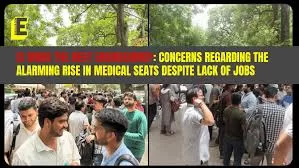
The government’s intervention follows intense judicial scrutiny and widespread debate after official qualifying thresholds for the 2025–26 academic session were sharply reduced, bringing percentile requirements down to near-zero and negative territory across several candidate categories.
The Controversy: A Steep Drop in Qualifying Thresholds
The legal and public health debate stems from an official notification issued on January 13, 2026, by the National Board of Examinations in Medical Sciences (NBEMS). To fill remaining vacant seats ahead of the third round of national counselling, the minimum qualifying percentile for NEET-PG aspirants was lowered dramatically:
-
General / EWS Candidates: Threshold lowered from the 50th percentile to the 7th percentile (equivalent to 103 out of 800 marks).
-
General PwBD Candidates: Cut-off dropped from the 45th percentile to the 5th percentile (90 out of 800 marks).
-
SC / ST / OBC Candidates: Threshold reduced from the 40th percentile to the 0th percentile (listed as -40 out of 800 marks).
While lowering cut-offs to fill vacant seats is not entirely unprecedented in competitive admission cycles, the scale of this reduction prompted petitions before the Supreme Court. Litigants argued that reducing entry barriers so drastically risks compromising academic standards in specialist medical training.
In response, a Supreme Court bench questioned whether such an abrupt drop could affect the overall standard of postgraduate medical education, prompting the Centre to submit its plan for an internal audit.
Understanding NEET-PG and Systemic Capacity
NEET-PG serves as the primary national gateway for medical graduates seeking Doctor of Medicine (MD), Master of Surgery (MS), and diploma specializations across India. Because these programs train the physicians who handle complex clinical care, surgical procedures, and sub-specialty medicine, entry standards remain a subject of active policy interest.
+-----------------------------------------------------------------------------------+
|                        NEET-PG CUT-OFF REVISION (2025-26)                         |
+--------------------------+-----------------------+--------------------------------+
| Category                 | Original Percentile   | Revised Percentile (Marks/800) |
+--------------------------+-----------------------+--------------------------------+
| General / EWS            | 50th Percentile       | 7th Percentile (103 Marks)     |
| General - PwBD           | 45th Percentile       | 5th Percentile (90 Marks)      |
| Reserved (SC / ST / OBC) | 40th Percentile       | 0th Percentile (-40 Marks)     |
+--------------------------+-----------------------+--------------------------------+
The issue highlights a persistent structural dilemma in public health administration: balancing candidate eligibility with clinical capacity.
On one hand, leaving postgraduate residency seats vacant wastes high-value clinical training capacity in public and private teaching hospitals. On the other hand, lowering qualifying standards raises concerns about meritocracy and academic readiness.
In its submission to the apex court, the Union Government clarified that NEET-PG scores reflect relative ranking in a competitive intake exam, rather than a absolute baseline of basic clinical safety. All candidates sitting for NEET-PG have already completed their Bachelor of Medicine, Bachelor of Surgery (MBBS) degree and a compulsory rotating internship, which officially certifies their foundational competence as registered medical practitioners.
Expert Perspectives: Infrastructure vs. Academic Standards
Medical educators and healthcare analysts emphasize that the debate surrounding NEET-PG is rooted in administrative friction rather than clinical safety alone.
“It is crucial to differentiate between basic medical competence and competitive examination ranking,” explains Dr. Arisudan Reddy, a senior medical administrator not involved in the litigation. “An MBBS graduate is already legally licensed to practice medicine. However, when we talk about specialist training—such as neurosurgery, cardiology, or intensive care—the selection process must remain transparent, predictable, and rigorous to maintain public trust in higher medical qualifications.”
Administrative challenges in postgraduate counselling have been documented in academic literature. A 2023 review published in the peer-reviewed medical journal Cureus highlighted that India’s postgraduate medical counselling frequently suffers from:
-
Lack of synchronization between All-India Quota (AIQ) and State-level counselling rounds.
-
Seat-blocking dynamics, where candidates hold multiple seats simultaneously before abandoning them late in the process.
-
Recurring legal challenges that stall academic calendars, forcing emergency administrative fixes late in the admission cycle.
Experts argue that without fundamental structural reform, lowering cut-offs becomes an annual “band-aid solution” to address vacancies created by inefficient seat allocation schedules rather than a lack of interested candidates.
Public Health Implications and Patient Care
For health-conscious consumers and the general public, it is important to contextualize what this policy audit means for real-world healthcare:
-
No Immediate Impact on Physician Care: The audit and percentile shifts involve postgraduate intake criteria, not the licensing of practicing physicians. Every specialist undergo years of supervised clinical residency, continuous assessments, and rigorous practical examinations before receiving an MD or MS degree.
-
Long-Term Workforce Planning: Postgraduate seats directly dictate the supply of future specialists in vital disciplines like anesthesiology, pediatrics, obstetrics, and general surgery. Ensuring seats are efficiently filled without policy friction directly impacts national specialist availability over the coming decade.
-
Restoring System Predictability: A streamlined, audited counselling framework prevents mid-session rule changes, reducing stress for tens of thousands of young doctors transitioning into residency programs.
Study Limitations and Governance Outlook
It is vital to distinguish policy analysis from clinical trial outcome data. The current debate relies on regulatory notices from NBEMS, legal filings before the Supreme Court, and published health policy reviews regarding medical education administration. There are no empirical studies demonstrating direct clinical outcomes linked specifically to percentile cut-off variations.
The 12-member DGHS panel has eight weeks to present its findings to the Supreme Court. Its report is expected to focus on:
-
Modernizing seat-matrix management across state and central pools.
-
Preventing late-stage seat abandonment and seat-blocking.
-
Establishing clear, standardized criteria for qualifying percentiles well in advance of examination cycles.
As India continues to expand its medical education infrastructure, the court-monitored audit marks a significant step toward creating a more transparent, stable, and merit-based administrative framework for the nation’s future medical specialists.
References
-
The Tribune India. “NEET-PG cut-off row: DGHS-led panel to conduct internal audit of admission system, Centre tells SC.” Supreme Court reporting, published August 4, 2026.
Medical Disclaimer: This article is for informational purposes only and should not be considered medical advice. Always consult with qualified healthcare professionals before making any health-related decisions or changes to your treatment plan. The information presented here is based on current research and expert opinions, which may evolve as new evidence emerges.