 0
0
 0
0
NEW DELHI — In a major structural overhaul of its public health delivery system, India’s Union Ministry of Health and Family Welfare launched a comprehensive national child health programme called the Samagra Shishu Bal Swasthya Karyakram (SSBSK).
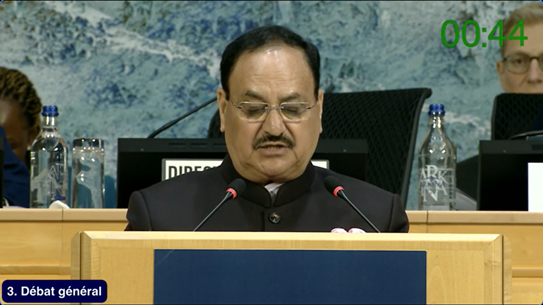
Union Health Minister Shri Jagat Prakash Nadda officially unveiled the initiative at the 16th Conference of the Central Council of Health and Family Welfare (CCHFW) at Vigyan Bhawan. Under the guiding vision of “पहले तीन साल सम्पूर्ण देखभाल” (Complete Care in the First Three Years), the unified programme integrates previously fragmented home-care models into a single framework. The policy establishes a continuous care protocol from birth up to 36 months of age, introducing risk-stratified tracking, maternal mental health screening, and strict guidelines against excessive infant screen time.
A Unified Continuum: Consolidating HBNC and HBYC
For over a decade, India relied on two distinct community-based frameworks to manage early childhood health: Home-Based Newborn Care (HBNC), which focused heavily on the fragile first few weeks of life, and Home-Based Care for Young Child (HBYC), which extended basic nutritional monitoring.
Public health data has consistently shown that fragmentation between these two phases often led to gaps in tracking dropouts, delayed immunization, and missed developmental milestones. SSBSK legally and operationally merges HBNC and HBYC into a single framework.
According to baseline data from the National Family Health Survey (NFHS-5), while infant mortality has declined nationally, the post-neonatal period remains highly vulnerable to environmental and nutritional shocks. By creating a continuous 36-month timeline, the government aims to close the transition gap between a child’s second month and their third year.
Risk-Stratified Monitoring and Extended Home Visits
The most critical clinical shift within the SSBSK guidelines is the introduction of a risk-stratified care model. Rather than applying a one-size-fits-all visitation schedule, the program categorizes newborns and infants based on clinical vulnerabilities—such as low birth weight, prematurity, or severe acute malnutrition.
Children identified as “at-risk” will receive an intensified schedule of home observations:
-
At-Risk Newborns: Up to nine targeted home visits within the first 42 days of life.
-
At-Risk Toddlers: Up to eight additional home visits extending through 36 months.
[Standard Care Pathway]  ---> Minimum scheduled visits for healthy development
[At-Risk Care Pathway]  ---> 9 Newborn Visits (Day 1-42) + 8 Toddler Visits (Up to Month 36)
To execute this intensive monitoring, the Ministry is deploying an integrated frontline workforce. Future home visits will be conducted jointly by:
-
ASHAs (Accredited Social Health Activists)
-
ANMs (Auxiliary Nurse Midwives)
-
CHOs (Community Health Officers)
-
AWWs (Anganwadi Workers)
This inter-agency approach will be supported by mandatory “Well-Baby Sessions” at every Village Health, Sanitation and Nutrition Day (VHSND), alongside a monthly “Shishu Shivir” (Child Health Camp) at local Ayushman Arogya Mandirs to catch developmental delays early.
Cognitive Development, Screen Time, and Maternal Mental Health
Moving beyond basic survival metrics like weight and infectious disease control, SSBSK formally incorporates Early Childhood Development (ECD) and cognitive health into the state’s healthcare mandate.
The policy addresses a rising public health concern in both rural and urban sectors: the cognitive impact of digital devices on infants. The guidelines establish formal recommendations urging parents to restrict screen time and instead focus on age-appropriate play, physical activity, and active mental stimulation.
Neurodevelopmental Context: Peer-reviewed neurological research indicates that the human brain achieves roughly 85% of its adult size by age three. Excessive screen exposure during this neuroplastic window is associated with language delays, shortened attention spans, and compromised emotional regulation.
Crucially, the policy recognizes that a child’s development is inextricably linked to parental well-being. SSBSK marks the first time India has integrated post-partum maternal mental health screening as a structured component of community-based pediatric care. Frontline health workers will be trained to use basic screening tools to identify signs of postpartum depression, ensuring timely referrals to district mental health units.
The Digital Backbone: Interoperable Child Tracking
To prevent data silos and ensure that mobile or migratory families do not slip through the cracks, the Ministry is backing the SSBSK with a complex, digital decision-support ecosystem.
Every child tracked under the program will be mapped using their ABHA (Ayushman Bharat Health Account) or Baal-ABHA IDs. This creates an interoperable data pipeline where frontline workers utilize child-tracking applications that sync directly across multiple national health portals:
| Portal / Tracker | Function within SSBSK |
| JANANI Portal | Tracks maternal health history and delivery details |
| U-WIN Portal | Monitors complete, real-time immunization schedules |
| POSHAN Tracker | Evaluates nutritional metrics and growth charts |
| RBSK 2.0 Portal | Coordinates early intervention and tertiary health referrals |
For urban settings, where high population density and migration make consistent healthcare tracking difficult, the Ministry has introduced tailored strategies specifically designed to locate and serve slum-dwelling and migrant populations.
Public Health Perspectives and Implementational Obstacles
Independent public health experts have broadly welcomed the integration. “Consolidating home-based care into a singular 36-month window acknowledges that child development doesn’t happen in isolated clinical stages,” noted an independent public health policy consultant not involved in the drafting of the program. “Focusing heavily on risk-stratification allows resource-constrained systems to prioritize children who need intensive care.”
However, analysts also urge a realistic look at structural challenges:
-
Workforce Fatigue: Frontline workers like ASHAs and Anganwadi Workers are already responsible for immunization drives, nutritional distribution, and maternal tracking. Adding intensive joint visits and psychological screenings could stretch capacity without a proportional increase in compensation and training.
-
Digital Connectivity: While an integrated digital dashboard looks efficient on paper, real-time syncing across platforms like U-WIN and the POSHAN Tracker depends heavily on consistent cellular network connectivity in remote rural districts.
-
Screen-Time Enforcement: While establishing guidelines against infant screen time is a progressive step, modifying deeply ingrained digital parenting habits across diverse socioeconomic strata requires sustained behavioral communication rather than just clinical advice.
By addressing the crucial first three years through an integrated lens of nutrition, digital tracking, and mental health, the SSBSK establishes a comprehensive foundation for early childhood survival and long-term development across India.
References
-
Policy Source: Press Information Bureau (PIB) Delhi, Ministry of Health and Family Welfare, Government of India. Published June 28, 2026.
Medical Disclaimer: This article is for informational purposes only and should not be considered medical advice. Always consult with qualified healthcare professionals before making any health-related decisions or changes to your treatment plan. The information presented here is based on current research and expert opinions, which may evolve as new evidence emerges.