 0
0
 0
0
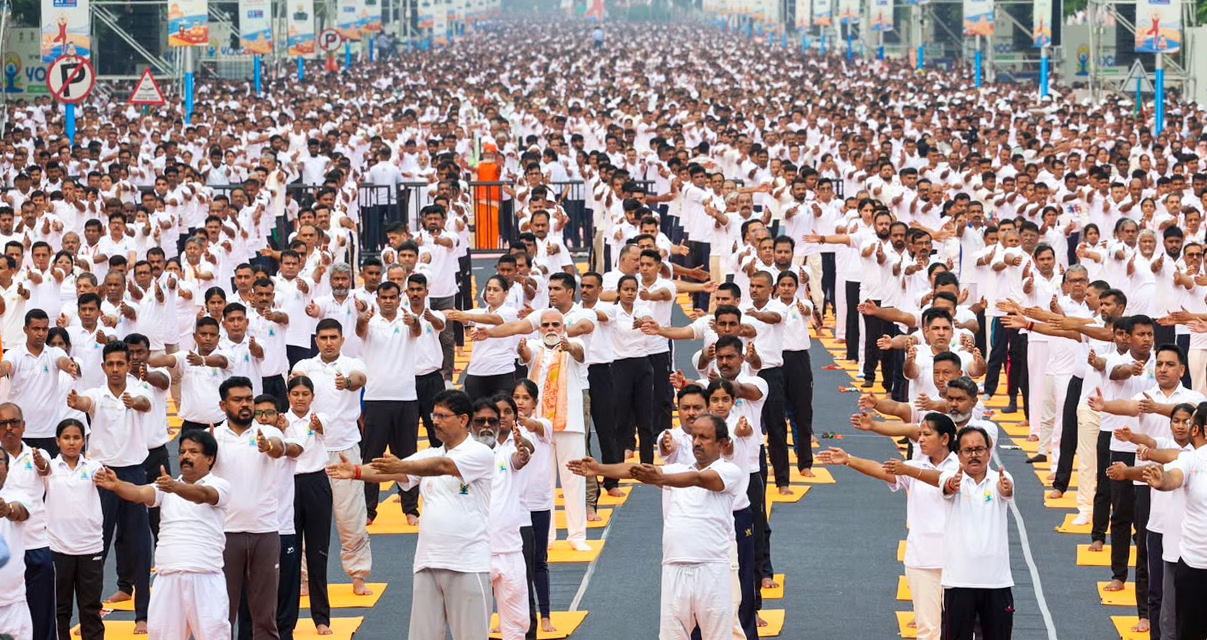
KOLKATA, India — Under a rain-swept sky at the historic Red Road in Kolkata, Indian Prime Minister Narendra Modi led millions worldwide in celebrating the 12th International Day of Yoga on June 21, 2026. The national observance, focusing on the theme “Yoga for Healthy Ageing,” brought together thousands of mass practitioners, healthcare leaders, and global delegates to emphasize preventative health. The event catalyzed a broader discussion on building a robust framework for human unity and health preservation through a collective commitment to daily mind-body practices.
The Intersection of Tradition and Modern Preventive Geriatrics
Addressing the energetic gathering along the iconic thoroughfare, Prime Minister Modi underscored that yoga has evolved from an ancient personal practice into a global public health resource. He noted that June 21—the summer solstice and longest day of the year in the Northern Hemisphere—has organically transformed into one of the largest collective celebrations of human wellness.
“Yoga is not merely a form of physical exercise and cannot be confined to any particular age group,” Modi emphasized during his address. “It is a source of consciousness, vitality, and inner illumination that enriches every stage of human life. When yoga becomes a way of life, it becomes the foundation of human unity.”
The Prime Minister framed this year’s central motif—healthy ageing—not as a passive acceptance of declining capabilities, but as an active pursuit of biological optimization. He voiced a collective national aspiration: that through structured yogic practices, citizens should aim to be more flexible at forty than they were at twenty, more energetic at fifty than they were at thirty, and significantly more resilient to lifestyle disorders at seventy than they were at fifty.
Clinical Evidence: The Science Behind “Yoga for Healthy Ageing”
While the physical spectacle in Kolkata illustrated the cultural adoption of yoga, peer-reviewed medical research increasingly confirms the molecular mechanisms driving these benefits. A 2026 narrative review published in Advances in Mind-Body Medicine showed that regular yoga practices successfully reverse traditional biomarkers of accelerated biological aging. The research highlighted significant down-regulation of oxidative stress, reduction in malondialdehyde levels (a core indicator of lipid peroxidation), and a measurable slowdown in leukocyte telomere shortening.
Furthermore, landmark clinical guidelines evaluating mind-body interventions within the WHO Decade of Healthy Ageing (2021–2030) outline how yoga serves as a scalable, cost-effective countermeasure to age-related frailty. By integrating asanas (physical postures), pranayama (breath regulation), and dhyana (mindfulness meditation), yoga acts directly on the autonomic nervous system to reduce the body’s chronic inflammatory baseline.
As detailed in the autonomic system layout above, chronic psychological and environmental stress keeps the body in a prolonged sympathetic (“fight-or-flight”) state. This long-term activation elevates systemic cortisol and pro-inflammatory cytokines like Interleukin-6 (IL-6), which speed up cellular damage. Structured yoga practices shift the autonomic balance toward parasympathetic dominance (“rest-and-digest”), effectively lowering baseline heart rate and blood pressure while improving overall neuroendocrine regulation.
Expert Insights and Public Health Implications
Independent healthcare professionals emphasize that the benefits of yoga go far beyond general fitness. “Yoga offers a unique form of multi-component physical activity that is highly adaptable for older adult populations,” states Dr. Aris Orkaby, a geriatrician and clinical researcher at Brigham and Women’s Hospital, who was not involved in the event. “As we face an expanding global demographic of older adults, preventing frailty—characterized by a decline across multiple physiological systems—is a top public health priority. Yoga helps preserve muscle mass, improves balance, and limits fall risks, which are major drivers of disability in older adults.”
The event also highlighted the substantial growth of the global “Yoga 365” digital health infrastructure. The initiative hosted a 100-day online protocol leading up to the solstice, drawing over 3 million active participants from 130 countries.
| Metric / Focus Area | Public Health Impact | Scientific Indicator |
| Autonomic Regulation | Mitigates age-related hypertension and cardiac stress. | Increased heart rate variability (HRV). |
| Cellular Resilience | Preserves genomic stability during cell division. | Elevated telomerase enzyme activity. |
| Cognitive Reserve | Delays mild cognitive decline and mental fatigue. | Increased Brain-Derived Neurotrophic Factor (BDNF). |
| Musculoskeletal Health | Decreases risk of falls and osteoporotic injuries. | Improved functional mobility and joint tracking. |
Limitations, Safety Considerations, and Balanced Perspectives
Despite the strong evidence supporting yoga, medical practitioners advise a cautious, personalized approach to the practice. Yoga is a supportive, complementary intervention and should never replace standard medical therapies or prescribed pharmaceuticals for chronic illnesses.
-
Injury Risks: Aggressive or unguided execution of complex postures can cause musculoskeletal strains, joint hyperextension, or lower back injuries, particularly in individuals with pre-existing conditions like advanced osteoporosis or severe osteoarthritis.
-
Need for Customization: Certified yoga therapists recommend that older adults or individuals with chronic metabolic conditions use modified variations, such as chair-based positions or prop-supported exercises, to ensure safety.
-
Lack of Standardization: The lack of uniform global certification for instructors means the quality and therapeutic focus of yoga classes can vary widely.
Public health officials emphasize that individuals beginning yoga to manage age-related conditions should undergo a professional clinical evaluation before starting any new regimen.
A Vision for Global Health Unity
Reflecting on West Bengal’s historical contributions to mind-body philosophy, Prime Minister Modi cited the timeless insights of Swami Vivekananda, Maharshi Aurobindo, and Gurudev Rabindranath Tagore. He reminded the audience that true identity is shaped through meaningful connections with the world around us. In an era marked by shifting demographics and rising lifestyle diseases, transitioning yoga from an occasional practice to an everyday habit offers a practical path toward long-term wellness.
The event closed with the traditional ancient invocation for universal well-being: “Sarve Bhavantu Sukhinah, Sarve Santu Niramayah”—a timeless wish that all individuals remain happy, healthy, and free from illness.
References
- https://www.pib.gov.in/PressReleasePage.aspx?PRID=2275924®=48&lang=1
Medical Disclaimer: This article is for informational purposes only and should not be considered medical advice. Always consult with qualified healthcare professionals before making any health-related decisions or changes to your treatment plan. The information presented here is based on current research and expert opinions, which may evolve as new evidence emerges.