 0
0
 0
0
NEW DELHI — On June 21, 2026, the Union Ministry of Health and Family Welfare celebrated the 12th International Day of Yoga (IDY) across India. The nationwide events, organized under the central theme of “Yoga for Healthy Ageing,” brought together senior political leaders, healthcare professionals, and millions of citizens. Driven by a massive public health infrastructure push, this year’s observance marked a systematic effort to transition yoga from a cultural practice into a mainstream preventive healthcare asset for an ageing global population.
The national flagship events were led by Prime Minister Shri Narendra Modi in Kolkata, West Bengal, and Union Health Minister Shri Jagat Prakash Nadda at Shantipath in New Delhi. According to official reports from the Union Health Secretary, the scale of the 2026 event reached unprecedented domestic coverage, with more than 1.87 lakh Ayushman Arogya Mandirs (primary healthcare and wellness centers) conducting active community-led yoga sessions simultaneously across rural and urban landscapes.
From “Added Years” to “Added Vitality”
Addressing a gathering of thousands of yoga practitioners in Kolkata, Prime Minister Modi emphasized that yoga transcends conventional physical fitness frameworks, operating instead as a foundational system for neurobiological and mental resilience.
“Yoga is more than a physical exercise; it is a source of consciousness, vitality, and inner energy,” Modi stated. “Healthy ageing is not merely about adding years to life, but about adding vitality, purpose, and well-being to those years.”
The Prime Minister explicitly positioned yoga as an adaptive lifestyle tool capable of modifying chronic disease trajectories over a lifetime. He noted that regular practice provides the structural discipline and balance required to help individuals become “more flexible at 40, more energetic at 50, and more resilient at 70.”
The Preventive Health Framework
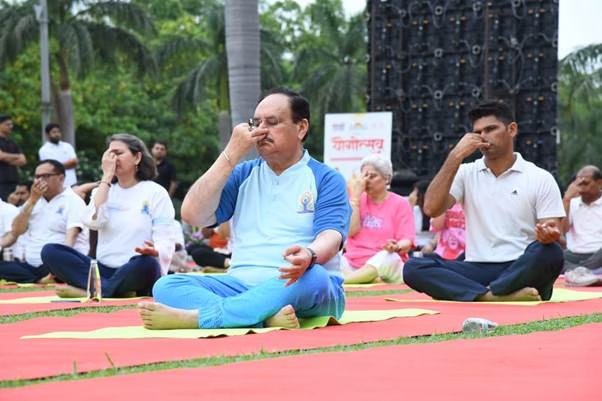
In New Delhi, Union Health Minister J. P. Nadda expanded on the clinical and preventive implications of yoga within modern healthcare delivery. Leading a mass mobilization session at Shantipath alongside healthcare workers and volunteers, Nadda highlighted the global evolution of yoga since the United Nations General Assembly officially recognized June 21 as IDY in December 2014 following India’s formal proposal.
                  ┌──────────────────────────────────────────────┐
                  │ 1.87 Lakh+ Ayushman Arogya Mandirs Mobilized │
                  └──────────────────────┬───────────────────────┘
                                         ▼
         ┌──────────────────────────────────────────────────────────────┐
         │              2026 Focus: "Yoga for Healthy Ageing"           │
         └───────┬──────────────────────┬───────────────────────┬───────┘
                 │                      │                       │
                 ▼                      ▼                       ▼
    ┌─────────────────────────┐   ┌───────────┐   ┌─────────────────────────┐
    │ Musculoskeletal Health  │   │ Longevity │   │  Preventive Healthcare  │
    │ Balance & Fall-Risk     │   │ & Quality │   │ Modifying Chronic       │
    │ Reduction               │   │  of Life  │   │ Disease Trajectories    │
    └─────────────────────────┘   └───────────┘   └─────────────────────────┘
Nadda noted that nearly 190 countries now participate in the annual event, transforming the practice into a standardized framework for public health.
“In an era marked by increasing stress, sedentary lifestyles, and lifestyle-related disorders, yoga provides a natural and sustainable means of restoring balance and harmony within the body and mind,” Nadda explained. He stated that regular integration into clinical pathways significantly improves longevity, protects physical function, and builds systemic immunity against metabolic health challenges.
Simultaneously, at Kartavya Bhawan in New Delhi, Union Health Secretary Smt. Punya Salila Srivastava led a specialized session for ministry administrators and policymakers. Srivastava underscored that the widespread integration of yoga routines across the 1.87 lakh Ayushman Arogya Mandirs represents a structural pivot toward community-level preventive care.
The Clinical Evidence: How Yoga Alters the Aging Trajectory
While political leaders emphasized the policy expansion of yoga, medical literature increasingly substantiates the physiological mechanisms behind the theme of healthy ageing. Geriatric clinical trials and systematic reviews demonstrate that the multi-component nature of yoga—combining physical postures (asanas), controlled breathing (pranayama), and mindful meditation—directly addresses the core hallmarks of biological aging.
1. Musculoskeletal Health and Fall-Risk Reduction
A comprehensive systematic review published in the Annals of Internal Medicine analyzed 33 randomized controlled trials involving over 2,300 participants aged 65 and older. The findings demonstrated that structured yoga interventions significantly improve objective measures of physical frailty. Specifically, older adults practicing yoga showed substantial increases in walking speed and the ability to rise from a chair—two critical clinical indicators strongly correlated with reduced fall risks and expanded independent living capacity.
2. Neuroplasticity and Cognitive Preservation
Cognitive decline remains a primary challenge in geriatric medicine. Neurological research highlighted by the American Heart Association (AHA) shows that regular mind-body practices induce structural brain alterations. Magnetic resonance imaging (MRI) studies reveal that long-term practitioners retain greater gray matter volume in the prefrontal cortex and hippocampus—areas highly vulnerable to age-related atrophy.
Furthermore, data from the Journal of Cognitive Enhancement indicates that short-term, 8-week Hatha yoga interventions significantly improve executive function, working memory capacity, and processing speed in sedentary older adults by down-regulating the hypothalamic-pituitary-adrenal (HPA) axis and reducing systemic cortisol exposure.
| Biomarker / Physical Metric | Impact of regular Yoga Practice | Clinical Significance for Older Adults |
| Gait Speed & Chair Rise | Statistically significant increase | Lower incidence of frailty; reduced fall-related hospitalization |
| Cortisol & IL-6 Levels | Measured down-regulation | Mitigates chronic, low-grade systemic inflammation (inflammaging) |
| Gray Matter Volume | Preservation in prefrontal cortex | Offsets age-related cognitive decline and memory degradation |
| Heart Rate Variability | Increased autonomic flexibility | Enhances cardiovascular resilience against stress |
Public Health System Integration and Limitations
Integrating yoga into primary health networks via India’s public health infrastructure aims to lower the socio-economic burden of non-communicable diseases (NCDs), such as hypertension, type 2 diabetes, and osteoarthritis.
However, external public health experts emphasize the importance of distinguishing adjunctive lifestyle modifications from primary medical interventions. Dr. Helen Lavretsky, a professor of psychiatry and director of integrative medicine at UCLA (not involved in the national event), notes that while mind-body interventions show robust efficacy in reducing inflammation and improving sleep, they are not a standalone replacement for established pharmacological or surgical treatments.
“Yoga is highly modifiable to accommodate diverse physical capabilities, such as using chair-based protocols for arthritic populations,” Dr. Lavretsky observed in independent medical commentary. “However, from a clinical perspective, long-term therapeutic outcomes depend entirely on adherence. Benefits operate on a ‘use-it-or-lose-it’ biological phenomenon; sporadic or unguided practice fails to produce sustained neuroprotective or metabolic advantages.”
Additionally, medical authorities warn that improper execution of advanced physical postures without qualified supervision can cause musculoskeletal injuries, particularly in individuals with pre-existing bone density deficiencies or spinal conditions. Public health researchers note that to maximize the utility of the 1.87 lakh mobilized health centers, standardized, low-impact protocols tailored specifically for senior citizens must remain strictly enforced.
Medical Disclaimer
This article is for informational purposes only and should not be considered medical advice. Always consult with qualified healthcare professionals before making any health-related decisions or changes to your treatment plan. The information presented here is based on current research and expert opinions, which may evolve as new evidence emerges.
References
- https://www.pib.gov.in/PressReleasePage.aspx?PRID=2275947®=48&lang=1