 0
0
 0
0
GENEVA — Global childhood immunization coverage saw a modest improvement in 2025, yet the gains remain too fragile to close critical immunity gaps. According to new data released on July 14, 2026, by the World Health Organization (WHO) and UNICEF, geopolitical conflict, mass displacement, deep-seated poverty, and rising vaccine hesitancy continue to leave millions of the world’s most vulnerable children exposed to preventable, life-threatening diseases.
The newly released WHO-UNICEF Estimates of National Immunization Coverage (WUENIC) reveal that 90% of infants globally—approximately 116 million children—received at least one dose of the diphtheria, tetanus, and pertussis (DTP1) vaccine in 2025. Furthermore, 85% (about 110 million infants) successfully completed the full three-dose DTP3 series. While these figures represent a slight uptick, public health officials warn that progress has effectively plateaued, keeping global protection levels dangerously below pre-pandemic benchmarks.
The Statistical Reality: A Slow Recovery
The one-percentage-point increase in both major DTP indicators compared to the previous year masks a troubling stagnation. Global vaccination coverage remains a full percentage point below 2019 levels and has fluctuated within a stubbornly narrow window for nearly two decades.
Global DTP3 Coverage (2019–2025)
2019: ████████████████ 86% (Pre-Pandemic Baseline)
2021: ██████████████ 81%   (Pandemic Low)
2024: ███████████████ 85%  (Partial Recovery)
2025: ███████████████ 85%  (Current Plateau)
Of acute concern to epidemiologists is the population of “zero-dose” children—infants who do not receive a single vaccine dose during their first year of life. In 2025, this figure stood at 13.5 million children. Although this represents a reduction of roughly 750,000 children compared to 2024, health agencies emphasize that the decline is far too slow to meet global immunization targets.
The data for measles paints an even more alarming picture. The WHO and UNICEF report that only 84% of children received their first dose of a measles-containing vaccine (MCV1) in 2025, while a mere 77% received the second dose (MCV2). Both figures fall drastically short of the 95% coverage threshold required to establish herd immunity and prevent community transmission of the highly contagious pathogen. This deficit had immediate consequences: 57 countries reported large or highly disruptive measles outbreaks in 2025 alone.
Why the Gains Are Fragile: Conflict and Hesitancy
Public health experts trace the current stagnation to a pair of overlapping, systemic challenges: geopolitical instability and the erosion of public trust.
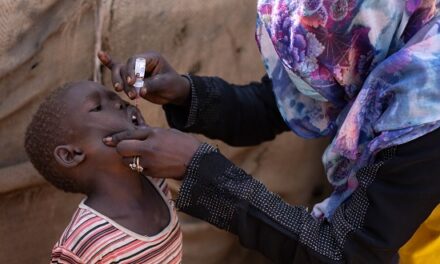
More than half of the world’s zero-dose children currently reside in fragile, conflict-affected, or vulnerable settings. Paradoxically, these regions account for only about one-third of the global child population. In active war zones and areas experiencing forced migration, the physical infrastructure required to maintain cold-chain storage for vaccines and deploy healthcare workers has systematically collapsed.
Conversely, in stable, well-resourced nations where vaccines are readily accessible, health systems are battling a different adversary: misinformation. Weakening public trust and the proliferation of unverified medical claims online have fueled vaccine hesitancy, leading to localized drops in uptake that leave affluent communities unexpectedly vulnerable to outbreaks.
Independent Expert Analysis
“Measles is frequently described as the ‘canary in the coal mine’ for public health,” says Dr. Helen Jenkins, an independent infectious disease epidemiologist not involved in the compilation of the report. “Because it is so incredibly transmissible, even a minor two or three percent drop in community vaccination coverage creates an immediate opening for the virus. The fact that 57 countries experienced major outbreaks in 2025 is clear empirical proof that our global safety net has wide holes in it.”
The findings align with official statements from agency leadership. UNICEF Executive Director Catherine Russell emphasized the ethical imperative of bridging these gaps, noting that conflict and poverty should not dictate a child’s survival when simple, cost-effective interventions exist.
WHO Director-General Dr. Tedros Adhanom Ghebreyesus reiterated that routine immunization remains one of the most equitable and reliable public health measures in human history, though its success relies entirely on consistent, uninterrupted delivery systems.
Public Health Implications and Practical Steps
For parents, caregivers, and local communities, the takeaway from the 2025 data is foundational: maintaining the established childhood immunization schedule is a collective responsibility. Missing early-life doses leaves infants highly vulnerable to severe cases of pertussis (whooping cough), diphtheria, and measles. Families are strongly encouraged to consult official national health guidelines or their local healthcare providers to ensure children are fully up to date on their primary series and any necessary catch-up regimens.
For global policymakers, the data mandates an immediate shift in resources toward three distinct priorities:
-
Targeted Delivery: Establishing secure humanitarian corridors for immunization campaigns within active conflict zones.
-
Infrastructure Investment: Strengthening mobile health clinics and community outreach to reach historically underserved or rural populations.
-
Countering Misinformation: Implementing robust, transparent public health communication strategies to rebuild trust in vaccine safety and efficacy.
Furthermore, health authorities raise a critical warning regarding international health financing. The economic impacts of recent international funding cuts are not yet fully visible in the 2025 data. If health programs lose funding for essential vaccines, front-line staff, epidemiological surveillance, and data systems, the modest progress achieved could easily reverse throughout 2026.
Limitations of the Data
When interpreting these findings, it is necessary to acknowledge the inherent limitations of large-scale global health modeling. The WUENIC figures are model-based estimates that undergo continuous retrospective revision as country-specific data matures.
Crucially, only 185 countries successfully submitted data for the 2025 estimation round. The total number of national immunization surveys available for analysis was significantly lower than in 2024. This reduction in primary data sources introduces a higher degree of statistical uncertainty, meaning some localized immunity gaps may be more severe than the national averages suggest.
Ultimately, the data does not signal a failure of immunization science, but rather an uneven, inequitable recovery. While routine immunization programs in many nations have successfully reclaimed the ground lost during the COVID-19 pandemic, global averages continue to obscure the deep divides between stable, well-funded health systems and environments fractured by war, poverty, and systemic mistrust.
References
-
World Health Organization (WHO) and UNICEF. Global childhood immunization coverage inches forward despite conflict and hesitancy. Joint Press Release. Published July 14, 2026. WHO-UNICEF Estimates of National Immunization Coverage (WUENIC).
- Medical Disclaimer: This article is for informational purposes only and should not be considered medical advice. Always consult with qualified healthcare professionals before making any health-related decisions or changes to your treatment plan. The information presented here is based on current research and expert opinions, which may evolve as new evidence emerges.