 0
0
 0
0
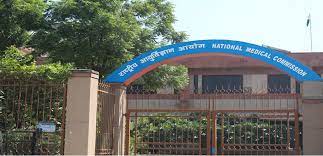
NEW DELHI — In a major development for healthcare education and public health planning, the National Medical Commission (NMC) has officially released the comprehensive MBBS seat matrix for the 2026–27 academic admission cycle. Issued just ahead of the highly anticipated NEET UG counselling process, the official update establishes a nationwide intake of 136,939 seats across 823 medical colleges. This represents a substantial increase of 9,911 new MBBS seats compared to the previous year, providing clear directives that counselling authorities must legally adhere to for this year’s admissions.
The expansion comes at a critical juncture for India, which has long grappled with systemic shortages in its healthcare workforce, particularly in rural and underserved districts. While the news brings immense relief to lakhs of medical aspirants navigating an intensely competitive landscape, public health experts and medical educators caution that expanding structural capacity is only the first step in a much larger equation of healthcare delivery and educational quality.
Mapping the Expansion: Private Sector Leads the Growth
According to the latest data released by the NMC, India’s total MBBS pool is now divided between 63,296 seats in government medical colleges and 73,643 seats in private medical institutions. This means private colleges currently account for roughly 54% of the country’s total undergraduate medical capacity.
The growth this year is driven by a dual strategy: the establishment of 25 brand-new medical colleges, which collectively account for 2,400 of the newly added seats, alongside the expansion of intake capacity within existing medical institutions. The NMC clarified that these figures strictly exclude Institutes of National Importance (INIs) such as the All India Institutes of Medical Sciences (AIIMS), JIPMER, and PGIMER, which continue to manage their admissions through independent, specialized allocation processes.
Total Indian MBBS Seats (2026-27): 136,939
├── Private Medical Colleges:    73,643 seats (53.8%)
└── Government Medical Colleges: 63,296 seats (46.2%)
The State-Wise Reality and Domicile Friction
A closer look at the data reveals that the distribution of new seats is highly localized, potentially intensifying or easing competition depending on a student’s geographic eligibility. The largest state-level gains are concentrated in a handful of regions:
-
Karnataka: Led the country by adding 1,300 seats.
-
Tamil Nadu: Followed closely with an increase of 950 seats.
-
Rajasthan: Expanded its pool by 900 seats.
-
West Bengal: Registered an uptick of 825 seats.
-
Telangana & Uttar Pradesh: Contributed 810 and 800 additional seats, respectively.
While notable increases were also recorded across Maharashtra, Bihar, Madhya Pradesh, Andhra Pradesh, and Jharkhand, the unequal distribution underscores an ongoing challenge in India’s medical education policy. Because the vast majority of MBBS admissions are heavily governed by strict state domicile rules, category-based quotas, and regional counselling pools, the localized seat count matters far more to individual applicants than the macro national figure. A student’s chances remain deeply tied to the specific state infrastructure where they hold institutional or residential eligibility.
Public Health Implications: Pipeline vs. Infrastructure
From a broader public health perspective, the seat expansion is a direct attempt by Indian policymakers to bridge the historical deficit in the doctor-to-population ratio. According to World Health Organization (WHO) health workforce benchmarks, India has historically lagged behind the recommended density thresholds necessary to sustain comprehensive health systems. Peer-reviewed research, including a landmark 2024 analysis by Mehta V. et al. on human resource shortages in India’s health sector, notes that the combined density of doctors, nurses, and midwives across many states remains well below optimum global guidelines.
Public health advocates generally welcome the scaling up of training capacity, but they voice persistent caveats regarding the correlation between the quantity of graduates and the quality of care.
“Adding seats on paper provides immediate hope to students, but its long-term success hinges entirely on the underlying infrastructure,” says Dr. Arisudan Patel, an independent medical education observer and public health consultant not involved in the NMC reporting. “An MBBS seat is only as good as the clinical exposure attached to it. If new or expanded colleges lack adequate faculty, running water, functioning tertiary-care hospital beds, and robust patient footfall, we risk producing graduates who are under-prepared for the complex realities of clinical practice.”
Furthermore, experts emphasize that merely increasing the number of medical graduates does not automatically solve the geographic maldistribution of healthcare professionals. The true public health impact relies heavily on post-graduation trajectories: how many young doctors choose to enter underserved public health clinics, how many remain in the profession long-term, and whether there is a matching expansion in quality postgraduate (MD/MS) training spots to support advanced medical specializations.
Structural Limitations and Financial Barriers
While the seat matrix provides much-needed transparency and legal clarity for the upcoming NEET UG counselling, the document is not without structural limitations. The NMC itself notes that the matrix remains a working counseling baseline rather than an absolute, unalterable guarantee. The total count remains subject to minor revisions if pending legal appeals or competent judicial authorities alter institutional approvals during the active admission cycle.
A more profound challenge for health-conscious consumers and families is the socioeconomic disparity embedded in the seat layout. Because private institutions hold the majority share (73,643 seats), access to medical education in India remains highly stratified.
While government seats offer heavily subsidized tuition, making them accessible purely on academic merit, private college seats often carry steep annual fees. For thousands of middle- and lower-income families, a high score on the NEET UG exam may still not bridge the financial chasm required to secure a private seat, effectively turning financial capacity into a deciding factor alongside academic performance.
Consumer and Professional Takeaways
For NEET UG 2026 candidates and their families, the immediate strategy involves utilizing this official matrix to meticulously rank college preferences during the options-entry phase of counselling. The expanded pool means that cut-off scores in certain state quotas may experience downward shifts, widening the opportunity window for thousands of borderline applicants.
For the Indian healthcare ecosystem, the 2026 seat matrix marks a significant step forward in scaling the human resource pipeline. However, the ultimate transformation of Indian public health will depend not on the numbers declared at the start of the academic year, but on rigorous quality control, stringent institutional oversight by the NMC, and systemic reforms aimed at retaining these future physicians within the communities that need them most.
Reference Section
-
Institutional Data: National Medical Commission (NMC) Official MBBS Seat Matrix Release for the 2026–27 Admission Cycle; compiled and verified against reporting by Careers360, The Indian Express, and India Today, dated July 15, 2026.
Medical Disclaimer: This article is for informational purposes only and should not be considered medical advice. Always consult with qualified healthcare professionals before making any health-related decisions or changes to your treatment plan. The information presented here is based on current research and expert opinions, which may evolve as new evidence emerges.