 0
0
 0
0
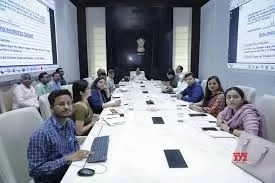
New Delhi, June 9, 2026 — In one of the most stringent examination-security exercises undertaken in India’s academic history, the National Testing Agency (NTA) and the Union Education Ministry have placed all experts involved in setting, moderating, and translating the upcoming NEET-UG 2026 retest question paper into absolute isolation. These personnel have been relocated to an undisclosed, heavily guarded facility where they will remain in a total communication “lockdown” until the conclusion of the examination on June 21, 2026. This unprecedented step follows the widespread paper leak controversy that forced the cancellation of the initial May 3 exam, disrupting the lives of more than 22 lakh medical aspirants nationwide.
The Multi-Tier Security Framework Unveiled
The extraordinary isolation protocols represent the first line of defense in a sweeping overhaul of India’s competitive examination architecture. According to officials familiar with the developments, the sequestered paper setters, translators, and moderators have had all personal communication devices—including smartphones, laptops, and smartwatches—confiscated. Internet access at the secure facility is tightly regulated, and external contact is entirely barred to ensure zero information leakage during the critical final stages of paper formulation.
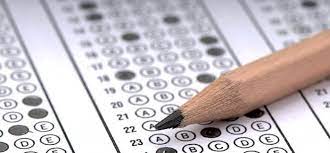
The re-examination is scheduled to take place on June 21, 2026, in traditional pen-and-paper mode from 2:00 PM to 5:15 PM across 551 domestic cities and 14 international centers. To prevent a recurrence of the breach that invalidated the May test, the NTA has compartmentalized every phase of the exam cycle. This ensures that no single entity or individual possesses oversight of the entire operational chain.
Summary of Enhanced Security Protocols
To restore public trust, the government has authorized a tech-driven, highly militarized logistics plan:
| Security Layer | Operational Description |
| Air Force Transport | The government has explored utilizing Indian Air Force aircraft to securely transport confidential examination materials across the country. |
| Three-Tier Perimeter | Examination centers will be guarded by a three-layer security arrangement to eliminate unauthorized entry or candidate impersonation. |
| Massive Deployment | Over 500,000 security personnel are being stationed at centers globally. |
| AI Surveillance & Biometrics | Mandatory AI-based facial recognition, digital e-KYC, and strict biometric verification will be enforced at all entry points. |
| Signal Neutralization | Advanced 5G jammers will be operational to neutralize mobile data, Bluetooth, and Wi-Fi networks within the vicinity of the centers. |
| Live Feeds & Monitoring | AI-enabled CCTV cameras will transmit live, round-the-clock feeds to the central NTA control room in New Delhi, coupled with continuous social media scanning to suppress misinformation and fake leaked papers. |
The Parallel Public Health Crisis: A Silent Epidemic of Anxiety
While the logistical modifications aim to secure test booklets, public health professionals warn that the academic disruption has exacerbated an ongoing mental health crisis among India’s youth. The sudden cancellation of the May 3 exam following a Central Bureau of Investigation (CBI) probe into high-priced “guess papers” has left millions of students in a state of prolonged psychological limbo.
Psychiatrists and counselors across India report a sharp increase in clinical anxiety, severe panic episodes, and emotional burnout among medical aspirants who are forced to maintain peak performance levels for an extended duration.
“Students are struggling with intense performance anxiety, acute fear of failure, diminished self-confidence, and a massive emotional burden as they prepare for the re-test,” explains Dr. Avinash Desouza, a leading Mumbai-based Consultant Psychiatrist and Founder of the Desousa Foundation. “Early psychological intervention is absolutely vital right now. Prolonged stress of this nature doesn’t just impact academic focus—it actively degrades both the mental and physical health of these young individuals.”
Stark Statistics: The Human Cost of High-Stakes Testing
The systemic vulnerabilities of India’s highly competitive medical entrance ecosystem carry heavy structural toll. An open-source intelligence (OSINT) data analysis compiled by India Today traced at least 93 student suicide cases directly linked to NEET pressure between 2021 and 2026.
-
Peak Year: 2025 recorded the highest annual toll with 32 documented deaths.
-
Current Year Toll: In 2026 alone, at least 14 student deaths have already been recorded, including five tragic losses that occurred immediately after the NTA announced the cancellation of the May 12 examination.
-
Geographic Hotspots: The coaching hub of Kota, Rajasthan, remains the primary hotspot, accounting for at least 40 reported deaths over this period.
-
Demographic Breakdown: Nearly one in five NEET-linked suicide cases involved students from Bihar (19.8%), followed closely by Rajasthan (18.7%), Uttar Pradesh (15.4%), and Tamil Nadu (15.4%).
Institutional Background: The May 2026 Breach
The original National Eligibility cum Entrance Test (NEET-UG) proceeded on May 3, 2026, across 5,432 centers. Shortly thereafter, the Rajasthan Police’s Special Operations Group (SOG) uncovered evidence that localized networks in hubs like Sikar had distributed leaked question sets, particularly targeting Chemistry and Biology modules, in exchange for exorbitant illicit payments.
Acknowledging a compromise in exam sanctity, the NTA, with direct authorization from the Ministry of Education, voided the initial test results. The ongoing CBI investigation highlights a structural vulnerability that critics argue requires deeper reform than simple logistical lockdowns.
Limitations, Criticisms, and Systemic Vulnerabilities
Despite the NTA’s deployment of a fortress-style infrastructure, student advocacy groups and educational policy experts remain skeptical of quick-fix security solutions.
Data compiled by organizations like the All India Students’ Association (AISA) points out that nearly 89 major examination paper leaks have occurred across various national and state-level competitive tests over the past decade, including high-profile disruptions in JEE Mains and UGC-NET. AISA critics argue that hyper-securitization merely masks deep-seated administrative vulnerabilities and fails to protect students from predatory educational networks.
Furthermore, legal precedents present a complicated view of mass re-examinations. During a previous nationwide examination controversy, the Supreme Court of India declined to order a blanket cancellation, noting that a total re-test could spark severe socioeconomic consequences for millions of innocent students unless a systemic, widespread breach was conclusively proven. The NTA’s pivot to a total re-examination in 2026 indicates that central investigative agencies discovered far more compromising, systemic evidence than in prior years.
What This Means for Families and Healthcare Futures
For health-conscious families and communities, the integrity of the NEET-UG framework directly dictates the competency and transparency of India’s future healthcare workforce. To navigate the upcoming re-test safely, medical aspirants and their guardians are advised to emphasize health alongside academic readiness:
-
Verify Official Channels: Rely exclusively on authenticated updates via the official NTA portal (
neet.nta.nic.in) to avoid social media panic. -
Prioritize Psychological Health: Families should actively screen students for symptoms of chronic sleep deprivation, severe withdrawal, or panic, and seek professional psychiatric evaluation if needed.
-
Anticipate Calendar Delays: The structural restart of the testing cycle will inevitably delay subsequent counseling phases, MBBS/BDS freshman admissions, and broader academic calendars nationwide.
In a recent affidavit submitted to the Supreme Court, the NTA affirmed it is executing time-bound security upgrades recommended by the Radhakrishnan Committee. These include advanced biometric checks and comprehensive signal jamming. Following the conclusion of the June 21 test, a central steering committee will evaluate whether future iterations of the medical entrance exam will permanently transition away from pen-and-paper testing to a secured, Computer-Based Test (CBT) format to structurally mitigate leak risks.
Medical Disclaimer
This article is for informational purposes only and should not be considered medical advice. Always consult with qualified healthcare professionals before making any health-related decisions or changes to your treatment plan. The information presented here is based on current research and expert opinions, which may evolve as new evidence emerges.
References
1. News & Study Citations
-
Times of India. “NEET paper setters to be in lockdown till re-exam.” Published June 7, 2026. Source Link