 0
0
 0
0
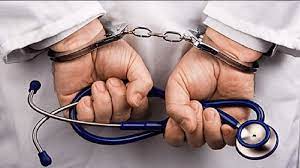
JAIPUR, RAJASTHAN — In a major crackdown exposing severe vulnerabilities in India’s healthcare credentialing system, the Rajasthan Police’s Special Operations Group (SOG) arrested three foreign medical graduates (FMGs) on June 7, 2026. The individuals allegedly paid a combined total of ₹74 lakh to acquire forged screening examination certificates.
The fraudulent documents allowed them to bypass mandatory safety checks, secure clinical internships at state-run government medical colleges, and obtain provisional registration with the Rajasthan Medical Council (RMC). State investigators revealed that this operation is part of a sprawling, institutionalized fake certification racket. More than 100 practicing doctors across the region are now under active criminal scrutiny for utilizing the same network to illegally obtain medical credentials.
Inside the Racket: High Prices for Unearned Credentials
The three arrested individuals have been identified by police as Deepak Yadav (28) of Chomu, Raju Gurjar (28) of the Deeg district, and Naresh Gurjar (30) of Kathumar in the Alwar district. Public records show that all three obtained their Bachelor of Medicine, Bachelor of Surgery (MBBS) degrees from medical universities in Kazakhstan. However, after returning to India, they repeatedly failed to clear the mandatory licensing exam required of foreign-trained graduates.
An investigation by the SOG detailed the specific financial transactions used to bypass the national evaluation system:
-
Deepak Yadav allegedly paid ₹24 lakh for a falsified passing certificate, using it to clear entry for a clinical internship at Government Medical College, Dausa.
-
Raju Gurjar paid ₹27 lakh to acquire a forged certificate, successfully embedding himself as an intern at Government Medical College, Hanumangarh.
-
Naresh Gurjar reportedly paid ₹23 lakh for his fraudulent documents, completing an internship at Government Medical College, Alwar. Investigators allege that Naresh Gurjar subsequently shifted from a client to an active node in the network, helping recruit other failing candidates into the scheme.
Inspector General of the SOG, Ajay Pal Lamba, stated that the financial transactions trace back to an organized syndicate. The network was allegedly masterminded by a middleman named Bhanaram Mali, who charged candidates between ₹20 lakh and ₹30 lakh to fabricate passing profiles on the National Board of Examinations (NBE) templates.
The security breach was not merely external; the syndicate allegedly operated with inside assistance from key personnel within the Rajasthan Medical Council. High-profile arrests executed by the SOG in connection with the racket include Rajesh Sharma, the former Registrar of the RMC, alongside Upper Division Clerk Akhilesh Mathur and Lower Division Clerk Farhan Hasan. To date, 17 foreign medical graduates have been taken into custody, with a broader roster of over 100 suspect profiles currently undergoing forensic verification.
The Regulatory Shield: What is the FMGE?
To understand how these individuals managed to bypass medical regulations, it is important to understand the role of the Foreign Medical Graduate Examination (FMGE). Introduced in 2002, the FMGE is a high-stakes screening test administered twice a year by the National Board of Examinations in Medical Sciences (NBEMS).
Under Indian federal law, any Indian citizen or Overseas Citizen of India (OCI) who earns a primary medical qualification from an institution outside India—such as universities in Eastern Europe, China, Central Asia, or the Philippines—must pass this screening test before they can legally touch a patient, begin a mandatory one-year clinical internship, or register with any state medical council. The test acts as a standardized quality-control barrier to ensure that foreign-trained graduates possess clinical skills equivalent to peers trained within India’s domestic medical education system.
Regulatory frameworks have continued to tighten. Starting in late 2024, the National Medical Commission (NMC) began transitioning the baseline licensing criteria toward the National Exit Test (NExT), a comprehensive uniform examination designed to replace both the FMGE and the domestic postgraduate entrance exams. This transition aims to compress licensing into a single, multi-step standard, raising the stakes for candidates struggling to pass.
Patient Safety and Public Health Risks
The revelation that dozens of unqualified individuals have successfully integrated into government hospital wards has triggered intense alarm across India’s medical community. Clinical internships at state hospitals represent a high-intensity training period where individuals diagnose ailments, administer medications, and assist in surgeries on real patients.
“When individuals practice medicine without verified qualifications, it introduces immediate, unmitigated danger to patient lives,” said Dr. Rajesh Kumar, a senior physician at SMS Hospital Jaipur, who was not involved in the active investigation. “An internship is not a simulation; it involves direct patient care. By using forged papers to bypass the screening exam, these individuals skipped the primary check that proves they possess baseline clinical competence.”
The crisis in Rajasthan is not an isolated event. It mirrors an ongoing investigation in Chhattisgarh, where the state medical council and the National Medical Commission placed more than 3,000 foreign-trained doctors under regulatory audit following reports of falsified exam verifications.
Medical education specialists note that these repeating scandals point to structural failures within administrative offices rather than isolated criminal acts.
“This racket highlights systemic vulnerabilities in the credential verification process,” observed Dr. Anjali Sharma, a medical education expert at the All India Institute of Medical Sciences (AIIMS) Delhi, who is independent of the case. “The reality that more than 100 individuals in a single state could evade detection implies that our data integration between the central exam boards and the state registration councils has critical gaps that require urgent regulatory overhaul.”
The Inequality of Rural Healthcare Distribution
This credentialing scandal also complicates India’s broader public health metrics. According to data released by the Ministry of Health and Family Welfare, India has 13,86,145 registered allopathic doctors, achieving a national doctor-to-population ratio of roughly 1:811. This appears to easily beat the World Health Organization’s (WHO) recommended benchmark of 1:1,000.
However, public health experts emphasize that these national numbers hide deep geographic inequalities between urban and rural areas.
Indian Doctor Distribution: Urban vs. Rural
[Urban Centers] ████████████████████ 80% of Doctors (13 per 10,000 residents)
[Rural Areas]   ████ 20% of Doctors (3 per 10,000 residents | 1:6,000 ratio)
As illustrated above, roughly 80% of registered doctors reside in urban centers, leaving rural areas heavily underserved. While urban environments boast an average of 13 doctors per 10,000 people, rural sectors drop to just 3 doctors per 10,000 residents. This skews the actual rural doctor-patient ratio to an alarming 1:6,000.
“The irony is stark,” explained Dr. Vikram Singh, a public health specialist at the National Institute of Health Administration. “While India claims to have achieved the WHO-recommended doctor ratio on paper, we are discovering that a parallel market has been allowing unqualified individuals into clinical spaces. This erodes public trust in public health infrastructure and jeopardizes patient safety, particularly inside rural public hospitals that already face severe shortages of qualified personnel.”
Criminal Charges and Legal Penalties
The legal consequences for using or fabricating false medical credentials are severe. Under the Indian Penal Code (IPC) and the updated Bharatiya Nyaya Sanhita (BNS) framework, presenting forged certificates to secure employment or a medical license constitutes a non-compoundable criminal offense—meaning the charges cannot be settled out of court or dropped via financial restitution.
The prosecution is proceeding under legal provisions covering forgery for the purpose of cheating and using forged documents as genuine (traditionally handled under IPC Sections 420, 468, and 471, corresponding to BNS Sections 318, 336, and 339). Convictions under these statutes carry penalties including:
-
Rigorous imprisonment for up to 7 years.
-
Substantial financial penalties.
-
Permanent blacklisting from practicing medicine or holding clinical positions across all Indian states and territories.
The judicial stance on this issue remains uncompromising. In pre-trial hearings linked to the network, the Rajasthan High Court explicitly denied bail requests from accused parties, stating that credential fraud “strikes at the very foundation of competitive examinations and unfairly harms deserving candidates competing through lawful means.”
Evolving Consumer Protection Frameworks
As the SOG intensifies its forensic analysis of digital devices seized from Bhanaram Mali’s network, Additional Director General of the SOG, Vishal Bansal, confirmed that the three arrested FMGs remain in extended police custody to map out further nodes of the enterprise.
In direct response to the vulnerability exposure, the Rajasthan Medical Council has introduced tighter administrative rules for all foreign medical graduates seeking future state registration. Applicants are now required to submit a comprehensive legal package, including an Indemnity Bond and an Affidavit of Surety executed on Non-Judicial stamp paper, both verified by a Notary Public. These measures make applicants personally and financially liable for any discrepancies discovered during background verification.
For everyday healthcare consumers, medical safety experts recommend checking provider credentials before receiving care:
-
Verify National Registry Placement: Cross-reference a physician’s full name and license registration number via the National Medical Commission (NMC) or relevant State Medical Council online portals.
-
Confirm FMGE Compliance: For practitioners who completed their medical degrees overseas, verify exam clearance statuses using the verified confirmation portals hosted by the National Board of Examinations.
-
Examine Institutional Identification: Ensure that physical registration certificates and active license numbers are clearly displayed within medical facilities as required by state health statutes.
-
Report Anomalies: Report any suspicious practices or unverified claims of specialized medical certification directly to state regulatory authorities.
Unresolved Questions and Investigative Scope
While the SOG has disrupted a major hub of this operation, significant gaps in information remain under active investigation. The precise total financial value of the racket has not yet been determined, given that the initial ₹74 lakh figure accounts for only three of the suspects. Furthermore, because the SOG has temporarily withheld the complete list of the 100+ suspected doctors to prevent active flight risks, public health officials have not been able to trace exactly how many patients were treated by these unverified individuals during their time in state internships.
Reference Section
Study and News Sources
-
The Times of India, “3 foreign-trained doctors held in fake cert racket,” published June 7, 2026. Source Link
Medical Disclaimer: This article is for informational purposes only and should not be considered medical advice. Always consult with qualified healthcare professionals before making any health-related decisions or changes to your treatment plan. The information presented here is based on current research and expert opinions, which may evolve as new evidence emerges.