 0
0
 0
0
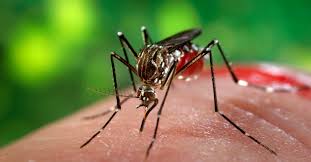
NEW DELHI — In a quiet laboratory in Northern India, researchers have uncovered an alarming biochemical shift in one of the world’s most formidable disease carriers. Aedes aegypti mosquitoes—the primary vectors responsible for transmitting debilitating tropical viruses including dengue, Zika, and chikungunya—are showing early signs of resisting alpha-cypermethrin, a front-line pyrethroid insecticide widely deployed across tropical and subtropical regions.
The laboratory investigation, led by a research team at the University of Delhi, revealed that when a long-standing colony of Ae. aegypti was exposed to the standard diagnostic dose set by the World Health Organization (WHO), the survival rate slightly surpassed safety expectations. While 97.91% of the insects died upon exposure, public health benchmarks classify any mortality rate between 90% and 98% as an early warning signal of emerging resistance—a threshold that demands immediate scientific and public health attention.
“This is an early sign these mosquitoes could be developing resistance to this insecticide,” explains Dr. Rohit Lakhwani, the study’s lead author at the University of Delhi.
The Molecular Shield: How Mosquitoes Disarm Chemicals
To understand how these insects survived, the research team examined the inner biochemical workings of the exposed mosquitoes. They discovered a dramatic molecular adaptation: a 21-fold spike in the activity of $\beta$-esterase, a specialized enzyme that acts as a metabolic cleaning crew inside the insect.
When exposed to alpha-cypermethrin, the mosquitoes’ baseline enzyme activity soared from roughly 11 units per milligram of protein to 239 units per milligram. Computer modeling confirmed that alpha-cypermethrin bound far more tightly to $\beta$-esterase than to four other primary detoxification enzymes. Essentially, the mosquitoes disarm the poison by producing massive quantities of an enzyme that breaks the chemical bonds holding the insecticide together before it can reach its target in their nervous system.
Chemical Defense Mechanism
┌───────────────────────────┐      ┌───────────────────────────┐      ┌───────────────────────────┐
│ Insecticide Exposure      │ ───► │ 21x Spike in β-Esterase   │ ───► │ Chemical Bonds Broken     │
│ (Alpha-Cypermethrin)      │      │ (11 → 239 units/mg)       │      │ (Inert Neutralized Compound)│
└───────────────────────────┘      └───────────────────────────┘      └───────────────────────────┘
Pyrethroids such as alpha-cypermethrin and permethrin have formed the backbone of global vector control programs for decades due to their low toxicity to mammals, rapid knock-down effect, and high efficacy at low doses. However, relentless reliance on a single class of chemicals has exerted massive evolutionary pressure on mosquito populations worldwide.
A Global Front Against “Super-Resistant” Vectors
The early metabolic resistance identified in Delhi reflects a broader, escalating global crisis. According to a 2026 systematic review published in Medicine, pyrethroid resistance is now the most frequently reported pattern in vector control globally, driven largely by metabolic detoxification mechanisms like carboxylesterases, cytochrome P450 monooxygenases, and glutathione S-transferases.
| Region / Country | Mosquito Species | Mechanism Identified | Field Impact |
| India (Lab Study) | Aedes aegypti | 21-fold increase in $\beta$-esterase enzyme activity | Diagnostic WHO threshold warning (97.91% mortality) |
| Southeast Asia (Cambodia/Vietnam) | Aedes aegypti | Target-site gene mutation ($L982W$ in $Vgsc$) | >90% extreme resistance; standard spraying rendered ineffective |
| Sub-Saharan Africa | Anopheles species | Combined target-site mutation & metabolic overload | Survival up to 10x standard lethal dose |
In parts of Southeast Asia, the situation has already progressed beyond early metabolic warning signs. Researchers have documented “super-resistant” Ae. aegypti carrying a specific target-site mutation known as $L982W$ in their voltage-gated sodium channel gene ($Vgsc$). In places like Phnom Penh, Cambodia, over 90% of sampled mosquitoes exhibit this genetic alteration, making standard pyrethroid control nearly impossible.
Similarly, in Sub-Saharan Africa, pyrethroid resistance among Anopheles mosquitoes—which carry malaria—has reached levels where some populations survive chemical concentrations 10 times higher than previously lethal doses. Between 2000 and 2015, insecticide-treated bed nets and indoor spraying averted more than 500 million malaria cases; experts fear those historical gains are now at serious risk.
Expert Insights: Catching Resistance Before It Spreads
The primary value of the Delhi study lies in its ability to catch evolutionary changes at their inception, giving health authorities a crucial head start.
“Our study is valuable because it goes beyond showing that resistance exists; it helps explain how it develops at the molecular level,” says Professor Sarita Kumar, senior author of the study. She emphasizes that because this biochemical resistance is not yet fixed across wild populations, health officials have a rare window to act before the chemical becomes totally obsolete.
Independent experts agree that vigilance is necessary, though they urge measured interpretation. David Weetman, a vector biologist at the Liverpool School of Tropical Medicine who was not involved in the research, notes that while the molecular identification is significant, real-world field evaluations are essential.
“Whether the newly identified mutant combination in this study represents a greater threat or has greater potential for spread is unclear,” Weetman says. “It does suggest that control programs dependent on pyrethroid spraying should consider alternatives.”
High Stakes for Global Public Health
The potential loss of effective insecticides comes at a precarious moment for global health. Over the past 50 years, global dengue incidence has increased 30-fold. The Centers for Disease Control and Prevention (CDC) estimates that roughly 400 million people are infected with dengue each year, resulting in approximately 21,000 deaths.
Because Ae. aegypti thrives in urban environments—breeding rapidly in artificial water containers like buckets, discarded tires, and open storage drums—chemical control has historically served as the primary firebreak against explosive outbreaks of dengue, Zika, chikungunya, and yellow fever. Without effective insecticides, containing epidemics becomes exponentially harder.
Study Limitations and Counterarguments
To maintain balanced public health reporting, several limitations of the University of Delhi study must be noted:
-
Laboratory vs. Field Populations: The mosquitoes tested were from a laboratory colony maintained since 2009 without routine exposure to insecticides. Their subtle survival rates could stem from individual genetic variation or slow genetic drift rather than widespread environmental selection.
-
Geographic Scope: The findings reflect a single lab population at one point in time and cannot automatically be extrapolated to wild, free-flying mosquito populations across India or broader Asia.
Professor Kumar acknowledges these constraints but highlights a critical silver lining: metabolic resistance can be reversible. If public health authorities temporarily withdraw alpha-cypermethrin or combine it with chemical synergists that block the $\beta$-esterase enzyme, the mosquitoes’ metabolic defenses can relax, restoring the chemical’s killing power over time.
Actionable Steps for Households and Communities
While public health agencies work to diversify chemical rotation strategies, health-conscious consumers and communities can take immediate physical steps to reduce their reliance on chemical sprays:
-
Eliminate Standing Water: Inspect yard areas weekly. Empty, scrub, cover, or throw out any containers that hold water, including vases, pet bowls, rain barrels, and old tires.
-
Maintain Physical Barriers: Ensure window and door screens are tight-fitting and free of holes. Use bed nets treated with alternative combination treatments in areas where mosquito-borne disease is active.
-
Support Local Monitoring: Cooperate with municipal health officers conducting vector surveillance and source reduction drives.
References
Peer-Reviewed Studies & Publications:
https://www.earth.com/news/mosquitoes-are-beginning-to-outsmart-a-common-insecticide/
Medical Disclaimer: This article is for informational purposes only and should not be considered medical advice. Always consult with qualified healthcare professionals before making any health-related decisions or changes to your treatment plan. The information presented here is based on current research and expert opinions, which may evolve as new evidence emerges.