 0
0
 0
0
Published: June 3, 2026
WASHINGTON — A flesh-eating parasitic fly known as the New World screwworm has been detected in northern Mexico just 25 miles from the United States border, marking the closest confirmed sighting to U.S. soil during the current regional outbreak. The U.S. Department of Agriculture (USDA) confirmed Tuesday that the parasite was discovered on May 28 in a 5-year-old goat within Mexico’s Coahuila state, directly across from southwestern Texas. The discovery has intensified defense preparations among federal agricultural officials and U.S. livestock producers who are monitoring the parasite’s steady northward migration.
Key Findings and Current Border Status
Federal authorities have ramped up communication and field containment efforts following the 25-mile border breach. According to updated USDA data, U.S. officials tracking the outbreak alongside Mexican authorities have identified 32 total cases of the parasitic fly throughout Coahuila state, 19 of which remain active. On a broader scale, Mexico has documented at least 26,216 cumulative cases since regional monitoring intensifications began, with upwards of 2,700 cases currently active.
Despite the close proximity of this latest detection, the USDA emphasized during a press briefing that the New World screwworm “is not currently present” in the United States. Federal authorities maintain that “the current risk to livestock, other animals, and people in the United States remains very low.” To maintain transparency and public awareness, the department issues bi-weekly surveillance updates for any new cases confirmed within a 400-mile radius of the U.S. border.
The parasite has shown a progressive northward advance over the last few months. In April 2026, Texas Agriculture Commissioner Sid Miller announced a confirmed detection 60 miles from the international boundary. More recently, a Texas state lawmaker publicly asserted that the pest had been found as close as one mile from the border. However, U.S. Agriculture Secretary Brooke Rollins explicitly refuted that claim, cautioning that unverified assertions trigger unnecessary panic among agricultural sectors and the public.
Understanding the New World Screwworm
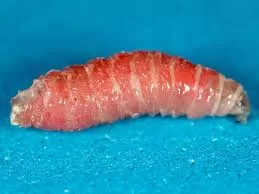
The New World screwworm (Cochliomyia hominivorax) is a parasitic fly native to tropical areas of the Americas that feeds exclusively on the living tissue of warm-blooded animals, including livestock, wildlife, pets, and occasionally humans.
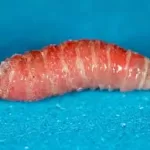
Unlike typical blowflies that lay eggs on decaying organic matter or dead tissue, female screwworm flies are attracted to open wounds, skin abrasions, or natural body orifices (such as the eyes, ears, nose, or mouth). The female deposits hundreds of eggs at the wound site. Within hours, these eggs hatch into larvae, or maggots, which use specialized mouth hooks to burrow deep into the living flesh, literally consuming the host animal alive. If the resulting infestation—a medical condition known as myiasis—is left untreated, it frequently causes severe systemic complications, secondary bacterial infections, and ultimately death.
Symptoms in Humans and Animals
Early identification is vital for successful treatment. According to clinical protocols from the Centers for Disease Control and Prevention (CDC), signs of a screwworm infestation include:
-
Visible Larval Movement: Seeing or distinctly feeling maggots moving within a skin wound, or inside the ears, nose, eyes, or mouth.
-
Progressive Tissue Damage: Painful skin lesions or wounds that enlarge rapidly and worsen significantly within days as larvae feed.
-
Distinctive Odor: A highly foul-smelling, pungent discharge or odor emanating from the infestation site.
-
Localized Bleeding: Persistent bleeding or oozing from open sores where the larvae are burrowing.
Secondary bacterial pathogens frequently invade these open tissue cavities. This can lead to broader systemic illnesses, characterized by high fever, chills, and lethargy in both animal hosts and human patients.
Expert Commentary and Public Health Readiness
“This significantly heightens the urgency and may prompt an increase in resources to expedite the implementation of strategies to prevent the screwworm from crossing into our territory,” said Dr. Michael Payne, a cattle disease specialist at the University of California, Davis, School of Veterinary Medicine, who is not involved in the government’s current border operations.
During an emergency press call, U.S. Agriculture Secretary Brooke Rollins underscored the high stakes for American agriculture. “There is no question that this poses a very serious threat to our livestock,” Rollins said, though she reassured the public that the federal government has comprehensive “plans A through D” actively prepared.
Rear Admiral Michael Schmoyer, associate administrator for USDA’s Animal and Plant Health Inspection Service (APHIS) and director of the New World Screwworm Directorate, added that more than 58,000 domestic specimens and suspicious flies have been tested so far, and all confirmed U.S. surveillance samples remain negative. State veterinary experts, including Dr. Joe Dinges of the Texas Animal Health Commission (TAHC), are urging livestock managers to inspect herds daily, noting that “the best thing you can put on your animal is your eyes.”
Economic Implications for U.S. Agriculture
The economic stakes are extraordinarily high for the domestic meat and dairy supply chain. Agricultural economists estimate that a full-scale screwworm outbreak could inflict up to $1.8 billion in damages to Texas’ economy alone due to livestock mortality, increased ranch labor costs, and veterinary medication expenses. Because Texas leads the nation in cattle production—generating roughly $15 billion annually—a domestic introduction would likely drive U.S. retail beef prices to record highs by sharply reducing the domestic cattle supply.
This biological threat arrives at a time when the domestic livestock market is uniquely vulnerable. Due to multi-year, drought-related herd reductions across the American West, the U.S. cattle herd is already hovering at a multi-decade low. Historically, the U.S. imports more than one million head of cattle from Mexico annually to stabilize supply. However, following the suspension of live cattle imports from Mexico due to cross-border movement compliance issues, the market faces a tight “super squeeze,” threatening further grocery store inflation for consumers.
Historical Context and Human Cases
The New World screwworm was officially eradicated from the United States in 1966 using genetic control methods, and a permanent biological barrier has historically been maintained in southern Central America. However, driven in part by changing climatic conditions and rising global temperatures, the parasite began expanding its geographic footprint northward out of South America starting in 2023. Since this re-emergence, regional health authorities in Central America and Mexico have documented more than 171,700 animal cases and 1,960 human cases.
In August 2025, federal health officials confirmed the first traveler-associated case of human New World screwworm infestation inside the United States in decades. The patient was a traveler who returned to Maryland after visiting El Salvador. Department of Health and Human Services (HHS) spokespersons confirmed that the individual fully recovered following local treatment, and extensive epidemiological investigations found zero evidence of secondary transmission to other people or local animal populations.
Prevention and Current Control Measures
To prevent the parasite from establishing a breeding population on U.S. soil, the USDA and state animal health commissions have deployed a multi-layered defense strategy:
| Defense Measure | Operational Description |
| Sterile Insect Technique (SIT) | Releasing approximately 100 million laboratory-sterilized male flies per week via aircraft across northern Mexico and border zones to disrupt the wild reproductive cycle. |
| Livestock Movement Controls | Sustaining the temporary closure of southern U.S. land ports of entry to live Mexican livestock trade to prevent importing infested animals. |
| Border Surveillance & Patrols | Deploying mounted patrol officers, historically known as “Tick Riders,” equipped with specialized biological detection dogs to monitor border paths. |
| Emergency Research Investment | Allocating up to $100 million for innovative combat methods, trapping networks, and cross-border digital tracking systems. |
| Domestic Infrastructure | Commencing construction on a new $750 million sterile fly production facility in southern Texas, designed to supply 300 million sterile flies weekly by 2027. |
What This Means for Readers and Travelers
While federal public health agencies emphasize that the immediate health risk to individual Americans living domestically remains very low, health authorities advise that individuals traveling to Central America, South America, or current outbreak zones in Mexico take the following preventive measures:
-
Protect Open Wounds: Keep any skin scrapes, cuts, or open wounds clean, treated with antiseptic, and securely covered with bandages, regardless of how minor the injury seems.
-
Apply Repellents: Consistently use Environmental Protection Agency (EPA)-registered insect repellents containing DEET, picaridin, or IR3535 to deter flies from landing on the skin.
-
Wear Protective Clothing: Wear loose-fitting, long-sleeved shirts and long pants when visiting agricultural or wooded areas.
-
Secure Accommodations: Sleep indoors, in well-screened rooms, or under insecticide-treated bed nets.
-
Seek Immediate Care: If you experience localized skin pain, swelling, or suspect larval movement within a wound following international travel, seek immediate medical attention. Explicitly disclose your detailed travel history to your healthcare provider.
For domestic livestock producers, equestrian owners, and pet owners in southern border states, federal veterinarians emphasize the critical need to maintain close, daily animal inspections, treat domestic animal wounds promptly with protective topical ointments, and immediately report any suspicious larvae or unexplained lesions to local state animal health officials.
Limitations and Future Outlook
While federal data indicates that current suppression efforts have successfully kept the screwworm from crossing into the United States, some independent biological experts warn that the threat is no longer a distant possibility. The accelerating northward movement of tropical pests, influenced by shifting global weather patterns and livestock transit vectors, presents an ongoing management challenge.
Furthermore, while the sterile insect technique remains one of the most successful biological control methods in modern agricultural history, its long-term efficacy in the current outbreak depends on sustained international funding, consistent cross-border geopolitical coordination, and maintaining strict internal animal quarantine protocols within affected regions.
Medical Disclaimer
Medical Disclaimer: This article is for informational purposes only and should not be considered medical advice. Always consult with qualified healthcare professionals before making any health-related decisions or changes to your treatment plan. The information presented here is based on current research and expert opinions, which may evolve as new evidence emerges.
References
-
Texas Tribune / Oklahoma Farm Report. “Rising Threat at the Southern Border: U.S. and Texas Ag Officials Ramp Up Screwworm Defense Posture.” Regional Data Summary; June 2, 2026.