 0
0
 0
0
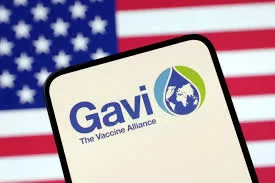
WASHINGTON — In a dramatic pivot for American global health policy, U.S. Secretary of State Marco Rubio announced Tuesday that the United States will officially re-establish its partnership with Gavi, the Vaccine Alliance. The decision comes in direct response to a rapidly escalating Ebola outbreak in Central Africa, which the World Health Organization (WHO) recently designated a global health emergency.
Speaking before the Senate Foreign Relations Committee, Rubio stated that the State Department finalized the reversal several weeks ago after close consultation with the Department of Health and Human Services (HHS). The move dramatically ends a year-long funding freeze initiated in 2025 by the Trump administration, which had terminated roughly $300 million in annual U.S. contributions to the international immunization group.
With a rare, lethal strain of the virus spreading unchecked across international borders, Washington is moving quickly to restore its historic role in global health security.
A Viral Threat Lacking a Medical Shield
The current crisis marks the 17th recorded Ebola outbreak in the Democratic Republic of Congo (DRC), but it presents an unusually steep hurdle for international teams. Unlike previous epidemics driven by the more common Zaire strain, this outbreak is fueled by the Bundibugyo virus species.
According to the WHO, as of late May 2026, health workers have tracked 906 suspected cases and 223 suspected deaths in the DRC alone. Furthermore, there are 134 laboratory-confirmed cases split between the DRC and neighboring Uganda. The outbreak’s severity prompted WHO Director-General Tedros Adhanom Ghebreyesus to declare a Public Health Emergency of International Concern (PHEIC) on May 17, 2026—just 11 days after the rare strain was molecularly confirmed.
Current Scope of the Bundibugyo Ebola Outbreak
| Metric | Outbreak Data & Historical Context |
| Suspected Cases (DRC) | 906 cases |
| Suspected Deaths (DRC) | 223 deaths |
| Confirmed Cases (DRC & Uganda) | 134 cases |
| Historical Case Fatality Rate | 30% to 50% |
| Approved Vaccines or Treatments | None currently licensed |
The primary challenge lies in the medicine cabinet: there are currently no licensed vaccines or targeted therapeutics specifically approved to combat the Bundibugyo strain. While past patients have benefited immensely from aggressive supportive care—like IV fluids and symptom management—the lack of an existing preventative shot makes swift field containment incredibly difficult.
Why Washington Recoupled with Gavi
For a quarter of a century, Gavi has functioned as the logistical backbone for immunizing children in the world’s most vulnerable regions. Historically, the U.S. served as its anchor donor, providing roughly 15% of the alliance’s budget.
When the U.S. completely withdrew its financial backing in mid-2025, it shattered two decades of bipartisan consensus and drew heavy criticism from public health advocates. At the time, Gavi leadership warned that prolonged funding gaps could disrupt routine childhood immunizations, potentially risking up to a million lives. Although international philanthropists and European allies stepped up to pledge over $9 billion at the 2025 Gavi Summit to shield basic programs, the complete absence of American diplomatic and financial infrastructure left a glaring hole in emergency response frameworks.
“The State Department made the decision that we were going to re-engage on this issue of Gavi,” Secretary Rubio told lawmakers, adding that U.S. Health Secretary Robert F. Kennedy Jr. has been deeply involved in orchestrating the next steps. “We need to drive this to an outcome.”
In tandem with restoring ties to Gavi, Rubio revealed the U.S. has unlocked $50 million in immediate emergency funding for the African continent. This package allocates $10 million for immediate field containment and isolates $40 million to accelerate early-stage clinical vaccine trials.
The Race for a Vaccine
With the U.S. back at the table, global health organizations are working to rapidly compress vaccine trial timelines.
The Coalition for Epidemic Preparedness Innovations (CEPI) recently injected roughly $60 million into specialized vaccine pipelines, including a fast-tracked $50 million grant to Moderna to adapt its mRNA platform for the Bundibugyo strain.
“It’s possible to get Ebola Bundibugyo vaccines ready for trials within a couple of months,” noted Richard Hatchett, head of CEPI, highlighting the unprecedented speed of modern vaccine design.
Independent experts agree that an aggressive, unified international front is the only viable path forward. Dr. Sandra Fryer, a public health expert at Northeastern University who is not involved in the current trial funding, emphasizes that while the absence of an off-the-shelf vaccine is highly concerning, it does not mean containment is impossible.
“The outbreak of a rare strain of Ebola virus, for which there is currently no vaccine, will cause more suffering and deaths in Central Africa,” Dr. Fryer stated. “But it can ultimately be contained with the appropriate international response.”
Logistical Headwinds in the Field
Despite the political momentum in Washington, field responders face a matrix of severe local challenges. The epicenter of the virus resides in the volatile eastern provinces of the DRC—Ituri, North Kivu, and South Kivu—where persistent civil conflict, high population displacement, and dense trade corridors severely hamper contact tracing.
Alarmingly, the virus has already broken containment lines. Confirmed cases have emerged in Uganda’s capital city of Kampala, driven by regional travel, and an infected American citizen was recently medically evacuated to Germany for specialized isolation care.
Furthermore, the WHO noted that at least four healthcare workers have died after exhibiting symptoms matching viral hemorrhagic fever. High positivity rates in initial random sampling indicate that a significant portion of cases may be going unrecorded due to inadequate regional diagnostic networks.
What This Means for the Public
For health-conscious consumers and healthcare professionals globally, this policy shift carries important, practical takeaways:
-
Interconnected Global Security: The rapid spread from rural DRC to an urban transport hub like Kampala serves as a reminder that localized outbreaks can evolve into international concerns within days, necessitating strong centralized entities like Gavi.
-
Travel Precautions: For individuals traveling to or operating within East and Central Africa, strict adherence to specialized medical advisories is essential.
-
Clinical Vigilance: Because Ebola is transmitted exclusively through direct contact with the bodily fluids of a symptomatic individual, the European Centre for Disease Prevention and Control (ECDC) currently rates the risk to Western nations as “very low.” However, healthcare facilities worldwide must maintain strict infection control protocols.
The re-engagement of the United States with Gavi marks a vital return to international health collaboration. As scientists work against the clock to move experimental Bundibugyo shots into clinical trials, the combined resources of the U.S. government, Gavi, and the WHO will dictate whether this outbreak can be systematically contained before mutating or spreading further.
Medical Disclaimer
Medical Disclaimer: This article is for informational purposes only and should not be considered medical advice. Always consult with qualified healthcare professionals before making any health-related decisions or changes to your treatment plan. The information presented here is based on current research and expert opinions, which may evolve as new evidence emerges.
Reference Section
- https://www.reuters.com/business/healthcare-pharmaceuticals/us-re-engage-with-gavi-vaccine-alliance-amid-ebola-outbreak-rubio-says-2026-06-02/