 0
0
 0
0
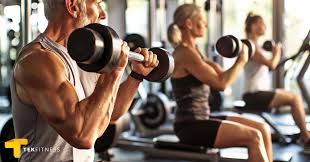
A groundbreaking study reveals that just four minutes of daily strength training can dramatically improve fitness, mobility, and functional performance in adults aged 65 and older. The findings challenge the widely held belief that extensive, time-consuming workout routines are necessary to achieve meaningful health benefits.
Led by researchers at the Penn State College of Medicine, the randomized controlled trial demonstrated that critical strength improvements affecting fall risk, longevity, and independent living significantly increased in as little as 12 weeks. For millions of aging adults who struggle to meet standard public health exercise guidelines, this micro-workout protocol could represent a major shift in preventive geriatric care.
Key Findings: Small Time Investment, Major Results
The study, named FAST-2 (Functional Activity Strength Training-2), was published in the peer-reviewed journal PLoS One. Researchers enrolled 97 participants with an average age of 74, all of whom had pre-existing walking difficulties or mobility limitations. Before entering the trial, these individuals reported averaging a mere 18 minutes of total physical exercise per week—far below the federally recommended baseline of 150 minutes of moderate-intensity aerobic activity.
The FAST-2 intervention group was prescribed a highly condensed, home-based regimen consisting of just four simple exercises:
-
Pushups (30 seconds)
-
Chair stands (30 seconds)
-
Two-arm rows using elastic resistance bands (30 seconds)
-
Stair stepping on an adjustable aerobics stepper (30 seconds)
Participants performed each movement at a high intensity for 30 seconds, followed immediately by a 30-second rest period, bringing the total commitment to exactly four minutes of active exercise.
After 12 weeks, the intervention group demonstrated striking, statistically significant improvements in objective mobility metrics compared to the delayed-treatment control group:
| Functional Measure | Performance Change | Statistical Significance |
| 30-Second Chair Stands | +4.2 repetitions | p < 0.001 |
| One-Legged Stand Time | +3.6 seconds | p = 0.02 |
| Sit-to-Stand Time | -2.3 seconds | p = 0.01 |
Remarkably, participants maintained an 81% adherence rate over the 3-month period. This indicates that the ultra-short duration successfully eliminated the psychological and physical barriers that frequently cause older adults to abandon traditional fitness programs.
Why This Matters: Falls Are a Critical Threat to Longevity
Mobility is the primary cornerstone of independent living and quality of life for seniors. The inability to move efficiently often triggers a cascading decline in health, leading to institutionalization or premature death. In fact, public health data highlights mobility disability as an independent driver of mortality; older adults with severe walking limitations are up to 8.7 times more likely to die and 13 to 36 times more likely to transition into a nursing home.
The risk of falls, in particular, represents a pressing modern public health crisis:
-
According to the Centers for Disease Control and Prevention (CDC), more than 14 million adults aged 65 and older—roughly one in four—report falling every year in the United States.
-
Falls stand as the leading cause of injury-related death among this demographic.
-
The age-adjusted fall death rate rose an alarming 21% from 64.7 per 100,000 older adults in 2018 to 78.4 per 100,000 in 2024.
-
In 2023 alone, over 41,000 Americans of retirement age lost their lives due to fatal fall injuries.
-
The economic toll is staggering, resulting in approximately $80 billion in annual medical costs.
“These indicators predict your future ability to go into a nursing home, your future likelihood of falling, and of developing difficulty walking,” explained lead author Christopher Sciamanna, a professor of medicine and public health at Penn State College of Medicine. “They give you a sense of whether or not you’re going to be able to be active in the future.”
Expert Commentary: Overcoming the Complexity Barrier
“The human body is designed to improve very quickly,” Sciamanna noted. “And just a few repetitions of an exercise performed regularly can lead to huge improvements. Exercise is about forward thinking—think about what you want to be able to do and train for it.”
The FAST-2 trial builds on the team’s previous pilot study, FAST-1, which observed 24 older adults performing only 30 seconds of pushups and squats daily, yielding notable improvements in lower-body power over six months.
Outside exercise physiology experts note that while conventional resistance training is highly effective, current public health delivery is failing seniors. Currently, fewer than one in five older adults meet the CDC recommendation of muscle-strengthening activities at least two days per week.
“Exercise is actually really complicated because you have to decide how many repetitions, how far, how many sets, how much rest, and how many times per week,” said study co-author Smita Dandekar, an associate professor of pediatrics at Penn State College of Medicine. “It’s hard work, so there are huge problems with people wanting to do exercise. If we can make it short, we’re part of the way there.”
Standard strength programs usually demand 20 to 30 minutes per session, multiple times a week. For an older individual dealing with chronic pain, joint osteoarthritis, or cognitive fatigue, navigating these variables can feel insurmountable. The FAST-2 model strips away this complexity entirely.
Practical Implications for Readers
For health-conscious consumers and older adults looking to preserve their independence, this research offers an accessible, immediate blueprint for daily life:
-
Minimal Equipment Required: The full routine requires only four elastic resistance bands with handles and a single adjustable aerobics stepper.
-
Built-in Modifications: Exercises can be customized to fit any baseline fitness level. For instance, pushups can be performed against a wall or kitchen counter, and chair stands can be assisted by placing hands on the knees for leverage.
-
Progressive Overload: As the movements become easier, individuals are encouraged to advance the difficulty—such as transitioning from wall pushups to floor pushups, or increasing the height of the aerobic step.
-
Prioritize Frequency Over Duration: The study highlights that consistency is key. Participants exercised an average of 5.6 days per week, proving that bite-sized, frequent inputs trump lengthy, sporadic workouts.
“Exercise is the key to freedom,” Sciamanna emphasized. “Freedom is the ability to be able to do what you want to do… I approach exercise by thinking of what I want to be able to do in 20 years, and then I train to do that.”
Limitations and Counterarguments
Despite the highly encouraging data, medical professionals urge caution before viewing a four-minute routine as a total fitness panacea. The study carries several distinct limitations that warrant further investigation:
-
Narrow Scope of Benefits: This protocol was explicitly designed to improve functional mobility and basic strength in older adults with existing walking difficulties. It does not provide the metabolic stimulation required to significantly alter body composition, reverse muscle wasting (sarcopenia), or improve cardiorespiratory endurance.
-
Short Study Duration: The trial only tracked participants for 12 weeks. While compliance was high, long-term adherence remains unproven. Geriatric specialists note that older adults may become bored with repeating the exact same four movements indefinitely, potentially causing adherence to drop off over a multi-year period.
-
Small Sample Size: With only 97 participants, the study is small relative to the millions of older adults experiencing physical decline. Larger, multi-center trials are necessary to confirm these results apply across a broader, more diverse population.
-
Exclusion Criteria: The study required participants to have reliable internet access to follow the protocol, a factor that excluded vulnerable, isolated seniors. Furthermore, due to pandemic-related disruptions, researchers could not conduct standard in-person evaluations like the 6-minute walk test.
-
Risk of Injury: Safety remains an important factor. The trial recorded seven adverse orthopedic events across six participants (averaging one injury per 427 exercise sessions), primarily presenting as shoulder discomfort. Half of these instances required a visit to a healthcare provider, underscoring the reality that even short-duration resistance training carries a baseline physical risk if form is compromised.
The Bottom Line
The FAST-2 trial provides compelling, evidence-based proof that resistance training does not need to be an exhausting, hour-long chore to yield life-changing benefits. For healthcare providers, prescribing a simple, four-minute micro-routine could serve as an achievable gateway to physical activity for highly sedentary or frail patients. By transforming exercise from a complex logistical hurdle into a brief daily habit, this approach could help turn the tide on the growing epidemic of age-related mobility loss.
Medical Disclaimer
Medical Disclaimer: This article is for informational purposes only and should not be considered medical advice. Always consult with qualified healthcare professionals before making any health-related decisions or changes to your treatment plan. The information presented here is based on current research and expert opinions, which may evolve as new evidence emerges.
References
- https://www.earth.com/news/four-minutes-of-strength-training-transforms-fitness-in-older-adults/