 0
0
 0
0
Health News Portal | June 12, 2026
MONGBWALU, DEMOCRATIC REPUBLIC OF CONGO — On a rugged, rocky road in the remote eastern territory of the Democratic Republic of Congo (DRC), a pastor’s coffin cracked open during transport to his burial ceremony. Seeking to honor him properly, his grieving family made the immediate decision to replace the damaged casket. That sequence of events, followed by a packed, traditional funeral ceremony in the town of Mongbwalu, is now being investigated by global health authorities as a massive superspreader event. The incident has unmasked a stealthily growing epidemic of a rare Ebola strain that investigators suspect may have been circulating completely undetected in the region since January 2026.
The Uncovering of a Hidden Epidemic
The gravity of the situation culminated on May 17, 2026, when the World Health Organization (WHO) officially declared the Ebola outbreak in the DRC and neighboring Uganda a Public Health Emergency of International Concern (PHEIC). In an unprecedented epidemiological move, WHO Director-General Dr. Tedros Adhanom Ghebreyesus bypassed the standard protocol of convening an Emergency Committee first, declaring the PHEIC directly.
“I did not do this lightly,” Dr. Tedros stated, citing deep concerns over the “scale and speed of the epidemic.”
As of June 10, 2026, data from the U.S. Centers for Disease Control and Prevention (CDC) paints a sobering picture: 676 confirmed cases and 136 confirmed deaths in the DRC alone. This follows a DRC Ministry of Health report from just days earlier on June 5, which documented 452 confirmed cases and 82 deaths—a sharp mathematical spike that highlights aggressive, ongoing community transmission. Cross-border spread has also begun, with Uganda confirming 15 cases and one death, all epidemiologically linked to travelers arriving from the DRC.
Anatomy of a Superspreader Event
Through investigative reconstructions involving hospital ledgers, internal government documents, and interviews with more than 20 people across eastern Congo, a chilling timeline of the Mongbwalu superspreader event has emerged:
[May 5: Individual passes away in Bunia]
                 │
                 ▼
[Body transported to Mongbwalu & placed in coffin]
                 │
                 ▼
[Coffin cracks on rocky road; family replaces it]
                 │
                 ▼
[Packed, traditional funeral ceremony takes place]
                 │
                 ▼
[Three of the pastor's relatives die within weeks]
Because human bodies remain highly infectious after death, direct handling of the deceased during the casket swap and traditional mourning practices amplified transmission. Within weeks of the funeral, three of the pastor’s immediate relatives fell ill and died.
“I don’t think that we have the ‘patient zero’ for now,” cautioned Dr. Anne Ancia, the WHO’s representative in the DRC. “It’s from where it started.” Epidemiologists fear the virus may have spent four to six months jumping quietly from person to person before the cracked coffin incident brought the crisis into plain view.
The Unique Challenge of the Bundibugyo Strain
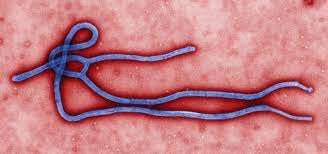
Compounding the crisis is the specific pathogen responsible: the Bundibugyo virus. One of four ebolavirus species known to cause severe, life-threatening disease in humans, Bundibugyo is historically the least prevalent and least understood variant. It was first identified in 2007 in western Uganda and has rarely re-emerged since.
The critical pharmaceutical challenge of this outbreak is stark: there are currently no licensed vaccines or specific therapeutic treatments approved for the Bundibugyo virus.
The two highly effective, commercially available Ebola vaccines—manufactured by Merck (Ervebo) and Johnson & Johnson—were specifically engineered to target the Zaire strain. Animal research indicates that these existing vaccines do not provide substantial cross-protection against Bundibugyo.
Clinical Differences and Symptoms
The Bundibugyo strain does present a lower case-fatality rate than its deadlier cousin, Zaire.
“The mortality rate for the Bundibugyo strain typically ranges from 25% to 40%,” explains Dr. Geeta Sood, an infectious disease specialist at Johns Hopkins Bayview Medical Center who is not involved in the field response. “While lower than the Zaire strain—which averages a devastating 60% to 90% mortality rate—it still represents a profound public health threat.”
Initial symptoms are notoriously deceptive, perfectly mimicking common tropical ailments like malaria or typhoid:
-
High fever and severe headaches
-
Sore throat and profound fatigue
-
Muscle aches and joint pain
As the pathology progresses, patients develop intense gastrointestinal distress, including severe vomiting and diarrhea. The classic hallmark of the disease—hemorrhagic fever, where the virus damages blood vessels and causes internal organ bleeding—often develops late. Crucially for clinical detection, visible signs like nosebleeds frequently do not manifest until day five of infection, causing diagnostic delays. The virus carries an incubation period of up to 21 days, though it averages 8 to 10 days.
Diagnostics Delayed by Genomic Blindspots
The virus’s ability to circulate undetected for months stems directly from diagnostic limitations. When initial patients presented with symptoms in the city of Bunia, local laboratory assays came back negative because the diagnostic kits were configured exclusively to screen for the common Zaire strain.
It was only when patient samples were shipped to advanced reference laboratories in the capital city of Kinshasa that genomic sequencing unmasked the Bundibugyo virus.
“We have significant uncertainty about the number of infections and how far the virus has spread,” Dr. Ancia admitted, pointing to these early diagnostic blindspots and the non-specific nature of early-stage symptoms.
Vaccine R&D Races Against Time
Public health authorities are scrambling to accelerate clinical trials for experimental candidate vaccines specifically tailored to the Bundibugyo strain, though none are ready for immediate deployment:
| Vaccine Candidate | Developing Institution | Estimated Timeline to Clinical Trials |
| rVSV Bundibugyo | International AIDS Vaccine Initiative (IAVI) | 7 to 9 months |
| ChAdOx1 Bundibugyo | Oxford University / Serum Institute of India | 2 to 3 months (for efficacy assessment) |
| Ervebo (Stockpile) | Merck (Zaire-specific vaccine) | 2 months to deploy (Ineffective against Bundibugyo) |
Dr. Vasee Moorthy, head of the WHO’s research and development blueprint, urged caution regarding these timelines, noting “a lot of uncertainty” remains due to the current absence of robust efficacy data from animal models.
A ‘Catastrophic Collision’ of Conflict and Disease
The containment effort is unfolding within a complex humanitarian crisis. The affected Congolese provinces of Ituri and North Kivu are volatile conflict zones, currently home to more than two million internally displaced persons and returnees.
This environment has created what local teams call a “catastrophic collision of disease and conflict.” On June 3, an accredited safe burial team was violently attacked by an armed group in Katana, South Kivu, forcing health workers to abandon a highly infectious body and raising immediate fears of localized transmission. In a separate incident, twelve infected patients fled isolation facilities amid community panic as the outbreak breached a new health zone.
Public health officials emphasize that heavy-handed enforcement will backfire. “If we use coercive measures and the population does not agree, we will see bodies disappear,” warned Dr. Ancia.
WHO officials maintain that halting transmission relies on grassroots community engagement rather than militarized quarantines. Because bodies remain highly contagious, traditional burial practices involving washing, dressing, or kissing the deceased are prohibited. Instead, the WHO mandates “safe and dignified burials” performed strictly by trained teams in specialized protective gear (fluid-resistant gowns, double gloves, face shields, and rubber boots).
Global Risk Assessment
Despite the severity of the situation in Central Africa, international health agencies maintain that the risk of widespread transmission outside the continent remains exceptionally low.
Dr. Satish Pillai, the CDC’s incident manager for the Ebola response, confirmed that the risk to nations like the United States is minor. To maintain this low risk profile, the U.S. has instituted entry restrictions, prohibiting entry to noncitizens who have been present in affected areas of the DRC or Uganda within the previous 21 days. While one American healthcare worker in the DRC recently tested positive, immediate domestic risk in both the U.S. and Europe is officially classified as very low.
What This Means for You
For Health-Conscious Individuals & Travelers
-
Avoid Exposure: If traveling to permitted regions of the DRC or Uganda, strictly avoid contact with sick individuals, bodily fluids, or deceased bodies.
-
Acknowledge the Vaccine Gap: Understand that there is currently no preventative vaccination available for the Bundibugyo strain; prevention relies entirely on behavioral mitigation and strict hygiene.
-
Monitor Timelines: If you have had potential contact, adherence to the strict 21-day symptom monitoring window is mandatory.
For Healthcare Professionals
-
Review Travel History: Because early symptoms mimic standard viral infections, take a meticulous travel history for any patient presenting with acute fever who has recently been in the DRC or Uganda.
-
Do Not Wait for Bleeding: Do not rule out Ebola simply because a patient lacks hemorrhagic signs; nosebleeds and overt bleeding may not manifest until day five of clinical illness.
-
Provide Aggressive Supportive Care: In the absence of approved anti-viral therapeutics or vaccines, survival depends heavily on early supportive medical care, including aggressive intravenous hydration, mechanical blood pressure monitoring, and targeted heart and lung support.
Looking Ahead: Limitations and Uncertainties
The epidemiological investigation into the true origin of the Mongbwalu outbreak remains deeply hampered by regional instability. “We cannot foster community trust or isolate the ill while bombs are dropping,” Dr. Tedros emphasized, calling for an immediate humanitarian ceasefire to allow health workers safe access to vulnerable communities.
Experts warn that defeating this outbreak will require a long-term commitment. Contrasting the current situation with past outbreaks, Dr. Ancia noted that even if an experimental vaccine is readied within months, it will not signal a swift end to the crisis. “It is not two months before the outbreak will be done,” she concluded. “Remember the previous one; it took two years.”
Medical Disclaimer
Medical Disclaimer: This article is for informational purposes only and should not be considered medical advice. Always consult with qualified healthcare professionals before making any health-related decisions or changes to your treatment plan. The information presented here is based on current research and expert opinions, which may evolve as new evidence emerges.
References
-
Reuters. “A cracked coffin, a funeral and the hunt for Ebola’s patient zero.” June 11, 2026. Available at: https://www.reuters.com/world/africa/cracked-coffin-funeral-hunt-ebolas-patient-zero-2026-06-11/