 0
0
 0
0
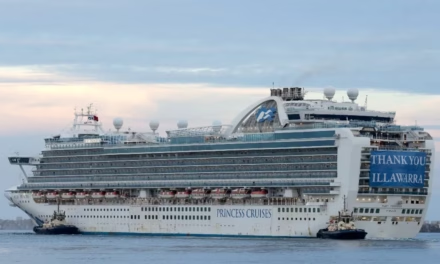
BORDEAUX, France — French health authorities temporarily halted the disembarkation of more than 1,700 passengers and crew from the British-operated cruise ship Ambition in the port of Bordeaux on May 12–13, 2026. The intervention followed reports that approximately 50 individuals aboard had developed symptoms of acute gastroenteritis, including severe vomiting and diarrhea. The vessel remains under a health lockdown as investigators conduct environmental testing and clinical assessments to identify the pathogen responsible for the outbreak.
The ship, which was carrying 1,233 passengers and 514 crew members, was met by regional health officials from the Agence Régionale de Santé (ARS) Nouvelle-Aquitaine upon docking. While early rapid tests for norovirus—the most common culprit in maritime outbreaks—reportedly returned negative results in some samples, authorities have not yet ruled out other viral agents or potential foodborne contamination.
Rapid Containment and the Investigation
According to official reports from the ship’s operator and local health departments, the outbreak affected 48 passengers and one crew member. In response, the ship implemented strict “Red Level” sanitation protocols, which involve the isolation of symptomatic individuals in their cabins and the suspension of self-service dining and communal social activities.
A complicating factor in the voyage was the death of a 92-year-old passenger. However, French officials have clarified that the fatality appears to be a cardiac event unrelated to the gastrointestinal outbreak. “At this stage, we are treating the death and the illness cluster as two separate matters,” a spokesperson for the local prefecture noted, though a full medical evaluation is being completed to ensure no underlying epidemiological link exists.
The Challenge of the “Stomach Flu”
Gastroenteritis is an inflammation of the lining of the stomach and intestines. While colloquially referred to as the “stomach flu,” it is unrelated to the influenza virus.
“Acute gastroenteritis on cruise ships is usually caused by highly contagious viruses such as norovirus, but we must wait for confirmatory laboratory testing to know the culprit,” said Dr. Anne Dupont, an infectious diseases specialist at Bordeaux University Hospital, who is not involved in the ship’s investigation. “Close quarters, shared dining, and frequent social events make rapid spread more likely if infection control measures are delayed even by a few hours.”
Why Cruise Ships are Vulnerable
The Ambition incident highlights a recurring challenge for the cruise industry. Large populations living in high-density environments share common air handling systems, dining facilities, and recreational areas.
-
Low Infectious Dose: Many gastrointestinal viruses require only a tiny amount of particles to infect a new host.
-
Environmental Stability: Pathogens like norovirus can survive on hard surfaces (handrails, elevator buttons) for days and are resistant to many standard alcohol-based sanitizers.
-
Transmission Vectors: Outbreaks can be sparked by a single passenger arriving already infected, a contaminated water source, or a breakdown in food handling safety.
Dr. Dupont emphasized that the restriction of disembarkation is a standard, albeit disruptive, public health tool. “By pausing shore excursions, authorities prevent the potential seeding of a pathogen into the local community and ensure that symptomatic people are near medical care rather than traveling on public transport or in crowded tourist sites,” she explained.
Public Health Implications and Clinical Outlook
For the vast majority of healthy adults, acute gastroenteritis is a self-limiting illness, meaning it resolves on its own without specific medication. However, the primary risk is dehydration, which can be life-threatening for vulnerable populations.
| Population Group | Risk Level | Primary Concern |
| Healthy Adults | Low | Dehydration, temporary incapacity |
| Older Adults (65+) | High | Electrolyte imbalance, kidney strain, cardiac stress |
| Infants/Children | High | Rapid fluid loss |
| Immunocompromised | Moderate-High | Prolonged viral shedding and recovery time |
Local healthcare systems in Bordeaux remain on alert. Concentrated outbreaks can place sudden demands on regional laboratories and infectious disease units. Coordination between the ship’s medical staff and port health authorities is essential for managing potential hospital transfers should any passenger’s condition deteriorate.
Limitations and Uncertainties
While initial rapid tests did not confirm norovirus, health experts urge caution. Secondary testing, including PCR (polymerase chain reaction) and stool cultures, can take 24 to 48 hours to provide a definitive answer.
There are several plausible alternative explanations currently being explored:
-
Other Viral Agents: Rotavirus or sapovirus can cause similar symptoms.
-
Foodborne Bacteria: Salmonella, Campylobacter, or E. coli contamination in the ship’s galley could lead to a sudden spike in cases.
-
Bacterial Toxins: Toxins from Staphylococcus aureus or Bacillus cereus often cause rapid-onset vomiting shortly after ingestion.
Public health investigators are currently conducting “epidemiologic interviews”—tracing what the sickened passengers ate and where they spent time—alongside environmental swabs of the ship’s infrastructure.
Practical Takeaways for Travelers
If you are currently traveling or planning a voyage, medical professionals recommend several evidence-based strategies to stay healthy:
-
Prioritize Soap and Water: Alcohol-based hand sanitizers are ineffective against certain “naked” viruses like norovirus. Thorough handwashing with soap and water for at least 20 seconds is the gold standard for protection.
-
Report Symptoms Early: If you experience nausea or diarrhea, notify ship medical staff immediately. Early isolation is the only way to prevent a handful of cases from becoming a ship-wide outbreak.
-
Monitor for Dehydration: Watch for “red flag” symptoms such as extreme thirst, dark-colored urine, dizziness upon standing, or confusion.
-
Respect Quarantine: If asked to remain in your cabin, do so. This is a critical step in breaking the chain of transmission.
As of May 14, authorities in Bordeaux are reviewing the latest lab results to determine when the Ambition can safely resume its itinerary or allow passengers to return home.
Medical Disclaimer: This article is for informational purposes only and should not be considered medical advice. Always consult with qualified healthcare professionals before making any health-related decisions or changes to your treatment plan. The information presented here is based on current research and expert opinions, which may evolve as new evidence emerges.
References
-
Euronews, “France confines 1,700 people on cruise after gastroenteritis outbreak,” May 13, 2026.