 0
0
 0
0
BUNIA, Democratic Republic of Congo — At least 30 people have died since the beginning of May 2026 at the Kigonze displacement camp in northeastern Congo, revealing an unprecedented spike in mortality that camp officials fear points to a rapid, undetected spread of Ebola virus disease. The fatalities—all involving individuals presenting with classic Ebola-associated symptoms such as high fevers, severe headaches, and violent vomiting—have sent shockwaves through the crowded camp of more than 15,000 people. Situated in Ituri province, the camp sits at the epicenter of an escalating epidemic that the World Health Organization (WHO) recently designated a Public Health Emergency of International Concern (PHEIC).
An Unprecedented Spike in Camp Mortality
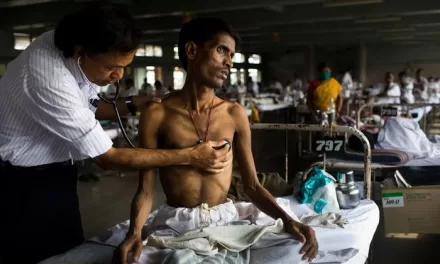
The Kigonze camp, which serves as a sanctuary for thousands fleeing regional violence, is facing a medical crisis that camp representative Desire Grodya Bapi described as entirely “unprecedented” for the facility. Under normal circumstances, the camp records between one and three deaths per month from all causes combined. However, since early May, at least 30 fatalities have occurred in rapid succession.
According to camp logs and community reports, the deceased individuals consistently exhibited a severe cluster of symptoms characteristic of Ebola virus disease:
-
Sudden onset of high fever and elevated body temperature
-
Debilitating, severe headaches
-
Persistent vomiting and diarrhea
-
Profound muscle pain and advanced fatigue
Despite the clear clinical indicators, establishing an absolute medical confirmation of the cause of death has proven impossible. Until quite recently, ailing individuals and their families within the Kigonze camp steadfastly declined to undergo diagnostic testing. This widespread refusal was confirmed by Justin Zanamuzi, director of the Catholic aid organization Caritas, which operates extensively on the ground inside the facility.
Expert Alarm Over Rapid Transmission
International humanitarian organizations and health agencies are expressing grave concern over the logistical and epidemiological fallout if the virus establishes a firm foothold within the displaced population.
“We are extremely concerned that Ebola could spread rapidly in these camps, leading to panic and people fleeing regardless of whether they have been in contact with infected individuals or are symptomatic,” warned Caitlin Brady, country director for the Danish Refugee Council in Congo.
Compounding the anxiety is the severe nature of the specific pathogen responsible. The WHO reported that the Bundibugyo strain of the virus currently circulating in the Democratic Republic of Congo (DRC) carries a case fatality rate between 30% and 50% among confirmed cases.
“It’s huge. It means that up to five out of 10 people are likely to die,” stated Anais Legand from the WHO Health Emergencies Programme’s High Threat Pathogens Team, emphasizing that these statistical figures remain preliminary.
The danger to those trying to mitigate the crisis is also starkly apparent. Dr. Marie Roseline Belizaire, WHO regional emergency director, reported that 75 healthcare workers in the DRC have been infected with Ebola since the inception of the outbreak, resulting in 17 fatalities—reflecting a harsh 20.46% mortality rate among the medical personnel on the front lines.
The Threat of the Bundibugyo Strain
The current crisis represents a distinct scientific challenge because it involves the rare Bundibugyo strain of the Ebola virus. Unlike the more common Zaire strain, which was successfully combated in previous outbreaks using highly effective vaccines developed by Merck and Johnson & Johnson, the Bundibugyo strain currently has no approved vaccines or targeted therapeutic treatments.
Recognizing the global threat, the WHO Director-General declared the outbreak a PHEIC on May 17, 2026, following initial reports of over 300 suspected infections and 88 deaths. The trajectory has only steepened since. By late May, the WHO indicated that suspected cases under investigation had climbed to 906, alongside 223 suspected fatalities.
Congolese authorities first officially announced the outbreak on May 15, 2026, though retroactively acknowledging that deaths had begun early in the month. The geographic footprint of the virus has since expanded across three volatile provinces—Ituri, South Kivu, and North Kivu—and crossed the border into neighboring Uganda, which has documented 19 cases.
Displacement Camps as Transmission Hotspots
The situation in Kigonze intensifies long-held fears that Ebola is circulating silently among the more than 5 million internally displaced persons (IDPs) across eastern Congo. These provinces have endured decades of armed conflict, leaving local healthcare systems shattered and severely complicating outbreak containment.
Aid workers emphasize that displacement camps create a perfect storm for infectious disease transmission due to severe infrastructural deficits:
| Risk Factors in IDP Camps | Public Health Consequences |
| Severe Overcrowding | Accelerates close physical contact, the primary vector for transmission. |
| Sanitation Deficits | Hundreds of individuals frequently rely on a single, shared latrine. |
| Hygiene Barriers | Open defecation remains common due to lack of facilities; clean water is limited. |
“Camps with poor sanitation pose a high risk of rapid Ebola spread, worsened by community mistrust and difficult isolation conditions,” international aid dispatches warn.
Mistrust and Resistance Present Steep Barriers
Beyond the physical limitations of the camps, deep-seated community mistrust remains a primary obstacle to containment. Since the formal declaration of the outbreak, several emergency isolation and treatment sites have been targeted and attacked by local residents. Many are angry over strict bio-secure protocols that prevent families from conducting traditional, close-contact burial practices, while others remain convinced that the outbreak is a hoax orchestrated by outsiders.
The dangers of this friction were illustrated at the neighboring Kpangba camp, a facility housing roughly 30,000 displaced people. On May 30, a 60-year-old woman tested positive for Ebola but managed to break out of her quarantine enclosure. By the time emergency health workers arrived to isolate her, she had vanished back into the densely populated camp, highlighting the extreme difficulty of effective contact tracing in these environments.
Data Limitations and Uncertainties
Epidemiologists caution that current figures must be viewed through a lens of strict limitation:
-
Unconfirmed Status: While clinical signs strongly suggest Ebola, the exact cause of the 30 deaths at Kigonze remains unverified by laboratory diagnostics due to the initial testing standoff.
-
Preliminary Data: The 30% to 50% fatality rate reported by the WHO represents early modeling that could shift as more robust testing occurs.
-
Impaired Contact Tracing: Health authorities admit they are essentially “flying blind” in several sectors, as tracking contacts within highly fluid, crowded camp environments is nearly impossible.
-
Under-reporting: As of mid-June, the DRC officially reported 676 confirmed cases and 136 confirmed deaths, but the volume of suspected cases under active investigation vastly outnumbers laboratory-verified data.
Public Health Relevance and Global Context
For health-conscious individuals and the broader global community, this crisis underscores several fundamental realities of viral hemorrhagic fevers. Ebola is not airborne; it spreads strictly through direct contact with the blood, secretions, organs, or other bodily fluids of infected individuals, or via surfaces contaminated with these fluids.
In the absence of a dedicated pharmaceutical cure for the Bundibugyo strain, medical professionals emphasize the profound value of basic healthcare. “Good early clinical care saves lives, even without specific treatment,” noted Dr. Maria Van Kerkhove, an acting director within the WHO’s Epidemic and Pandemic Department, during a recent briefing. Aggressive fluid replenishment, electrolyte balancing, and symptom management significantly improve survival outcomes.
Furthermore, existing stockpiles of Zaire-strain vaccines offer no cross-protection against Bundibugyo. While experimental counter-measures are in development globally—including an mRNA-based vaccine candidate undergoing evaluation in China—none have successfully concluded human clinical trials. Experts project that deploying an experimental vaccine to the field under emergency use protocols will take anywhere from two to nine months at a minimum.
Concurrently, international travel bodies like the UK Health Security Agency have issued advisories urging clinicians worldwide to thoroughly evaluate any acutely unwell patient who presents with a relevant travel history to equatorial Africa.
Outlook: A Complex Emergency
The 2026 Ebola outbreak is rapidly evolving into one of the region’s most complex medical emergencies. The confluence of a highly lethal viral strain, a complete lack of approved vaccines, mass human displacement, ongoing regional conflict, and deep community resistance presents a profound challenge to international public health. Until trust can be established and systemic testing implemented within camps like Kigonze, health workers will remain locked in a dangerous race against a silent, fast-moving pathogen.
Medical Disclaimer
Medical Disclaimer: This article is for informational purposes only and should not be considered medical advice. Always consult with qualified healthcare professionals before making any health-related decisions or changes to your treatment plan. The information presented here is based on current research and expert opinions, which may evolve as new evidence emerges.
References
-
“At least 30 deaths at Congo camp show Ebola could be spreading fast.” Reuters Bunia, June 19, 2026.