 0
0
 0
0
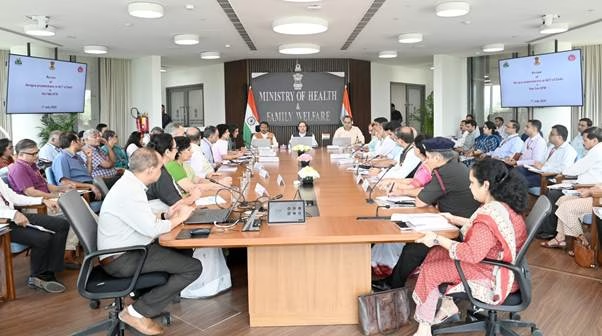
NEW DELHI — In a major push to accelerate India’s ambitious target of eliminating tuberculosis, Union Minister of Health and Family Welfare Shri J.P. Nadda chaired a high-level review meeting with the Government of National Capital Territory (NCT) of Delhi. The strategic session, focusing on the TB Mukt Bharat Abhiyaan (Tuberculosis-Free India Campaign) and its ongoing 100-day intensive campaign, laid out a decisive framework to transition the medical initiative into a full-scale public movement.
“Implementation must be based on cooperation, not in isolation,” Minister Nadda emphasized during the review. Acknowledging that the health system cannot eradicate the disease on its own, the Health Ministry called for enhanced Jan-Bhagidari (public participation) to bridge the persistent gap between clinical efforts and successful community outcomes.
The Data Behind Delhi’s Massive Screening Blitz
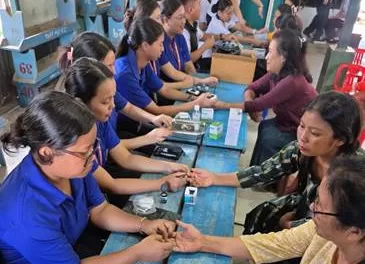
To date, the intensive campaign in Delhi has deployed precision-targeted, data-driven strategies to locate and treat individuals affected by tuberculosis. The scale of the mobilization includes:
-
28.83 lakh individuals screened across high-risk zones.
-
21.67 lakh chest X-rays conducted to identify early signs of pulmonary damage.
-
3.65 lakh molecular (Nucleic Acid Amplification Test, or NAAT) diagnostic tests performed to ensure highly accurate case identification.
-
1.75 lakh TB patients successfully notified and linked to standard care protocols under the national campaign.
Operationally, the campaign has moved away from generalized, city-wide outreach toward a method called AI-driven vulnerability mapping. Smt. Aradhana Patnaik, Additional Secretary and Mission Director of the National Health Mission (NHM), explained during the briefing that by utilizing more than 30 region-specific indicators, health authorities have mapped out high-risk zones. Nationally, this has identified 1.58 lakh vulnerable villages and wards. In Delhi, this technology successfully narrowed the focus to 38 specific wards across 11 districts—pockets that collectively account for over 80% of the capital’s high-risk tuberculosis burden.
Deploying Artificial Intelligence and Grassroots Leadership
A major technical takeaway from the meeting is the planned expansion of handheld X-ray machines integrated with Artificial Intelligence (AI). These portable devices allow frontline workers to capture images in high-density residential areas, with AI algorithms immediately flagging abnormal lung patterns. This approach cuts the time to diagnosis from days to minutes.
However, the Ministry stressed that cutting-edge technology must be matched by human infrastructure. The review outlined an expanded role for youth volunteers via the MY Bharat platform, alongside Accredited Social Health Activists (ASHAs) and Community Health Officers.
Furthermore, the Union Health Minister directed that every municipal ward in Delhi be assigned a designated Senior Government officer tasked with tracking progress. He mandated that Members of Parliament (MPs), Members of Legislative Assemblies (MLAs), and Municipal Councillors receive regular briefings on the specific TB burdens in their constituencies.
Shifting Focus: Diagnostics, Prevention, and Psychosocial Support
To completely sever the chain of transmission, the review recommended four operational upgrades for the Delhi health ecosystem:
-
Upfront Molecular Testing: Shifting diagnostic protocols to provide immediate NAAT testing for all presumptive cases, which allows for the rapid identification of drug-resistant strains right at the outset.
-
Differentiated Care Assessments: Conducting comprehensive, 100% clinical assessments of notified patients to identify individuals who require specialized clinical pathways or hospitalization.
-
Expanded TB Preventive Treatment (TPT): Scaling up short-course preventive regimens for household contacts and highly vulnerable individuals living alongside active cases.
-
Strengthening Nutritional Sponsorships: Activating Resident Welfare Associations (RWAs) and Ward Committees to register as Ni-kshay Mitras—community mentors who provide essential nutritional kits and psychosocial support to ensure patients complete their full treatment course.
Expert Perspectives and the Challenge of Adherence
Public health experts not directly involved in the review meeting noted that involving local community networks is essential for overcoming the social hurdles associated with TB care.
“Tuberculosis is as much a social disease as it is a bacterial infection,” says Dr. Anita Sharma, an independent public health consultant and infectious disease specialist based in New Delhi. “When you involve Resident Welfare Associations and local public representatives, you begin to dismantle the deep social stigma associated with the diagnosis. Patients are far more likely to adhere to a strict six-month drug regimen when they feel supported by their immediate neighbors rather than monitored solely by a distant clinical system.”
Dr. Sharma also pointed out that while the screening numbers in Delhi are highly commendable, sustaining long-term adherence presents a significant challenge. “The primary logistical barrier in urban centers like Delhi is patient default. Individuals often stop taking their medications once their initial symptoms subside, which directly accelerates the development of dangerous Multi-Drug Resistant TB (MDR-TB). Precision mapping fixes the detection problem, but Jan-Bhagidari is what fixes the treatment completion problem.”
Potential Limitations and Nuances
Public health researchers emphasize that while precision mapping using 30 indicators is highly effective, it must remain dynamic. Rapid shifts in migrant labor populations and fluid dense settlements across Delhi mean that high-risk pockets can move quickly. Additionally, transitioning from conventional sputum microscopy to upfront molecular testing across all districts requires a continuous supply chain of diagnostic cartridges and regular calibration of equipment to avoid structural bottlenecks at the clinic level.
What This Means for Your Daily Health
For residents of Delhi and the wider public, the intensification of the TB Mukt Bharat Abhiyaan means that access to state-of-the-art diagnostic tools is moving closer to home. Health authorities urge citizens to utilize these free screening facilities, especially if experiencing key sentinel symptoms:
When to Seek Screening: A persistent cough lasting more than two weeks, unexplained weight loss, recurrent night sweats, or a low-grade evening fever are clear indicators to seek a medical evaluation.
Furthermore, community members can actively participate in the mission by checking in on neighbors undergoing treatment, supporting local awareness drives organized by ward committees, or signing up as corporate or individual Ni-kshay Mitras to sponsor the nutritional needs of patients in their locality. Through coordinated community action and cutting-edge diagnostics, the nation moves a step closer to a tuberculosis-free future.
References
Government and Statistical Sources
-
Press Information Bureau (PIB) Delhi: Official proceedings, review meeting statements, and campaign metrics issued on behalf of the Ministry of Health and Family Welfare, Government of India (Published July 1, 2026).
Medical Disclaimer: This article is for informational purposes only and should not be considered medical advice. Always consult with qualified healthcare professionals before making any health-related decisions or changes to your treatment plan. The information presented here is based on current research and expert opinions, which may evolve as new evidence emerges.