 0
0
 0
0
NEW DELHI — On July 1, 2026, India marked National Doctors’ Day with high-level recognition of its medical workforce, highlighting a decade-long expansion of domestic medical education and a high-profile international humanitarian mission in South America.
Prime Minister Narendra Modi extended national greetings to the country’s medical community, specifically lauding the efforts of Indian healthcare professionals currently deployed in Venezuela under “Operation Amistad.” The annual observance, which commemorates the birth and death anniversary of the legendary physician and freedom fighter Dr. Bidhan Chandra Roy, arrived this year amidst a broader public health discussion regarding the rapid scaling of medical infrastructure and the challenges of retaining quality care across diverse populations.
Expanding the Backbone: The Numbers Behind India’s Medical Boom
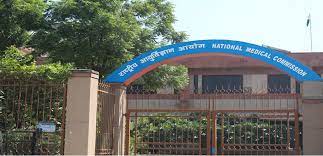
A central theme of this year’s address was the structural transformation of India’s medical education system over the past ten years. According to data from the Ministry of Health and Family Welfare and the National Medical Commission (NMC), the number of medical colleges in India has more than doubled since 2014, growing from 387 institutions to over 700.
This institutional growth has triggered a corresponding surge in available training positions:
-
Undergraduate (MBBS) Seats: Increased by over 110%, expanding from roughly 51,348 seats a decade ago to more than 108,000.
-
Postgraduate (PG) Seats: Grown by over 120%, rising from 31,185 to nearly 68,000 slots nationwide.
“This unprecedented growth is creating greater opportunities for aspiring doctors, building a stronger healthcare workforce, and ensuring that quality medical care reaches every corner of the country,” Prime Minister Modi stated in a public release via the Press Information Bureau (PIB).
Public health experts note that increasing local training capacity is vital for addressing India’s historically low doctor-to-population ratio. While the World Health Organization (WHO) prescribes a standard ratio of 1 doctor per 1,000 people, India has historically struggled with stark geographical imbalances, with the majority of specialists concentrated in urban centers.
Operation Amistad: Indian Medicine on the World Stage
Beyond domestic borders, the government drew sharp attention to “Operation Amistad,” a bilateral humanitarian initiative under which Indian doctors, nurses, and technical staff are currently deployed to support the strained healthcare infrastructure in Venezuela.
While specific deployment figures remain classified under diplomatic protocols, the mission represents a calculated continuation of India’s “Vaccine Maitri” and global health diplomacy strategies. Indian teams in Venezuela are reportedly assisting in critical care, maternal health, and regional clinical training.
“In challenging times, their selfless service demonstrates how healthcare professionals consistently rise to the occasion whenever society faces adversity,” Modi shared on social media platform X.
Independent observers view the mission as a double-edged sword. While it underscores India’s capability to export medical expertise and build soft power, it also occurs against a backdrop of persistent personnel deficits within India’s own rural health centers.
The Expert View: Structural Triumphs vs. Quality Control
To gauge the real-world impact of these developments, healthcare policy experts emphasize that volume alone does not guarantee equitable health outcomes.
“Doubling the number of seats is a massive administrative achievement,” says Dr. K. Srinath Reddy, past president of the Public Health Foundation of India (PHFI), who was not involved in the government’s recent briefings. “However, the primary challenge moving forward is quality control and equitable distribution. We are minting more doctors, but we must ensure that the newly established colleges have adequate faculty, robust tertiary-care teaching hospitals, and the resources required to train globally competitive clinicians.”
Furthermore, regional disparities remain an ongoing battle for Indian health planners. Data from the Rural Health Statistics (RHS) reports continually point to a vacancy rate of nearly 30% to 40% for specialist doctors at Community Health Centres (CHCs) across various states.
“A doctor trained in an urban center with high-tech equipment often faces severe cultural and infrastructure shocks when deployed to a rural clinic,” notes Dr. Dileep Mavalankar, former director of the Indian Institute of Public Health, Gandhinagar. “The focus of the next decade must shift from raw infrastructure creation to retention strategies, safer working conditions, and standardized digital health integration.”
Implications for Public Health and Consumers
For the everyday health consumer, the massive influx of medical professionals holds both immediate and long-term promises. The expansion directly correlates with the scaling of the Ayushman Bharat Pradhan Mantri Jan Arogya Yojana (AB-PMJAY), the world’s largest government-funded health insurance scheme.
With more doctors entering the workforce, the government aims to pivot the national healthcare model from curative care—treating illnesses after they become severe—to preventive and community-based healthcare.
For patients, this structural shift is intended to mean:
-
Reduced Wait Times: Increased availability of general practitioners at primary health networks.
-
Lower Out-of-Pocket Expenditure: Greater access to localized, affordable diagnostic and clinical talent without necessitating travel to major metropolitan areas.
-
Digital Integration: The ongoing rollout of the Ayushman Bharat Digital Mission (ABDM), which relies heavily on the newer generation of digitally native doctors to manage electronic health records and telemedicine.
Balancing the Narrative: The Challenges Ahead
Despite the celebratory nature of National Doctors’ Day, medical associations have used the occasion to call attention to systemic vulnerabilities. The Indian Medical Association (IMA) has consistently advocated for stricter federal laws to protect doctors from workplace violence—a growing concern in overcrowded public hospitals.
Additionally, resident doctor associations regularly highlight the intense mental health toll and burnout associated with 36-hour shifts, suggesting that while seat numbers have increased, workplace welfare guidelines require urgent reform.
As India marches toward its “Viksit Bharat” (Developed India) goals for the mid-century, its medical workforce remains its most critical asset. The transition from scaling up infrastructure to refining the quality of life and practice for its physicians will ultimately determine the success of its universal healthcare ambitions.
Reference Section
-
-
Press Information Bureau (PIB) Delhi. “Prime Minister greets doctors on National Doctors’ Day.” Published 01 JUL 2026.
-
Medical Disclaimer: This article is for informational purposes only and should not be considered medical advice. Always consult with qualified healthcare professionals before making any health-related decisions or changes to your treatment plan. The information presented here is based on current research and expert opinions, which may evolve as new evidence emerges.