 0
0
 0
0
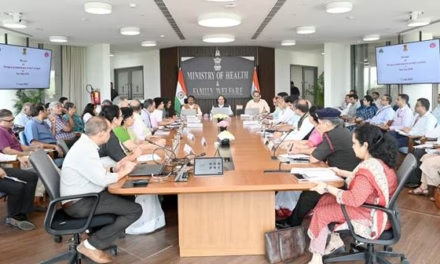
In a major bid to fortify its public healthcare infrastructure, the Maharashtra State Health Department has officially approved a large-scale recruitment drive to fill 5,000 vacant health-sector positions across the state. Timed alongside National Doctor’s Day observances, the initiative represents a targeted effort by the state government to close persistent staffing shortfalls and expand primary and secondary medical coverage in both rapidly growing urban centers and underserved rural districts. The rollout has commenced with the immediate appointment of approximately 1,400 doctors, with rolling recruitment phases slated to fill the remaining cadres, including nearly 1,900 Community Health Officers (CHOs).
Direct Action: Breaking Down the Numbers
The newly approved hiring push addresses long-standing vacancies that have strained the state’s public medical grid. By introducing 5,000 new personnel into the workforce, the state aims to improve patient-to-provider ratios and enhance healthcare accessibility.
The recruitment strategy is structured across distinct phases:
-
Immediate Medical Placements: Approximately 1,400 doctors have received immediate appointments to critical posts to alleviate frontline pressure.
-
Mid-Level Care Expansion: The next phase focuses heavily on community-level care, with approximately 1,900 Community Health Officer (CHO) positions scheduled to be filled in forthcoming recruitment rounds.
-
Supportive and Allied Cadres: The remaining vacancies will be distributed among secondary care staff, technical personnel, and rural outreach workers to ensure comprehensive facility operations.
State health officials have positioned this workforce expansion as both a structural necessity and a morale-building measure. Public statements accompanying the announcement emphasize that the influx of new personnel is critical to meeting the rising demand for primary-care services, easing the heavy workloads borne by existing medical staff, and executing targeted public health campaigns in remote areas.
Policy Context: Linking Administration to Action
This recruitment drive does not exist in a vacuum; it serves as the operational engine for several broad policy reforms launched by the Maharashtra government over the last year. In late 2025, the state cabinet approved the establishment of a specialized Urban Health Commissionerate to address the unique healthcare challenges of its dense metropolitan populations. Simultaneously, new administrative units and rural health outreach campaigns were introduced to bridge the widening care gap between metropolitan centers and rural villages.
Like many geographically vast Indian states, Maharashtra has historically grappled with discrepancies between sanctioned healthcare posts and actual on-the-ground staffing levels. The structural reforms introduced in recent months created the administrative framework, but the system lacked the human capital required to fully realize these initiatives. This 5,000-worker recruitment push provides the necessary personnel to operationalize these new units.
Expert Perspectives: The Dual Challenge of Hiring and Retention
Public health systems researchers and workforce specialists have generally welcomed the state’s aggressive hiring strategy. Expanding personnel at the primary-care and community levels is widely recognized as a proven mechanism for improving healthcare access, ensuring continuity of care, and boosting the delivery of vital preventive services.
However, external experts urge caution, noting that filling vacancies is only the first step in a highly complex process.
“A major recruitment drive is an excellent fiscal and administrative commitment, but hiring alone will not solve systemic access issues,” says a senior health systems researcher familiar with regional workforce dynamics. “Without robust post-deployment support, structured continuing medical education, and clear lines of supervision, newly recruited professionals often face early burnout, leading to high attrition rates.”
Comparative data from neighboring regions underscores these implementation challenges. For instance, reports from Haryana’s Health Department earlier this year highlighted over 5,000 vacancies persisting across various medical categories, demonstrating how difficult it is for state infrastructures to maintain full staffing levels.
To prevent similar issues, workforce specialists advise pairing Maharashtra’s recruitment drive with clear job descriptions, institutional support, and tangible incentive structures—such as adequate rural housing and career advancement preferences—to ensure that personnel remain in the underserved areas that need them most.
Public Health Implications: What This Means for Patients
If implemented successfully, the injection of 5,000 health workers will directly translate into tangible benefits for the general public and the broader health ecosystem:
1. Reduced Strain on General Facilities
By expanding primary-care networks and community-based clinics, routine cases can be managed effectively at the local level. This minimizes unnecessary patient travel and relieves the structural pressure on tertiary, higher-level district hospitals during seasonal disease surges or sudden outbreaks.
2. Shorter Wait Times and Better Ratios
An increase in active frontline providers naturally reduces the patient-to-provider ratio. For individuals visiting public clinics, this means shorter queues, longer consultation times, and more thorough clinical evaluations.
3. Enhanced Preventive Care Outreach
With 1,900 new Community Health Officers entering the field, communities can expect regular and resilient preventive health campaigns. This includes accelerated childhood immunization drives, widespread screenings for noncommunicable diseases (such as diabetes and hypertension), and enhanced maternal-newborn health monitoring.
Limitations and Potential Hurdles
While the announcement marks a pivotal policy shift, experienced health journalists and policy analysts emphasize that the ultimate success of the program depends on details omitted from initial press briefings.
Past administrative rollouts across various states show that generalized hiring announcements can inadvertently result in an urban concentration of new hires, where physicians and specialists find avenues to remain in metropolitan centers, leaving remote rural clinics vacant. Furthermore, discrepancies occasionally emerge between early media briefings and the final binding terms published in formal government gazette notifications.
Independent verification of the final recruitment notifications, exact vacancy locations, selection criteria, salary packages, and retention benefits will be vital in evaluating when these pen-and-paper plans will translate into actual clinical improvements on the ground.
Practical Takeaways for Readers
For Healthcare Jobseekers and Professionals
If you are a doctor, nurse, or community health professional looking to apply, closely monitor the official Maharashtra State Health Department website. Do not rely solely on early media summaries for application deadlines or eligibility criteria. Wait for the formal, legally binding advertisement and gazette notification to review the specific selection criteria, posting mandates, and contractual terms.
For Health-Conscious Citizens and Patients
This massive hiring plan signals a clear government commitment to improving your local healthcare access. However, institutional changes take time. Meaningful improvements in your local clinic’s wait times and service availability will depend entirely on how quickly these vacancies are filled and how effectively the new staff are supported by local municipalities.
Medical Disclaimer
Medical Disclaimer: This article is for informational purposes only and should not be considered medical advice. Always consult with qualified healthcare professionals before making any health-related decisions or changes to your treatment plan. The information presented here is based on current research and expert opinions, which may evolve as new evidence emerges.
References
- https://www.lokmattimes.com/health/doctors-day-maha-health-dept-approves-recruitment-of-5000-health-personnel-1/