 0
0
 0
0
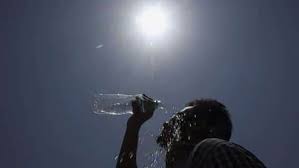
MADRID — A grueling late-June heatwave has left at least 1,028 people dead across Spain, public health officials announced this week, as the country grapples with a historic, record-shattering year of extreme weather. According to data released by Spain’s national meteorological agency, AEMET, the first six months of 2026 registered as the hottest first half of a year ever recorded in the nation’s history. The staggering mortality spike, tracked by the country’s specialized health monitoring systems, has prompted leading medical authorities to warn that extreme heat must be treated as a tier-one public health emergency rather than a mere weather inconvenience.
The sudden surge in fatalities—more than double the 407 heat-related deaths recorded in June 2025—coincided with a punishing atmospheric ridge that pinned scorching temperatures over the Iberian Peninsula. AEMET reported that average temperatures for June skyrocketed to $3.2^\circ\text{C}$ ($5.8^\circ\text{F}$) above historical norms, making it Spain’s second-warmest June on record. Nationally, the broader January-to-June period averaged $1.6^\circ\text{C}$ above long-term baselines, solidifying 2026’s unprecedented start.
A System-Wide Medical Emergency
At the peak of the heatwave, the sheer scope of the crisis became evident. Data from AEMET indicates that 35.7 million people—approximately 73% of Spain’s population—were exposed to health risks due to the ambient conditions. Alarmingly, 38% of the population faced what meteorologists classified as a “high-risk” thermal threshold.
“When heat reaches these extremes, it functions as a systemic stressor on the human body,” explains Dr. Helen Webber, a public health physician and researcher at the European Institute for Environmental Health, who was not involved in compiling the data. “We are not just talking about sunburns or heat exhaustion. Severe heat destabilizes vulnerable biological systems. It forces the heart to pump drastically faster to cool the skin, strains the kidneys through acute dehydration, and inflames respiratory pathways.”
According to the World Health Organization (WHO), Spain’s crisis mirrors a broader continental trend. The WHO Regional Office for Europe reported that more than 1,300 excess deaths occurred across Europe after June 21 alone, driven by the same sweeping heatwave.
Understanding the “Excess Death” Metric
To understand the scope of the tragedy, public health experts emphasize looking at how these numbers are gathered. The 1,028 fatalities were flagged by Spain’s daily mortality monitoring system, known as MoMo, operated by the Carlos III Health Institute.
MoMo does not rely on individual death certificates, which can take weeks to process. Instead, it utilizes statistical models to compare the actual number of daily deaths from all causes against historically expected baselines for that time of year, adjusting for temperature spikes.
[Historical Baseline of Expected Deaths]
                  vs.
[Actual Observed Deaths During Heat Wave] = Excess Mortality (1,028 Heat-Linked Deaths)
Because of this methodology, medical experts note that heat is rarely listed as the singular cause of death on a formal autopsy. Instead, extreme temperatures act as an accelerant. For instance, a person with pre-existing cardiovascular disease may suffer a fatal heart attack because their body could not handle the physical stress of staying cool. Public health agencies classify these as heat-linked deaths because, without the thermal stress, the fatal event likely would not have occurred.
Who is Most at Risk?
The epidemiological data reveals a predictable yet heartbreaking pattern. The mortality spike rose fastest among specific high-risk demographics:
-
Older Adults (Ages 65+): The body’s ability to regulate its internal temperature (thermoregulation) naturally declines with age. Older adults also sweat less efficiently.
-
Individuals with Chronic Illnesses: Those managing cardiovascular disease, diabetes, chronic obstructive pulmonary disease (COPD), or kidney issues are highly susceptible.
-
The Socially Isolated: Vulnerable individuals living alone often lack the cognitive awareness or physical mobility to adjust their environment during a crisis.
-
The Mechanically Unprotected: Households lacking functional air conditioning or adequate home insulation, particularly where nighttime temperatures fail to drop below $25^\circ\text{C}$ ($77^\circ\text{F}$).
Perspectives and Limitations
While the data from the Carlos III Health Institute paints a stark picture, epidemiologists urge a nuanced reading of early summer statistics. Because MoMo relies on mathematical modeling, the figures are initial estimates subject to refinement as final municipal data rolls in. Some medical groups point out that differing statistical models across various European institutions can result in slightly varying counts.
Furthermore, some critics argue that focusing solely on regional mortality statistics can obscure localized factors, such as urban heat islands—where concrete and asphalt trap heat in low-income neighborhoods—vs. cooler rural areas. Nevertheless, independent health analysts agree that all current indicators point to an undeniable and highly unusual summer mortality spike.
Dr. Hans Henri P. Kluge, the WHO Regional Director for Europe, stressed in a recent briefing that the recurring nature of these heatwaves means countries can no longer treat them as surprises. “The stark reality is that the vast majority of these heat-related deaths are entirely preventable,” Kluge stated, calling for robust, system-wide changes in urban design and community care.
Practical Lessons for Daily Health
For the general public, medical professionals emphasize that heat safety must be approached with the same gravity as an approaching blizzard or hurricane. Public health agencies recommend several immediate actions when extreme heat alerts are issued:
| Action Category | Recommended Health Practices |
| Hydration | Drink water continuously before you feel thirsty. Avoid heavy alcohol or excessive caffeine, which worsen dehydration. |
| Activity Modification | Postpone strenuous outdoor exercise or manual labor to early morning or late evening hours. |
| Environmental Cooling | Utilize shading, keep blinds closed during the day, and use air conditioning. If home cooling is unavailable, seek refuge in public libraries, malls, or cooling centers. |
| Community Vigilance | Establish a check-in protocol for elderly relatives, neighbors, or those living alone at least twice a day. |
Medical authorities advise keeping a watchful eye out for the warning signs of heat exhaustion—such as heavy sweating, a rapid pulse, dizziness, nausea, and headache. If these symptoms progress to confusion, fainting, or hot, dry skin, it may indicate a life-threatening heatstroke, requiring immediate emergency medical services.
The Public Health Outlook
Spain’s historic first half of 2026 stands as a clear warning for public health infrastructure worldwide. As summers grow longer and more intense, the strain on emergency medical response systems, hospital staff, and electrical grids is expected to intensify.
Health authorities are using the Spanish data to advocate for systemic adaptations, including enhanced localized heat warning thresholds, aggressive urban greening initiatives to lower city temperatures, and standardized workplace regulations to protect outdoor laborers. Ultimately, the data from June demonstrates that surviving extreme heat requires a shift in mindset: recognizing that a hotter climate is no longer just an environmental issue, but a profound and direct challenge to human survival.
References
- https://health.economictimes.indiatimes.com/news/industry/heatwave-linked-to-over-1000-deaths-as-spain-records-hottest-first-half-of-year/132112452?utm_source=latest_news&utm_medium=homepage
Medical Disclaimer: This article is for informational purposes only and should not be considered medical advice. Always consult with qualified healthcare professionals before making any health-related decisions or changes to your treatment plan. The information presented here is based on current research and expert opinions, which may evolve as new evidence emerges.