 0
0
 0
0
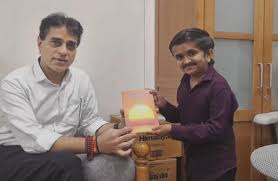
GANDHINAGAR — In a ceremony that blended individual triumph with an urgent public health plea, Gujarat Health Minister Praful Pansheriya on May 5, 2026, honored Dr. Ganesh Baraiya, a physician who stands just three feet tall. Dr. Baraiya, now a medical officer at Bhavnagar Civil Hospital, overcame both a rare physical condition and a landmark legal battle against the Medical Council of India (MCI) to earn his degree. The event served as a platform for the Minister to address the rising tide of student suicides in the state, urging the youth to view failure not as an end, but as a catalyst for resilience.
A Journey Defined by Grit
Dr. Baraiya’s path to the stethoscope was anything but traditional. Born with a form of dwarfism resulting in a 72% locomotor disability and weighing just 20 kilograms, he faced societal stigma and bullying from an early age. Despite these hurdles, he cleared the National Eligibility cum Entrance Test (NEET-UG) in 2018, a feat that should have secured his place in medical school.
However, the MCI initially barred his admission, citing his physical stature as a safety risk for patients and an impediment to performing emergency procedures. This rejection reflected long-standing, rigid physical criteria within the Indian medical establishment that often equate physical “perfection” with clinical competence.
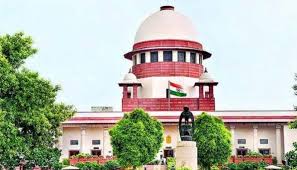
Supported by his family and his school principal, Dr. Dalpat Kataria—who assisted with legal expenses—Dr. Baraiya took his fight to the courts. While the Gujarat High Court initially sided with the regulators, the Supreme Court of India intervened in 2019. The apex court ruled that height alone could not be a disqualifying factor for a medical career, marking a historic victory for disability rights in education.
“I was rejected by an institution like the MCI, but without becoming discouraged, I fought my case up to the Supreme Court,” Dr. Baraiya reflected during the ceremony. “My journey proves that determination can bridge any physical gap.”
Accommodating Excellence in the Clinic
Dr. Baraiya’s success at Bhavnagar Medical College was facilitated by “reasonable accommodations”—a legal and ethical standard that allows individuals with disabilities to perform tasks using modified tools or environments. During his MBBS training, professors provided front-row seating and customized step stools for anatomy dissections and clinical examinations.
Today, as a practicing medical officer at Sir Takhtsinhji Civil Hospital, Dr. Baraiya performs the same duties as his peers. His colleagues note that while he may use a stool to reach a high examination table, his diagnostic skills and patient rapport are unaffected by his height.
“Physical disabilities do not preclude medical excellence,” says Dr. Ravi Patel, a pediatric endocrinologist at AIIMS Ahmedabad, who was not involved in Dr. Baraiya’s case. “In modern medicine, cognitive judgment, empathy, and the ability to work within a multidisciplinary team are far more critical than sheer physical stature. With minor adaptations, doctors with disabilities contribute immensely to the diversity and depth of our healthcare workforce.”
The Public Health Crisis: Resilience vs. Despair
The timing of Dr. Baraiya’s felicitation is significant. Minister Pansheriya used the occasion to address a “pressing public health concern”: the alarming rise in student suicides linked to academic pressure.
National Crime Records Bureau (NCRB) data paints a somber picture. In 2022 alone, Gujarat reported over 800 student suicides. Between 2017 and 2021, the state lost 3,002 students to suicide, many of whom were aged 15 to 25.
“Do not be afraid of any failure in life; become a fighter like Dr. Ganesh,” Pansheriya told the assembled students. By positioning Dr. Baraiya as a “guiding light,” the ministry hopes to shift the cultural narrative from one of “success at all costs” to one of “persistence through adversity.”
Experts suggest that sharing narratives like Dr. Baraiya’s can have a tangible impact on public health by:
-
Reducing Stigma: Humanizing disability and mental health struggles in high-pressure environments.
-
Encouraging Help-Seeking: Showing that even those at the top of their fields face and overcome massive setbacks.
-
Fostering Inclusive Policy: Encouraging schools to implement counseling mandates and better support systems.
Addressing the Skeptics: Safety and Systemic Change
Despite the celebratory tone of the event, the case has prompted debate within the medical community. Some critics argue that in high-stakes environments, such as trauma surgery or rapid-response emergencies, extreme physical limitations could pose challenges.
However, the prevailing legal and ethical consensus—backed by the Rights of Persons with Disabilities Act, 2016—emphasizes that candidates should be evaluated on their individual ability to perform with accommodations, rather than being excluded by blanket rules.
Furthermore, mental health advocates point out that while individual stories of triumph are inspiring, they are not a substitute for systemic reform. “Individual grit is commendable, but it shouldn’t be the only thing standing between a student and despair,” notes the reportage on Gujarat’s rising academic pressures. The state’s recent focus on holistic well-being, including yoga initiatives and student mental health programs, aims to address these root causes.
A New Standard for Inclusive Healthcare
Dr. Ganesh Baraiya’s journey from a rejected applicant to a celebrated physician serves as a case study in how institutional barriers can be dismantled. His presence in the hospital ward challenges patients and peers alike to reconsider what a “capable” doctor looks like.
As Gujarat continues to grapple with the mental health of its youth, the “fighter” from Bhavnagar stands as a reminder that the most significant limitations are often not physical, but systemic—and that those, too, can be overcome.
Medical Disclaimer: This article is for informational purposes only and should not be considered medical advice. Always consult with qualified healthcare professionals before making any health-related decisions or changes to your treatment plan. The information presented here is based on current research and expert opinions, which may evolve as new evidence emerges.
References
-
TEN News. “Do not fear failure: Gujarat Health Minister honours doctor who persevered through setbacks.” May 5, 2026.