 0
0
 0
0
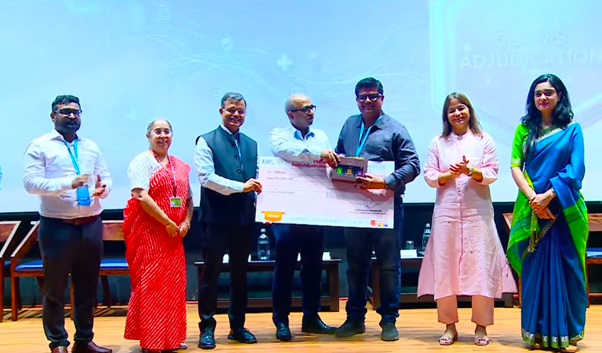
BENGALURU – In a significant move toward digitizing and securing India’s public health infrastructure, the National Health Authority (NHA) has concluded the AB PM-JAY Auto-Adjudication Hackathon Showcase 2026. Held in collaboration with the IndiaAI Mission and the Indian Institute of Science (IISc), the event highlights a future where Artificial Intelligence (AI) handles the heavy lifting of medical insurance claims, promising faster payouts for hospitals and enhanced fraud detection for taxpayers.
The two-day showcase, which wrapped up on May 9, 2026, saw over 3,500 innovators compete to solve the administrative bottlenecks of the Ayushman Bharat Pradhan Mantri Jan Arogya Yojana (AB PM-JAY)—the world’s largest government-funded health insurance scheme. By integrating AI into “claims adjudication”—the process of deciding whether a claim is valid and how much should be paid—the NHA aims to eliminate manual delays and human error.
The AI Breakthrough: Speeding Up Patient Care
One of the primary frustrations in modern healthcare is the “waiting game” for insurance approvals. Under the problem statement of Clinical Document Classification, Team Nirnaya took the top prize of ₹5 lakh. Their AI-enabled solution automates the interpretation of complex medical documents to ensure they comply with Standard Treatment Guidelines (STGs).
For the average patient, this means that the paperwork confirming their surgery or treatment meets medical standards could be processed in seconds rather than days. This automation is designed to:
-
Reduce Administrative Burden: Minimizing the manual review of thousands of pages of medical history.
-
Ensure Accuracy: Using AI to cross-reference doctor notes with established clinical protocols.
-
Faster Reimbursements: Allowing hospitals to maintain better cash flow, which indirectly improves the quality of care available to patients.
Catching the “Deepfakes”: Protecting Public Funds
As digital claims become the norm, the risk of sophisticated fraud—including forged documents and AI-generated “deepfake” medical images—has risen. The hackathon addressed this head-on. Team Sopa Claims emerged as the winner in the Document Forgery and Deepfake Detection category.
“In the era of AI, we face emerging risks such as identity misuse and fraudulent claims practices,” noted experts during a high-level panel discussion at the event. The new tools developed by these teams act as a digital “lie detector,” scanning for microscopic inconsistencies in digital files that the human eye would miss. This ensures that the billions of rupees allocated for the underprivileged under AB PM-JAY reach genuine patients rather than bad actors.
Beyond the Lab: Scalable Health Solutions
The event wasn’t just an academic exercise. The NHA emphasized that the winning solutions, including those from Team BiltIQ AI (focused on automated radiology report correlation), are being considered for real-world deployment within the national ecosystem.
Key Problem Areas Addressed:
| Category | Winning Team | Focus Area |
| Clinical Compliance | Team Nirnaya | Automating document checks against treatment guidelines. |
| Radiology AI | Team BiltIQ AI | Correlating X-ray/MRI images with written medical reports. |
| Fraud Prevention | Team Sopa Claims | Detecting deepfakes and forged medical documents. |
Building a Unified Digital Health Roadmap
Parallel to the competition, the NHA hosted strategic roundtables with large private hospitals to accelerate the adoption of the Ayushman Bharat Digital Mission (ABDM). The goal is a “patient-centric” ecosystem where a citizen’s health records—under the ABHA (Ayushman Bharat Health Account)—can be shared securely between doctors and insurers with the patient’s explicit consent.
This interoperability is expected to transform the “care continuum.” For instance, if a patient is referred from a rural clinic to a city hospital, their digital records and previous AI-vetted claims follow them instantly, preventing redundant tests and ensuring the new doctors have a complete medical history.
Challenges and The “Human” Element
Despite the optimism, officials and tech leaders acknowledged significant hurdles. Discussions focused on the need for indigenous datasets—AI models trained specifically on the Indian population’s health data—to ensure clinical accuracy. Furthermore, experts stressed that while AI can assist in adjudication, “clinical oversight” remains paramount. AI is a tool to support doctors and administrators, not replace the final human judgment in complex medical cases.
As the NHA moves toward scaling these AI-driven solutions, the focus remains on building a “secure, transparent, and scalable” system that can handle the massive volume of data generated by over 500 million potential beneficiaries.
Medical Disclaimer
This article is for informational purposes only and should not be considered medical advice. Always consult with qualified healthcare professionals before making any health-related decisions or changes to your treatment plan. The information presented here is based on current research and expert opinions, which may evolve as new evidence emerges.
References
- https://www.pib.gov.in/PressReleasePage.aspx?PRID=2259366®=3&lang=1