 0
0
 0
0
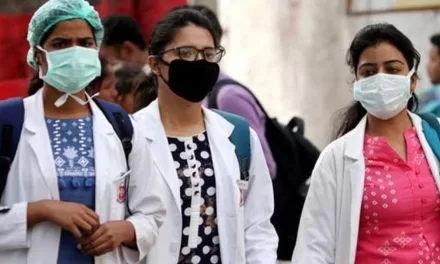
GORAKHPUR, INDIA — In a rare intersection of personal endurance and regulatory complexity, a student at Baba Raghav Das (BRD) Medical College has finally cleared his final-year MBBS examinations, 17 years after first entering the lecture halls. The student, a member of the 2009 enrollment batch, successfully passed his remaining papers in April 2026, ending a nearly two-decade journey that has ignited a national conversation regarding the efficiency, ethics, and evolution of medical training in India.
Now set to begin a mandatory one-year rotating internship in the college’s anesthesia department, the student represents a “legacy case” that highlights a significant grey area in India’s transition from the Medical Council of India (MCI) to the National Medical Commission (NMC).
The Long Road to Graduation
The standard MBBS curriculum in India is designed as a rigorous five-and-a-half-year program: four and a half years of academic study followed by one year of clinical internship. For most, the journey ends by age 24. For this student, a cycle of repeated failures, administrative backlogs, and “back-paper” (supplementary) attempts stretched that timeline three times beyond its intended length.
The breakthrough came following a 2025 High Court petition filed by a fellow student from the 2010 batch. The petition, which addressed years of pending results and administrative inertia, compelled BRD Medical College and its affiliated university to audit and clear a backlog of old examination records. This judicial intervention opened a “final window” for students from the 1998, 2009, and 2010 batches to sit for supplementary exams.
A Regulatory “Grey Zone”
This case has surfaced during a period of strict reform. Under current National Medical Commission (NMC) guidelines, an MBBS degree must be completed within nine years from the date of admission. Students who fail to qualify within this window are typically disqualified from the profession.
However, because this student enrolled in 2009—well before the nine-year “ceiling” was established—he occupied a regulatory vacuum.
-
The MCI Era: Previous rules were often more lenient regarding the number of attempts and the total duration allowed for completion.
-
The Transition Gap: Legal experts note that applying new time-caps retrospectively is difficult, leaving “legacy students” in a state of professional limbo until specific court orders or university concessions are made.
The Question of Clinical Competence
While the student’s perseverance is being hailed by some as a triumph of the human spirit, the medical community remains divided. The primary concern is the relevance of knowledge.
“The medical landscape of 2009 is vastly different from that of 2026,” says a senior professor of medicine at a leading North Indian institution. “Clinical guidelines, pharmaceutical protocols, and diagnostic technologies have undergone a revolution. Clearing a theory paper based on old patterns is one thing; demonstrating contemporary clinical safety is another.”
To address these concerns, BRD Medical College officials have stated that the student’s internship will serve as a critical “quality gate.” The head of the anesthesia department confirmed that the intern will undergo rigorous, supervised training to ensure they are up to speed with modern clinical protocols before they are granted full registration to practice independently.
Institutional Accountability and Student Support
Data from an investigative report in late 2025 revealed that this student was not an isolated case. At BRD alone, several students remained stuck in their first or second years for over a decade. This has led experts to question the “remedial systems” currently in place.
Medical education researchers argue that when a student spends 11 years in a single academic phase, it signals a systemic failure in:
-
Early Intervention: Identifying struggling students in year one.
-
Mental Health Support: Addressing the psychological toll of chronic academic failure.
-
Remedial Teaching: Providing specialized instruction to help students overcome specific academic hurdles.
“We must ask if we are doing these students a favor by letting them persist indefinitely without intervention,” noted a health-policy analyst from a Delhi-based think tank. “It raises questions about the efficient use of taxpayer-funded infrastructure and the emotional well-being of the students themselves.”
Public Health Implications
India currently faces a significant physician shortage, particularly in rural sectors. The World Health Organization (WHO) recommends a 1:1,000 doctor-to-population ratio—a target India is still striving to stabilize. While every new graduate adds to the workforce, the “17-year degree” model is viewed by many as an unsustainable drain on resources.
From a patient-safety perspective, the delay places an immense burden on the internship year. The internship must now bridge a 17-year gap in practical knowledge, ensuring the graduate can provide care that meets 2026 standards of safety and efficacy.
What This Means for Students and Families
The BRD case serves as a cautionary tale for families navigating the high-pressure world of Indian medical education. Edu-lawyers and counselors suggest the following for those in similar “legacy” situations:
-
Clarify Status: Determine if your enrollment falls under the old MCI rules or the new NMC nine-year cap.
-
Document Everything: Maintain a meticulous record of all exam attempts, fee payments, and correspondence.
-
Seek Refreshers: If returning after a long hiatus, engage in NMC-recognized foundation modules to update clinical knowledge.
Conclusion: A Catalyst for Change
The 17-year journey of the 2009-batch student is likely to be one of the last of its kind. As the NMC tightens its grip on academic timelines, the era of the “decades-long” medical degree is closing. While the student’s tenacity has finally earned him a seat in the internship ward, his case stands as a powerful reminder that medical education requires a balance between individual opportunity and the uncompromising need for timely, relevant, and safe medical training.
Medical Disclaimer: This article is for informational purposes only and should not be considered medical advice. Always consult with qualified healthcare professionals before making any health-related decisions or changes to your treatment plan. The information presented here is based on current research and expert opinions, which may evolve as new evidence emerges.
References
- https://medicaldialogues.in/news/education/medical-colleges/17-years-later-brd-medical-college-mbbs-student-clears-final-year-exams-170411