 0
0
 0
0
Kolkata, India — June 16, 2026
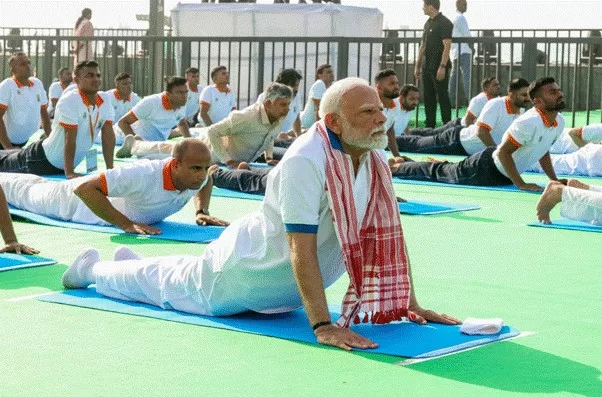
Prime Minister Narendra Modi will lead India’s national celebrations for the 12th International Day of Yoga (IDY) on Sunday, June 21, 2026, at Kolkata’s historic Red Road (Brigade Parade Ground). The mass gathering is expected to draw approximately 40,000 participants, ranging from top government dignitaries to local citizens. This year’s global theme, “Yoga for Healthy Ageing,” spotlights the traditional practice not merely as physical exercise, but as an evidence-based strategy to improve the physical health, mental well-being, and overall quality of life for an increasingly aging global population.
A Global Movement with Deep Roots
The upcoming celebration in Kolkata represents the focal point of a massive, synchronized global event. Coordinated by the Indian Council for Cultural Relations (ICCR), more than 210 Indian Missions worldwide will host Yoga Day events across nearly 2,500 international locations.
This widespread international adoption stems from a December 2014 United Nations General Assembly resolution. Initially proposed by Prime Minister Modi during his UN address in September 2014, the initiative received an endorsement from a record 175 member states. Over the last twelve years, what began as a diplomatic proposal has evolved into a standardized global health movement.
Addressing the Reality of Global Ageing
The 2026 theme addresses an urgent shift in global demographics. On June 15, during a curtain-raiser event in New Delhi, Prataprao Jadhav, the Union Minister of State (Independent Charge) for the Ministry of AYUSH, emphasized the public health philosophy driving this year’s focus:
“Across the world, people are living longer than ever before. The real challenge is to ensure that these added years are healthy, active, independent, and meaningful. Yoga offers a time-tested and holistic pathway towards healthy ageing.”
This initiative aligns directly with the World Health Organization (WHO) framework for healthy ageing, which focuses on developing and maintaining the functional abilities necessary for well-being in older age. With noncommunicable diseases (NCDs)—such as cardiovascular issues, diabetes, and chronic respiratory illnesses—accounting for 41 million deaths globally each year, health authorities are increasingly looking toward low-cost, scalable lifestyle modifications to reduce the burden on public healthcare systems.
The Scientific Evidence: Evaluating the Clinical Data
To evaluate the validity of yoga as a therapeutic intervention for older adults, clinical researchers have subjected the practice to rigorous scientific scrutiny. The consensus among recent peer-reviewed studies suggests that regular, modified yoga practice offers tangible physical and metabolic benefits for aging populations.
A primary piece of evidence is a Harvard-led systematic review of 33 randomized controlled trials (RCTs) involving 2,384 participants aged 65 or older, published in the Annals of Internal Medicine. The researchers discovered that older adults who practiced yoga showed significant improvements in walking speed and the ability to rise from a chair. Both metrics are critical clinical markers used by physicians to measure frailty; improvements in these areas are directly linked to preserved independence and greater longevity.
Furthermore, a comprehensive 2025 umbrella review published in the PMC network evaluated data regarding chronic disease management. The statistical breakdowns across multiple medical outcomes highlight its measurable impacts:
Clinical Markers of Yoga Interventions in Older Populations
| Health Outcome | Statistical Evidence (Standardized Mean Difference / Mean Difference) | Clinical Source Context |
| Balance Improvement | SMD = 0.81 (95% CI: 0.48 to 1.14, p < .001) | Meta-analysis of 15 studies (Adults 60+) |
| Muscle Strength | SMD = 0.49 (95% CI: 0.18 to 0.79, p = .002) | Meta-analysis of 15 studies (Adults 60+) |
| Depressive Symptoms | SMD = -0.50 (95% CI: 0.09 to 0.91, p = .01) | Reduction observed in community-dwelling seniors |
| Systolic Blood Pressure | MD = −6.49 mmHg (95% CI: −8.94 to −4.04) | Data pooled from 34 RCTs (Hypertension patients) |
| Fasting Blood Glucose | MD = −25.56 mg/dL (95% CI: −39.60 to −11.53) | Data pooled from 44 RCTs (Type 2 Diabetes patients) |
The review highlighted “stable and strong certainty of evidence” regarding yoga’s capacity to help regulate blood pressure and postprandial (post-meal) blood sugar levels. This makes it a viable supportive option for managing type 2 diabetes and hypertension.
Expert Perspectives and Study Limitations
Medical authorities emphasize that while the clinical data is highly encouraging, yoga must be viewed objectively within the broader landscape of physical therapy.
Dr. Poonam Khetrapal Singh, former WHO Regional Director for South-East Asia, has long advocated for the integration of the practice into community health frameworks. “Yoga can help a person lose weight, relieve stress, improve immunity, and build and maintain physical fitness and mental and emotional well-being,” she noted, highlighting that it requires virtually no financial investment and can be practiced anywhere.
However, independent medical researchers urge caution against viewing yoga as a singular medical miracle. Clinicians who reviewed the Harvard frailty study noted that the analyzed trials did not explicitly isolate yoga against other low-impact regimens. Analysts point out that the data did not show a clear clinical superiority of yoga over standard cardiovascular exercise or Tai Chi for certain mobility outcomes. Therefore, it cannot yet be definitively stated that yoga provides unique physiological advantages over other forms of gentle movement.
Additionally, a historical review of literature published in PMC points out that while modern trials are well-designed, a substantial portion of early yoga research relied on small sample sizes that lacked rigorous control groups. Meta-analyses still face challenges with study heterogeneity—meaning that different trials use vastly different styles of yoga, making it difficult to establish a single, universally standardized medical dosage or style for patients.
Practical Applications for Daily Health
For health-conscious individuals looking to incorporate these findings into their daily lives, medical consensus suggests a targeted approach based on specific health goals:
-
For Adults Aged 65 and Older: Prioritize gentle movements that emphasize lower-body strength and balance. Improving these components directly minimizes the risk of accidental falls, which remain a primary cause of injury and loss of independence among seniors. The WHO notes that yoga can count toward the recommended 150 minutes of moderate-intensity weekly aerobic activity.
-
For Individuals with Hypertension or Diabetes: Yoga should never replace prescribed pharmaceutical therapies. Instead, it should serve as an adjunct, or complementary tool, alongside standard medications to help lower resting blood pressure and stabilize metabolic tracking.
-
For Mental Health Maintenance: Regular breathing exercises (pranayama) and mindfulness-based yoga styles show the most consistent evidence for reducing baseline levels of cortisol (the body’s primary stress hormone), helping to alleviate mild to moderate symptoms of anxiety and depression.
Local Preparation and Environmental Awareness
In Kolkata, preparations are moving at a rapid pace. The Kolkata Municipal Corporation (KMC), operating under joint management from the central government and the Government of West Bengal, has tailored its local events around the banner of “Yoga for Healthy Living.” Smita Pandey, KMC Administrator and Commissioner, issued a public appeal calling for widespread participation to improve community-wide health metrics.
The main session on June 21 will run from 6:30 AM to 7:45 AM, preceded by community lead-up programs. These include a “Doud se Dhyan” (Run to Meditation) event on June 19 and a cultural “Vande Yogam” showcase on June 20.
Parallel to the main gathering, the event organizers are using the international platform to draw attention to ecological health. The Ministry of AYUSH is currently conducting the “Gangotri to Gangasagar: Ganga Tat Yoga Yatra” from June 13 to 20. This campaign charts a path through key riverside cities including Haridwar, Varanasi, and Patna, explicitly connecting personal physical wellness with river conservation and environmental stewardship.
As the countdown to June 21 concludes, the dual focus on scientific validation and public accessibility underscores yoga’s transition from an ancient philosophy into a recognized asset for global preventative medicine.
Medical Disclaimer
This article is for informational purposes only and should not be considered medical advice. Always consult with qualified healthcare professionals before making any health-related decisions or changes to your treatment plan. The information presented here is based on current research and expert opinions, which may evolve as new evidence emerges.
References
- https://www.ndtv.com/health/pm-modi-to-lead-international-day-of-yoga-2026-celebrations-in-kolkata-11638877/amp/1