 0
0
 0
0
BUNIA, Democratic Republic of Congo — June 15, 2026
One month after Ebola cases were officially confirmed in the eastern Democratic Republic of Congo (DRC), global health responders admit they remain blindfolded to the true scale of the crisis. According to ground officials and international aid workers, severe data gaps, inadequate testing capacities, and volatile community resistance are profoundly crippling containment efforts. What is unfolding in the provinces of Ituri, North Kivu, and South Kivu has quickly devolved into one of the most operationally complex and dangerous Ebola responses in recent medical history.
The outbreak, fueled by the rare Bundibugyo strain of the virus, has logged 782 confirmed cases and 181 deaths as of June 14, 2026. These numbers already cement it as the third deadliest Ebola outbreak on record. However, the international medical charity Médecins Sans Frontières (MSF)—or Doctors Without Borders—has issued an explicit warning that official government statistics likely represent only a fraction of the actual toll.
Unknown Territory: The Data Crisis
“No one knows the true scale or exactly where the disease is spreading in DRC,” stated Kate White, emergency medical coordinator for MSF, which operates frontline treatment facilities across the impacted eastern region.
In a formal statement, MSF identified diagnostic testing as “one of the most significant weaknesses in the response.” Many communities, heavily isolated by ongoing armed conflict, lack access to basic testing kits entirely. For regions that do have them, treatment centers face crippling logistical delays in receiving laboratory confirmations.
The crisis is exacerbated by an internal data-sharing failure. A senior Congolese public health official, speaking anonymously as they were not authorized to brief the press, explained that health agencies are struggling to harmonize three disparate streams of information:
-
Laboratory confirmations
-
Hospital and isolation center registries
-
Field epidemiological surveillance teams
This administrative disconnect distorts data in both directions. In some instances, cases are overcounted when displaced individuals cross health zones and undergo multiple tests. Conversely, an untold number of people continue to die in remote villages without ever being logged by public health authorities. Ground intelligence suggests the virus began circulating silently in February, roughly two months before the Ministry of Health officially declared the outbreak on May 15.
This discrepancy between local realities and centralized reports is stark. In Ituri’s Nizi health zone, United Nations refugee agency reports indicated two deaths at a displacement camp in late May. However, the head doctor of the Nizi zone, Dr. Jean-Claude Lonzama, revealed his local records tracked 19 positive cases and 17 deaths. Meanwhile, the national situation report published during the same period recorded a lone case and a single death for the entire area.
A Strain Bereft of Vaccines and Therapeutics
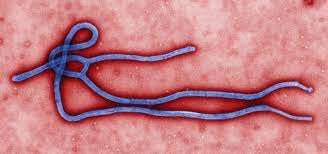
The Bundibugyo virus variant presents an exceptional clinical hurdle. Unlike the more common Zaire strain—which devastated West Africa a decade ago and now possesses regulatory-approved vaccines and monoclonal antibody treatments—the Bundibugyo variant currently has no approved countermeasures.
According to the World Health Organization (WHO), “there are currently no approved therapeutics or vaccines specific to the Bundibugyo virus.” This gap in the global medical arsenal prompted the WHO to classify the outbreak as a Public Health Emergency of International Concern (PHEIC). While the designation stops short of declaring a full global pandemic, it marks the highest level of international alarm under international law, designed to aggressively mobilize global funding and resources.
Historical vs. Current Bundibugyo Strain Fatality Rates
------------------------------------------------------
2007 Outbreak (Uganda):      ███████████████ 32%
2012 Outbreak (DRC):         ██████████████████████████ 55%
2026 Outbreak (Current DRC): ███████████ 23%
Dr. Rheaaseeorthy, who leads WHO’s research and development initiatives, delivered a sobering timeline regarding pharmaceutical intervention: the most promising candidate vaccine specifically tailored for Bundibugyo will not be logistically accessible for another six to nine months. “Currently, no doses are available for clinical trials,” he noted.
While three experimental therapeutics show promise—aldesivir alongside the monoclonal antibodies MBP and Maivim—none have received regulatory approval or undergone widespread deployment for Bundibugyo virus disease.
Escalating Community Resistance and Violence
The biological threats of the virus are compounded by a deteriorating security environment. On Sunday, domestic security forces were forced to fire warning shots and tear gas at a funeral service in Mongbwalu after an angry crowd attempted to violently seize the body of a suspected Ebola victim from health workers.
The WHO warned that these security incidents threaten to unravel regional containment entirely. Just two weeks prior, an attack on a safe burial team in South Kivu forced health workers to flee and abandon a highly infectious corpse before standard biohazard containment protocols could be completed. Furthermore, institutional mistrust has caused patients to flee isolation units; at least four individuals absconded from medical centers during the first week of June alone.
“Diagnostics, surveillance, access to care, and community engagement must be urgently strengthened. We urge authorities and all stakeholders to do everything possible to facilitate the movement of health workers and supplies.”
— Frederic Lai Manantsoa, MSF Emergency Coordinator in the DRC
To mitigate widespread skepticism across Ituri province, Dieudonne Mwamba, Director General of Congo’s National Public Health Institute, stated that safe burial teams are shifting strategies. Moving forward, teams will actively integrate family members into burial preparations to restore fractured community trust.
Treatment Capacity Stretched Beyond Breaking Point
On Monday, the WHO confirmed that local hospital isolation and treatment infrastructure is dangerously inadequate. Currently, only 14 operational treatment centers exist across nine health zones. However, epidemiological mapping reveals the virus has already breached 31 of the region’s 90 health zones.
In areas like Nizi, the total absence of a dedicated isolation facility means infected patients are simply returning to their dense communities, compounding transmission before dying at home.
Despite these failures, the current recorded case-fatality rate sits at 23%, with 40 documented recoveries. While lower than the historical Bundibugyo fatality rates seen in Uganda in 2007 (32%) and the DRC in 2012 (55%), experts warn this figure may be artificially suppressed due to the massive volumes of unreported community deaths.
Ebola Outbreak Chronology & Impact
====================================================================
Outbreak Period   Region                  Strain        Deaths
--------------------------------------------------------------------
2014–2016         West Africa             Zaire         11,000+
2018–2020         Dem. Rep. of Congo      Zaire         2,280
2026 (Current)    Eastern DRC / Uganda    Bundibugyo    181 (Unconfirmed)
====================================================================
“Never before has an Ebola outbreak recorded so many cases so soon after its declaration,” stated Alan Gonzalez, MSF’s deputy director of operations. The crisis is further worsened by regional geography: nearly one million people remain internally displaced due to years of civil conflict in eastern Congo, and the virus has already crossed international borders, with two cases confirmed in neighboring Uganda.
What This Means for Global Health Literacy
For the international community and health-conscious readers, this crisis highlights a persistent vulnerability in global health security: the dangerous lag in creating countermeasures for rare pathogen variants.
For individuals traveling through or residing in Central Africa, standard infection prevention protocols remain critical. The virus is not airborne; transmission requires direct contact with the bodily fluids (such as blood, saliva, or sweat) of an infected person or contaminated surfaces. Rigorous hand hygiene and immediate isolation upon the onset of a sudden fever, severe headache, or muscle pain are vital to breaking the chain of transmission.
Medical Disclaimer
This article is for informational purposes only and should not be considered medical advice. Always consult with qualified healthcare professionals before making any health-related decisions or changes to your treatment plan. The information presented here is based on current research and expert opinions, which may evolve as new evidence emerges.
References
- https://www.reuters.com/business/healthcare-pharmaceuticals/true-scale-congo-ebola-outbreak-still-unknown-one-month-responders-say-2026-06-15/