 0
0
 0
0
SECUNDA, Mpumalanga — In what global health leaders are calling a monumental shift in the fight against the world’s largest HIV epidemic, South Africa has officially launched the national rollout of a groundbreaking, long-acting preventive injection. The World Health Organization (WHO) has highly commended the nation for transitioning from policy to real-world implementation, providing an innovative shield against new infections that could reshape public health for a generation.
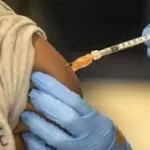
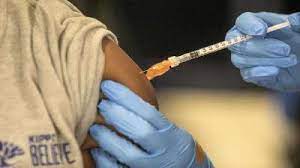
The rollout, which officially commenced in Secunda, Mpumalanga province, centers on lenacapavir—a twice-yearly injectable form of pre-exposure prophylaxis (PrEP). For a country where millions live with the virus and tens of thousands are newly infected each year, the introduction of an invisible, highly effective prevention option that is administered just twice a year represents a profound technological leap forward over daily preventative pills.
Near-Perfect Efficacy: The Clinical Evidence
The clinical data supporting lenacapavir has generated unprecedented optimism among researchers. Taken as a subcutaneous injection in the abdomen every six months, the drug operates as an HIV-1 capsid inhibitor—a class of medications that disrupts the protein shell protecting the virus’s genetic material, effectively blocking it from replicating and establishing an infection.
The drug’s efficacy was established through two massive international clinical trials:
-
The PURPOSE 1 Trial: Evaluating cisgender women in sub-Saharan Africa, the trial concluded with 100% efficacy. Out of thousands of participants receiving the injection, zero contracted HIV.
-
The PURPOSE 2 Trial: Enrolling 3,267 participants globally—including cisgender men, transgender men, transgender women, and gender non-binary individuals—the trial recorded a 96% reduction in HIV risk compared to the standard background rate. Ultimately, 99.9% of participants on lenacapavir remained HIV-negative, with only two incident cases occurring across the entire lenacapavir cohort of 2,179 individuals.
Published in The New England Journal of Medicine, these results proved lenacapavir’s definitive statistical superiority over standard once-daily oral PrEP (such as Truvada). In both studies, researchers noted that the primary limitation of daily pills was not their biological capability, but human adherence. Over time, participants frequently missed daily doses—a real-world hurdle that a twice-yearly injection completely bypasses.
Expert Perspectives: Moving Beyond Daily Adherence
Addressing a stadium crowd at the official launch, South African President Cyril Ramaphosa hailed the rollout as a “turning point” for the nation.
Medical professionals not directly tied to the manufacturer have echoed this enthusiasm, noting how the drug solves structural public health barriers. Professor Linda-Gail Bekker, CEO of the Desmond Tutu Health Foundation and a principal investigator for the PURPOSE 1 South African trial sites, noted that the data received a standing ovation from the international scientific community when first unveiled.
“Terrific news that twice-yearly injectable lenacapavir for PrEP is highly effective at preventing HIV among diverse populations of people who can benefit from this protection,” Bekker stated.
Similarly, Dr. Boitumelo Semete-Makokotlela, chief executive of the South African Health Products Regulatory Authority (SAHPRA)—which approved the drug—categorized the injectable as “the most effective HIV prevention measure thus far.”
Dr. Tedros Adhanom Ghebreyesus, WHO Director-General, emphasized the speed of South Africa’s mobilization in a video address: “South Africa is among the first countries to move from policy to implementation – receiving early supply, updating its essential medicines list, and preparing health systems for rollout. Today marks an important milestone in South Africa’s long fight against HIV.”
Contextualizing South Africa’s Unprecedented Burden
To understand why this rollout is being met with such urgency, one must look at the sheer scale of the South African epidemic.
South African HIV Epidemic Profile (Current Estimates)
│
├── Total Population Living with HIV: 7.6M - 8.0M people
├── Annual New Infections: 170,000 (Down 67% from year 2000 peak)
├── Adult Prevalence Rate: 17.3%
└── Gender Disparity: Females account for 59% of all new infections
While the country has made immense strides—securing a 66% decrease in AIDS-related deaths since 2010 through the massive expansion of antiretroviral treatment—the volume of new infections remains an active crisis. Adolescent girls and young women bear a disproportionate burden, frequently facing systemic inequalities, gender-based violence, and social stigmas that make negotiating condom use or maintaining a visible, daily oral PrEP regimen intensely difficult.
Rollout Strategy and Targeted Demographics
Backed by a $29 million grant from the Global Fund, the South African government has secured an initial supply sufficient to protect 456,000 individuals for one year. The first wave of 37,920 doses is currently deploying across 360 health facilities spanning 23 high-incidence districts in six provinces.
Rather than a blanket distribution, health authorities are utilizing a people-centered, high-impact approach. The program is prioritizing groups who stand to benefit most from a discreet, long-acting option:
-
Adolescent girls and young women
-
Pregnant and breastfeeding individuals
-
Female sex workers
-
Men who have sex with men (MSM)
-
People who use drugs
Because the injection is hidden under the skin and only required every six months, it eliminates the daily text reminders, pill bottles, and accidental disclosures that generate intense social stigma in vulnerable communities.
Barriers to Access: The Cost Gap and Supply Limits
Despite the euphoria surrounding the launch, public health experts emphasize that substantial hurdles remain before lenacapavir can completely eradicate the epidemic.
The most prominent barrier is economic. In high-income countries like the United States, lenacapavir carries a commercial price tag of roughly $28,000 per person annually. While South Africa’s initial rollout is fully subsidized by international aid, the current supply covers fewer than half a million people—a fraction of the millions who could benefit. Health Minister Aaron Motsoaledi explicitly tempered expectations, warning that initial distribution must remain strictly rationed due to these volume caps.
Furthermore, broader global access hinges heavily on a series of historic voluntary licensing agreements. Organizations including Unitaid, the Clinton Health Access Initiative (CHAI), Wits RHI, and the Gates Foundation have partnered with generic manufacturers—such as Dr. Reddy’s Laboratories and Hetero Drugs—to produce the drug for low- and middle-income countries.
These agreements are projected to drive the price down to just $40 per person annually. However, mass distribution of these ultra-low-cost generics is not expected to hit the market until 2027. Until then, countries must rely on limited donations and direct allocations. Public health infrastructure has also been strained by recent international funding volatility, including shifts in U.S. aid allocations via PEPFAR.
Practical Implementation and Limitations
For individuals considering this option, it is vital to understand what lenacapavir is—and what it is not.
Medical authorities emphasize that lenacapavir is not a vaccine. It does not permanently teach the immune system to fight off the virus; rather, it is a long-acting chemical shield. If an individual misses their six-month injection window, the protective barrier naturally degrades, leaving them vulnerable to infection once more.
Additionally, lenacapavir is highly specific: it is approved for adults and adolescents who weigh at least 35 kg, are confirmed HIV-negative prior to starting, and are at risk of exposure. Crucially, the drug provides absolutely zero protection against other sexually transmitted infections (STIs), such as syphilis, gonorrhea, or chlamydia. Health professionals maintain that the injection should ideally be paired with comprehensive sexual health practices, including regular barrier methods like condoms.
Looking Ahead: What This Means for Global Health
South Africa’s aggressive rollout places it among a select group of only nine African nations pioneering the deployment of long-acting injectables. If successful, this rollout will serve as a definitive blueprint for the rest of the developing world when generic supplies scale up in 2027.
For the average consumer and healthcare provider, the message is clear: the toolkit for preventing HIV has permanently expanded. By moving away from the rigid demands of daily pill adherence, public health systems finally possess a discrete, biological countermeasure capable of meeting vulnerable populations precisely where they are.
Reference Section
- https://www.who.int/news/item/15-06-2026-who-applauds-south-africa-s-leadership-in-advancing-hiv-prevention-through-lenacapavir-rollout
Medical Disclaimer: This article is for informational purposes only and should not be considered medical advice. Always consult with qualified healthcare professionals before making any health-related decisions or changes to your treatment plan. The information presented here is based on current research and expert opinions, which may evolve as new evidence emerges.