 0
0
 0
0
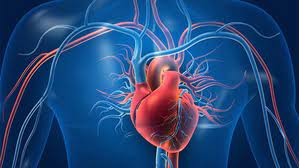
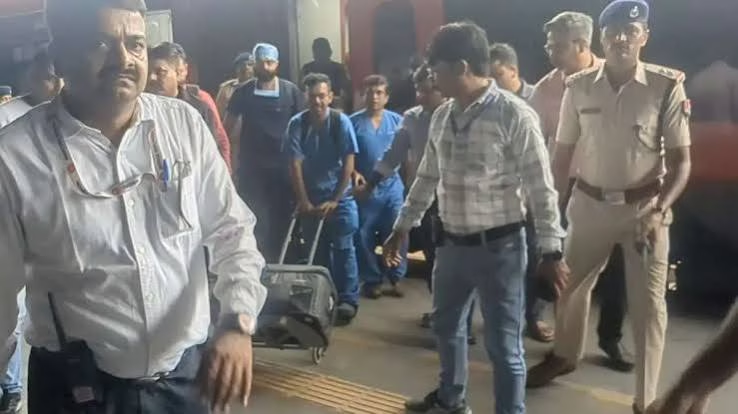
AHMEDABAD, India — In the high-stakes world of transplant medicine, where every passing minute degrades a viable organ, an unexpected hero has emerged on the tracks of Western India. On Sunday, August 2, 2026, the high-speed Vande Bharat Express was transformed into a “rail ambulance” for the second time in just three days, carrying a live donor heart across Gujarat to save the life of a critical patient in Ahmedabad.
The operation began at Smt. Jayaben Modi Multi-Speciality Hospital in Ankleshwar, where medical teams successfully retrieved the donor organ. To facilitate the transfer, railway authorities authorized an unscheduled, special halt for the Vande Bharat Express at Ankleshwar station. Coordinated with surgical precision, local police and the Railway Protection Force (RPF) established synchronized “green corridors”—dedicated traffic-free lanes—to move the heart from the hospital to the train cabin, and subsequently from Ahmedabad’s Kalupur station to the U.N. Mehta Institute of Cardiology and Research Centre.
The successful delivery allowed surgeons to perform the hospital’s 78th heart transplant. Remarkably, this mission closely followed a maiden rail transfer on Friday, July 31, when the same high-speed train delivered a donor heart from Surat to Ahmedabad amidst torrential rains.
While green corridors on municipal roadways and charter flights are established norms in organ transport, using scheduled high-speed rail lines represents a novel logistics model in Indian healthcare—one that experts say could bridge critical gaps in regional organ allocation.
       ORGAN RETRIEVAL                  HIGH-SPEED TRANSIT                TRANSPLANT SURGERY
  [ Jayaben Modi Hospital ]     ➔    [ Vande Bharat Express ]     ➔    [ U.N. Mehta Institute ]
   Ankleshwar Green Corridor          En-Route Cold Storage             Ahmedabad Green Corridor
The Biological Clock: Why Ischemic Time Is Everything
To understand the magnitude of this logistical feat, one must understand the stringent physiology of cardiac preservation. Once a heart is removed from a brain-dead donor and flushed with cold preservation solution, a clock begins ticking.
This period—known as cold ischemic time—refers to the duration the organ remains without blood supply, oxygen, and nutrients. Among solid organ transplants, the heart is uniquely vulnerable to ischemic injury.
-
Target Ischemic Window: Medical consensus recommends keeping donor heart cold ischemic time under 4 hours.
-
The Clinical Risk: Extending ischemia beyond 4 to 5 hours significantly elevates the risk of primary graft dysfunction (PGD)—a severe, potentially fatal complication where the newly implanted heart fails to pump adequately despite no obvious technical errors during surgery.
-
Comparative Resilience: While kidneys can remain viable on cold preservation for up to 24 hours and livers for up to 12 hours, cardiac tissue rapidly suffers irreversible cellular damage if not revascularized quickly.
Dr. Rajesh Patel, a clinical cardiologist not involved in the operations, emphasizes the stakes: “A heart does not afford us the luxury of delays. When moving an organ across 200 kilometers in monsoon conditions or dense metropolitan traffic, road travel carries unpredictable risks. High-speed rail running on dedicated infrastructure provides a level of temporal certainty that can directly impact post-operative survival.”
The Anatomy of an Emergency Transport
Every organ transfer relies on a seamless chain of custody, where a break at any link can render the organ unviable. The Gujarat operations demonstrated an integrated response across multiple public and private sectors:
-
Donor Identification & Consent: Medical teams identify a brain-dead donor, and counselors secure family consent. In the Surat case, the donation ultimately benefited four separate individuals through multi-organ retrieval.
-
Surgical Retrieval & Cold Storage: Surgeons harvest the heart and pack it using static cold storage—triple-bagged in sterile solution and placed in an ice-filled cooler maintained at 2°C to 4°C.
-
The First Green Corridor: Police clear traffic from the donor hospital to the railway platform, ensuring the transport vehicle maintains high speeds without stopping at intersections.
-
Rail Transit: The organ container is boarded onto the train accompanied by a medical technician or surgical coordinator who monitors temperature stability.
-
The Final Sprint: Upon arrival at the destination station, RPF personnel escort the team to a waiting ambulance, which traverses a second municipal green corridor directly into the operating theater.
Public Health Implications and Structural Challenges
The success of back-to-back train transfers highlights a potential blueprint for low-middle-income countries and rapidly urbanizing regions. In many dense metropolitan areas, severe traffic congestion and unpredictable monsoon weather routinely ground medical helicopters or stall ambulances. High-speed rail offers a weather-resilient, cost-effective alternative to air transport for medium-distance journeys (150–300 km).
India faces a severe shortage of donor organs relative to its disease burden. Improving logistical efficiency ensures that when a family consents to organ donation, the gift of life is not lost to transit delays.
However, medical logistics experts urge caution against viewing rail transport as a universal replacement for standard modalities.
| Transport Mode | Advantages | Limitations | Optimal Use Case |
| Ambulance / Road Corridor | Point-to-point delivery; no mid-transit transfers | Vulnerable to traffic delays and weather | Short distances (<50 km) within same city |
| High-Speed Rail | High speed; immune to road traffic; weather-resistant | Dependent on fixed schedules and track availability | Medium distances (100–300 km) with train access |
| Air (Helicopter/Charter) | Direct, high-speed over long distances | High cost; severe weather grounding risks | Inter-state transfers (>300 km) |
“Rail transport requires a highly specific set of alignment factors,” notes a senior health systems analyst. “You need a donor hospital near a rail station, a recipient center near a destination station, and a train schedule that aligns precisely with surgical retrieval times. It is a valuable tool in the toolkit, but not a replacement for traditional emergency air and road networks.”
Furthermore, clinical outcomes depend on detailed donor-recipient matching, recipient baseline health, and intraoperative variables—data that were not fully detailed in initial reports. Long-term post-transplant monitoring remains necessary to evaluate the full clinical efficacy of these specific cases.
What This Means for Patients and Families
For the public, these successful operations illustrate how public infrastructure and medical science can merge to save lives. The overarching message for health-conscious citizens and prospective donors centers on three key insights:
-
Time is Life: Organ logistics systems are evolving rapidly to ensure donated organs reach recipients faster and safer than ever before.
-
The Power of Consent: A single organ donor can save or improve up to eight lives, transforming tragedy into hope for multiple families awaiting transplants.
-
Systemic Synergy: Emergency organ care relies as much on civic infrastructure—train drivers, traffic police, and platform staff—as it does on surgical expertise.
As regional rail networks continue to expand globally, Gujarat’s successful experiments may prompt health authorities elsewhere to formally integrate rail corridors into national organ transport protocols.
References
-
The Print / Press Trust of India (PTI): Vande Bharat Transports Second Donor Heart to Ahmedabad in Three Days. Published August 2, 2026.
Medical Disclaimer: This article is for informational purposes only and should not be considered medical advice. Always consult with qualified healthcare professionals before making any health-related decisions or changes to your treatment plan. The information presented here is based on current research and expert opinions, which may evolve as new evidence emerges.