 0
0
 0
0
WASHINGTON D.C. — In a landmark shift for federal environmental policy, the U.S. Environmental Protection Agency (EPA) and the Department of Health and Human Services (HHS) announced on April 1–2, 2026, that they will begin the formal process of monitoring microplastics and pharmaceutical residues in the nation’s drinking water. By including these substances on the draft sixth Contaminant Candidate List (CCL 6), federal agencies are officially acknowledging that these “emerging contaminants” require systematic tracking and research to assess their long-term impact on human health. This move signals the first step toward potential federal regulation under the Safe Drinking Water Act, marking a pivotal moment in how the United States safeguards its most essential resource.
What the New Move Entails
The inclusion of microplastics and pharmaceuticals on the CCL 6—a rolling inventory of substances currently unregulated but known or anticipated to occur in public water systems—is more than a clerical update. It represents a commitment to scientific discovery.
While this step does not immediately impose legal limits on how much of these substances can exist in your tap water, it mandates that water utilities across the country begin testing and reporting their presence. The EPA now has a five-year window to evaluate the data collected and decide whether to implement formal regulations. This process also unlocks dedicated federal funding for large-scale studies to determine the precise concentrations of these materials in our pipes and their biological effects on the human body.
Why Microplastics and Medicines are Now Flagged
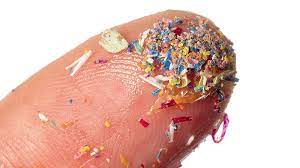
For years, scientists have warned of “invisible” pollutants. Microplastics—defined as plastic fragments less than 5 millimeters in size (roughly the size of a pencil eraser or smaller)—originate from the breakdown of consumer waste, synthetic clothing fibers, and even tire wear. Recent peer-reviewed research has consistently found these particles in both bottled and tap water, yet the health implications of ingesting them over a lifetime remain a scientific “black box.”
Pharmaceutical residues present a different challenge. When individuals take medication, their bodies do not always fully absorb the compounds. These chemicals, along with improperly flushed medications, enter the wastewater system. Traditional treatment plants are often not equipped to filter out complex drug molecules, leading to trace amounts of:
-
Antibiotics
-
Hormonal therapies (such as birth control)
-
Antidepressants
-
Heart medications
“Adding microplastics and pharmaceuticals to the CCL is not a statement that tap water is unsafe today, but that we need to stop flying blind,” noted a senior EPA environmental health scientist during a recent briefing. “Monitoring is the first scientific step toward clarity.”
How This Affects Public Health Practice
For healthcare providers, this federal shift suggests that “environmental dosing” may soon become a factor in clinical discussions. The EPA has already released preliminary human-health benchmarks for 374 different pharmaceuticals. These are non-binding guidelines that help states determine if detected levels of a drug in the water supply pose a potential risk.
Some researchers are particularly concerned about endocrine disruption—where trace hormones in water might interfere with the body’s natural signaling—or subtle changes to the gut microbiome caused by chronic, low-level antibiotic exposure.
“This is about prevention, not panic,” explains Dr. Elena Torres, an environmental epidemiologist not involved in the EPA’s decision. “We are finally acknowledging these substances are in our environment. Our job now is to see if they move the needle on chronic disease risk over several decades.”
What This Means for Everyday Consumers
The most important takeaway for the public is that your tap water has not changed overnight; rather, the “watchdogs” are upgrading their equipment. For the average household, this means:
-
Increased Transparency: You may soon see “microplastics” or specific drug names appear on your annual local water quality reports.
-
Technological Evolution: As the EPA’s $144 million STOMP program (supported by HHS) rolls out, utilities may begin adopting advanced filtration methods like activated carbon or reverse osmosis to meet future standards.
Limitations and Scientific Uncertainties
Despite the progress, significant hurdles remain. Measuring microplastics is notoriously difficult because there is no universal “standard” for how to count them. A particle the size of a grain of sand is treated differently than a microscopic fiber, making it hard to set one-size-fits-all safety thresholds.
Furthermore, some water-industry groups express concern that new regulations could place a heavy financial burden on small, rural water systems. They argue that the focus should remain on “source control”—stopping plastics and drugs from entering the water in the first place—rather than expensive “end-of-pipe” filtration.
Advocacy groups, including the “Make America Healthy Again” (MAHA) coalition, have lauded the move but argue it is long overdue. As Dr. Torres puts it, “This is a step, not a finish line. We still need large-scale human studies to link these levels to actual health outcomes like cancer or metabolic disease.”
Practical Implications for Your Health
While the government gathers more data, you can take proactive steps to protect your household:
-
Check Local Reports: Review your annual Consumer Confidence Report (CCR) provided by your water utility to stay informed about local detections.
-
Filter Wisely: If you are concerned, look for point-of-use water filters (like pitchers or under-sink systems) that are NSF/ANSI-certified to reduce specific chemicals and sub-micron particles.
-
Dispose of Meds Safely: Never flush unused pills. Use local “drug take-back” kiosks at pharmacies or police stations to keep chemicals out of the water cycle.
-
Reduce Plastic Use: Using fewer single-use plastics reduces the “plastic load” that eventually breaks down into the microplastics found in our rivers.
The current consensus from public health agencies remains firm: routine tap water consumption is still considered safe under current standards. This new initiative is a forward-looking strategy to ensure it stays that way for generations to come.
Reference Section
-
Reuters & US News & World Report. (April 2, 2026). Coverage of federal agency monitoring for microplastics.
Medical Disclaimer: This article is for informational purposes only and should not be considered medical advice. Always consult with qualified healthcare professionals before making any health-related decisions or changes to your treatment plan. The information presented here is based on current research and expert opinions, which may evolve as new evidence emerges.