 0
0
 0
0
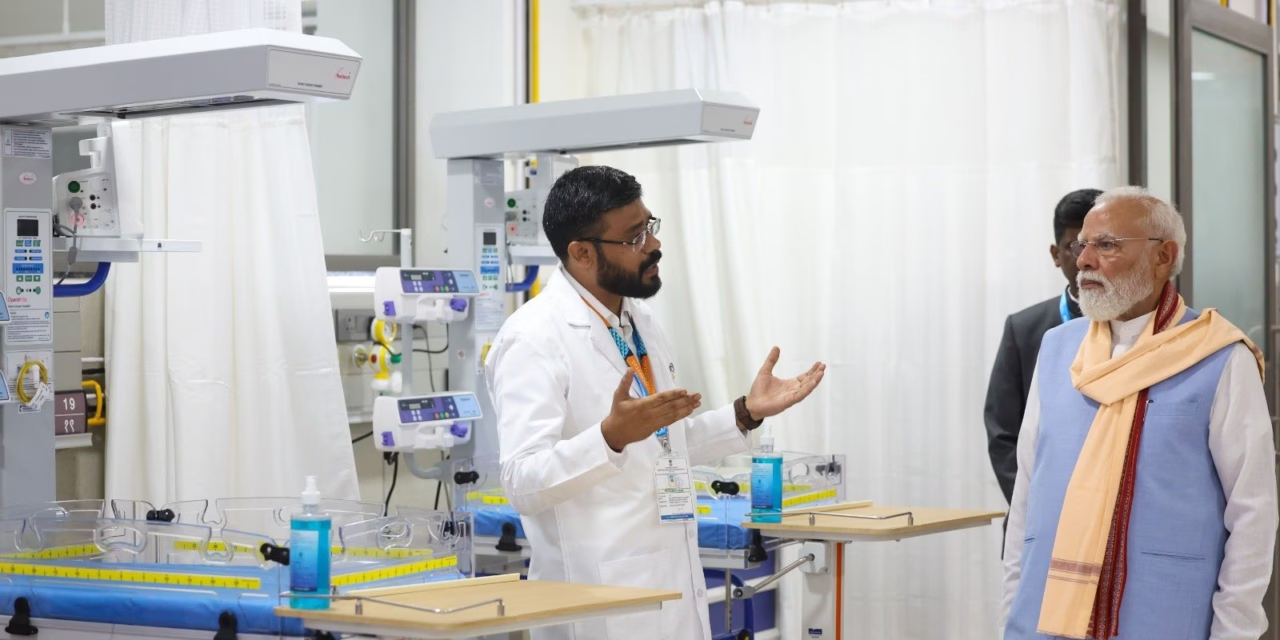
DAMAN — In a major move to upgrade regional healthcare infrastructure, Prime Minister Narendra Modi officially inaugurated the newly constructed NAMO Hospital in the Union Territory of Daman on Friday, June 5, 2026. The advanced multi-specialty district facility is designed to address longstanding gaps in specialized medical access for local residents and surrounding rural communities.
The hospital launch was part of a larger ₹2,970 crore development package for the region. It highlights a continuing national policy focus on shifting tertiary-level healthcare away from overcrowded metropolitan hubs and directly into historically underserved administrative territories.
Expanding Access and Daily Operational Capacity
Prior to this development, residents of Dadra and Nagar Haveli and Daman and Diu frequently had to travel long distances to major cities in neighboring states—such as Surat or Mumbai—to receive specialized medical diagnostics and advanced treatments.
According to data released by the Prime Minister’s Office (PMO), the newly constructed facility is architecturally and operationally scaled to manage a heavy clinical load:
-
Outpatient Volume: Engineered to accommodate approximately 1,500 Outpatient Department (OPD) patients per day.
-
Financial Scope: Developed alongside the New Terminal Building of NAMO Airport at a combined infrastructure cost of ₹1,340 crore.
-
Clinical Breadth: Features specialized wings spanning general medicine, intensive care, pediatrics, and emergency services.
Following the physical ribbon-cutting ceremony, the Prime Minister emphasized the administration’s broader structural goals via a public statement on social media.
“In line with our efforts towards providing quality health treatment to the people, the Namo Hospital at Daman was inaugurated,” Prime Minister Modi posted on X. “It has modern facilities and will go a long way in addressing the healthcare needs of the Union Territory and surrounding areas.”
Expert Perspectives on Decentralizing Care
Public health experts not directly involved in the construction projects view the decentralization of advanced diagnostic tools as an essential evolutionary step for regional healthcare systems.
“When you place a modern, high-capacity district hospital within a Union Territory, you radically compress the time-to-treatment window for acute clinical events like severe trauma, strokes, or myocardial infarctions (heart attacks),” explains Dr. Arisudan Mishra, an independent health systems policy analyst. “For a regional population, having a local facility capable of processing 1,500 outpatients a day means chronic conditions like diabetes, hypertension, and respiratory diseases can be caught and managed early, long before they escalate into medical emergencies.”
Beyond individual patient outcomes, medical educators emphasize how localized infrastructure builds long-term institutional capacity.
“Expanding high-tier hospital facilities within regional districts works hand-in-hand with medical education initiatives,” notes Dr. R.C. Goyal, a veteran medical educator and institutional administrator. “By building modern clinical spaces, you establish proper environments for training doctors and nursing staff directly within the community they are meant to serve. This naturally helps resolve regional health workforce shortages over time.”
Public Health Implications and Daily Decisions
For local families, the opening of NAMO Hospital alters how daily health choices are made. In public health budgeting, out-of-pocket spending on transport and accommodation often serves as a massive barrier to timely medical intervention.
By localizing specialized care, the facility directly lowers the overall financial burden on families. Health-conscious consumers in Daman and surrounding areas can transition from reactive, emergency-only medical visits toward proactive, preventive care. The availability of 24/7 emergency care and specialized maternal and child health services inside the district minimizes the risk of treatment delays.
Implementation Challenges and Systemic Balance
While the physical infrastructure marks a significant milestone, health policy analysts note that the ultimate success of the facility depends on ongoing operational factors. Building a modern hospital structure is an initial phase; maintaining highly calibrated healthcare delivery requires consistent resource management.
| Critical Operational Factors | Associated Systemic Requirements |
| Workforce Retention | Securing full-time super-specialists willing to reside in smaller regional territories long-term. |
| Supply Chain Continuity | Ensuring a steady supply of specialized pharmaceuticals and advanced laboratory consumables. |
| Primary Care Integration | Linking the district hospital efficiently with local primary health centers for smoother patient referrals. |
Independent observers point out that if regional recruitment lags, initial wait times for specialized departments could spike despite the massive physical capacity. Balanced health system development requires making sure that these new secondary and tertiary beds remain strongly supported by an active, well-funded primary care network at the grassroots level.
References
Government & Official Announcements
-
Press Information Bureau (PIB) Delhi: Official release issued by the Prime Minister’s Office, “Prime Minister inaugurates Namo Hospital at Daman,” Posted June 5, 2026. [Release ID: 2269628].
Medical Disclaimer
Medical Disclaimer: This article is for informational purposes only and should not be considered medical advice. Always consult with qualified healthcare professionals before making any health-related decisions or changes to your treatment plan. The information presented here is based on current research and expert opinions, which may evolve as new evidence emerges.