 0
0
 0
0
HYDERABAD, India — June 5, 2026 — Public health authorities in Hyderabad have isolated a second Sudanese national at Gandhi Hospital following the detection of a fever during routine airport screenings. The defensive measure marks a significant escalation in local surveillance protocols as state and federal officials remain on high alert for incoming travelers arriving from regions in Africa experiencing active Ebola outbreaks. The patient, a 23-year-old student arriving at Rajiv Gandhi International Airport (RGIA) to pursue higher studies at a private university, was immediately flagged by automated thermal imaging and transferred via a specialized ambulance to Telangana’s designated infectious disease nodal center.
State medical experts emphasize that the isolation is a strict precautionary measure under standard international containment protocols rather than an indication of a confirmed infection.
Screening at the Gateway: Key Findings and Case Details
The 23-year-old traveler recorded a body temperature of 100°F ($37.8^\circ\text{C}$) during his mandatory health clearance at RGIA. Because his travel originated in Sudan—a region currently subjected to heightened global health monitoring—border health officials immediately routed him away from the general public.
According to clinical updates from the isolation ward at Gandhi Hospital, the student remains in stable condition and is not exhibiting the severe gastrointestinal symptoms traditionally associated with advanced Ebola virus disease, such as vomiting, severe abdominal pain, or diarrhea.
“The referral was made because of the passenger’s travel history and the mild fever detected during screening, not because of any confirmed signs of Ebola infection,” stated Dr. Vamshee Krishna, the Nodal Officer for Ebola Preparedness at Gandhi Hospital. “Samples of the patient’s blood, urine, and nasopharyngeal swabs have been dispatched to government-designated reference laboratories for diagnostic confirmation. Reports are expected within 48 hours.”
Under the Ministry of Health and Family Welfare’s active protocol, if the laboratory panels return negative for the virus, the student will be discharged from the facility but directed to complete a strict 21-day monitored home quarantine. Should the tests return positive, specialized critical care protocols and aggressive contact-tracing containment measures will initiate immediately.
Two Cases in Days Heighten Airport Vigilance
The student represents the second individual from Sudan to be placed into isolation in Hyderabad within a matter of days. The first case involved a 35-year-old passenger who arrived in the state for a scheduled knee surgery. That individual’s travel itinerary included transit lines through Uganda and South Sudan—two geographic zones under active international public health surveillance.
[RGIA Airport Terminal] ──► [Thermal Screening Flags Fever] ──► [Nodal Center Isolation]
                                                                        │
       ┌────────────────────────────────────────────────────────────────┴────────────────────────────────┐
       ▼                                                                                                 ▼
[If Test is Positive]                                                                           [If Test is Negative]
• Immediate specialized treatment protocol                                                      • Discharge from hospital facility
• Aggressive containment & contact tracing                                                      • Mandatory 21-day monitored home quarantine
While both patients are clinically stable and showing no signs of systemic illness, the cluster has prompted a broader defensive response. The Airport Public Health Officer (APHO) confirmed that manifest tracking has successfully identified fellow passengers from the incoming flights. These individuals have been contacted by state epidemiologists and instructed to self-monitor for symptoms, while the secondary patient’s immediate close contact has also been transferred to Gandhi Hospital for precautionary clinical screening.
Global Context: Outbreaks in the DRC and Uganda
The defensive posture maintained by Indian health authorities mirrors rising international anxieties surrounding viral hemorrhagic fevers in East and Central Africa. On May 17, 2026, the World Health Organization (WHO) determined that the ongoing Ebola outbreak in the Democratic Republic of Congo (DRC) constitutes a Public Health Emergency of International Concern (PHEIC).
Data from the WHO indicates that as of May 27, 2026, the DRC has logged 906 suspected cases and 223 deaths tied to a severe outbreak of the Bundibugyo virus disease species, with transmission heavily concentrated in the provinces of Ituri, North Kivu, and South Kivu.
Concurrently, neighboring Uganda has been battling a separate outbreak of Sudan virus disease (SVD). By March 2025, Uganda recorded 14 cases resulting in 4 fatalities—representing an initial case fatality rate of 28.6%. Public health historical data notes that historical fatality rates for the Sudan virus strain typically fluctuate between 41% and 100% depending on the speed of supportive medical intervention.
Infrastructure and Preparedness in Telangana
Telangana’s healthcare apparatus has spent months reinforcing its defensive infrastructure. Gandhi Hospital features a dedicated, highly secure containment wing built specifically for viral hemorrhagic pathogens. The unit comprises 10 isolated negative-pressure rooms equipped with attached bathrooms and an additional 15 quarantine beds designed to prevent any cross-contamination.
| Facility Component | Capacity / Status | Purpose |
| Isolation Units | 10 Rooms | Dedicated individual space with attached bathrooms |
| Quarantine Beds | 15 Beds | Secondary monitoring space for suspected exposures |
| Airport Medical Teams | 24/7 Rotations | Continuous physical inspection & thermal scanning |
| Emergency Logistics | “108” Ambulances | Dedicated state-run transport units stationed at RGIA |
Telangana Health Minister C. Damodar Rajanarasimha confirmed earlier this week that a total of 58 travelers from Ebola-affected countries have arrived in Hyderabad recently. All 58 individuals were systematically placed under Category-I surveillance and directed into a 21-day home isolation framework. To date, none have developed symptoms.
Pathogen Profile: Clinical Features and Transmission
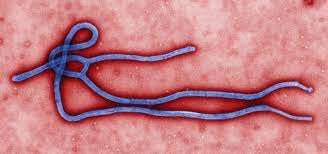
Ebola disease is notorious for a clinical presentation that mimics everyday seasonal illnesses during its earliest phases. Symptoms typically manifest abruptly between 8 to 10 days following exposure (though the full incubation window spans from 2 to 21 days).
-
Early Stage: Characterized by sudden fever, muscle aches (myalgia), chills, and profound fatigue.
-
Advanced Stage: Approximately 4 to 5 days later, the disease progresses to severe gastrointestinal distress, including profuse watery diarrhea, nausea, and vomiting.
-
Hemorrhagic Manifestations: Contrary to popular belief, visible bleeding is not universal. Unexplained hemorrhaging—occurring as bruising (ecchymosis), tiny purple skin spots (petechiae), or blood in vomit and stool—develops later in roughly 40% of patients.
Public health professionals emphasize that Ebola viruses are not airborne. Transmission requires direct contact with the bodily fluids (blood, saliva, sweat, or vomit) of an infected person who is actively showing symptoms, or through contact with surfaces contaminated by those fluids. An asymptomatic individual carrying the virus cannot transmit it to others.
Expert Perspectives and Public Risk Assessment
Union Health Minister J.P. Nadda addressed the nation to reinforce that India has not recorded a single confirmed case of Ebola within its borders.
“No case of Ebola Virus has been reported in India so far,” Nadda stated. “Our central agencies have directed all state border entry points to ensure that surveillance, isolation systems, and testing arrangements remain completely optimized. India has zero historical or current cases of the Bundibugyo strain.”
Independent epidemiological experts agree that the domestic threat to the general public remains exceptionally remote. The European Centre for Disease Prevention and Control (ECDC) recently evaluated the transmission risk to non-outbreak nations as “very low,” citing the biological reality that transmission demands close, physical contact with fluids from an obviously ill patient.
Furthermore, because both isolated individuals in Hyderabad lack advanced gastrointestinal symptoms or active bleeding, their biological ability to shed viral particles—even if they were to test positive—is significantly suppressed.
Limitations in Treatment and Diagnostics
A key complicating factor for global health teams is the current limitation in specific medical countermeasures. While highly effective vaccines exist for the common Zaire ebolavirus strain, there are currently no licensed vaccines or targeted antiviral treatments available for the Bundibugyo virus strain driving the DRC emergency.
For the Sudan virus strain impacting Uganda, candidate vaccines are undergoing deployment via rapid clinical trial protocols. Because specific cures are unavailable, medical care relies entirely on aggressive supportive therapy—intravenous hydration, electrolyte stabilization, and oxygen support—which has been shown to drop mortality rates substantially when initiated early.
Real-World Guidance for Readers and Travelers
For citizens and the broader community in Hyderabad, health leaders emphasize that current events are a sign of a functional safety net rather than a cause for alarm.
For international travelers arriving from or transiting through Central and East Africa, rigorous health screening screening protocols will remain active at all major entry ports. Asymptomatic travelers arriving from high-risk countries should anticipate mandatory 21-day home isolation orders coupled with check-ins from local health surveillance teams.
The general public is advised to maintain normal routines. However, individuals who have recently traveled to regions experiencing outbreaks or who have had contact with someone returning from those areas should immediately seek medical evaluation if they experience a sudden onset of fever, severe headache, muscle pain, or unexplained bruising. When seeking care, notifying the healthcare facility of travel history prior to arrival is vital to protecting staff and maintaining public biosecurity.
Medical Disclaimer
This article is for informational purposes only and should not be considered medical advice. Always consult with qualified healthcare professionals before making any health-related decisions or changes to your treatment plan. The information presented here is based on current research and expert opinions, which may evolve as new evidence emerges.
References
- https://www.ndtv.com/health/another-sudanese-national-isolated-at-hyderabad-hospital-over-suspected-ebola-symptoms-11594811