 0
0
 0
0
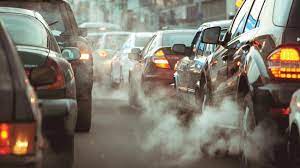
MUMBAI — A comprehensive, nationwide study analyzing environmental data across 640 districts in India has revealed a troubling connection between chronic air pollution and the severity of the COVID-19 pandemic. The research, published in the peer-reviewed journal Applied Spatial Analysis and Policy, indicates that long-term exposure to fine particulate matter ($PM_{2.5}$) and nitrogen dioxide ($NO_2$) was significantly associated with higher infection and death rates during the pandemic’s primary waves from April 2020 to November 2022. Conversely, the study found that districts with higher vegetation cover appeared to fare better, suggesting that urban green spaces may offer a protective health buffer.
Densely Populated, Densely Polluted: The Geography of Risk
Conducted by researchers at the International Institute for Population Sciences (IIPS) in Deonar, Mumbai, the study fills a critical gap in regional public health data. While international studies have frequently linked poor air quality to severe respiratory virus outcomes, this represents the first large-scale, national analysis examining the intersection of pollution, greenness, and COVID-19 outcomes across the diverse geography of India.
The researchers compiled district-level health data alongside long-term satellite and ground-based pollution measurements, temperature, rainfall, and socioeconomic variables. The data revealed that the burden was not distributed equally. Industrialized and heavily urbanized regions—most notably Mumbai and parts of the surrounding state of Maharashtra—bore the brunt of these combined environmental pressures.
“Mumbai stood out prominently in the data as a high-incidence area,” noted Dr. Suryakant Yadav, lead author of the study. The paper linked this elevated burden to a compounding dynamic of dense populations, high baseline pollution levels, and comparatively lower green cover.
Critically, the relationship fluctuated across state lines. The impact varied substantially from district to district, demonstrating that local factors like regional geography, transportation patterns, population density, and baseline health-system capacity fundamentally shape how an airborne pathogen spreads and ravages a community.
How Dirty Air Weakens the Body’s Defenses
To understand why air pollution correlates with worse viral outcomes, it helps to look at how these pollutants interact with human tissue. Fine particulate matter, or $PM_{2.5}$, consists of microscopic particles smaller than 2.5 micrometers in diameter—roughly thirty times thinner than a human hair. Because of their minuscule size, these particles bypass the body’s natural filtration systems in the nose and throat, penetrating deep into the lungs’ alveoli (the tiny air sacs where oxygen exchange occurs) and even crossing into the bloodstream.
Global health authorities, including the World Health Organization (WHO), have long warned that chronic exposure to $PM_{2.5}$ and $NO_2$ causes persistent, low-grade inflammation in the respiratory tract. This continuous irritation damages the epithelial cells lining the lungs and impairs alveolar macrophages—the immune system’s frontline defender cells responsible for clearing out viruses and bacteria. When a novel respiratory pathogen like SARS-CoV-2 attacks an already compromised respiratory system, the body’s ability to fight off the infection is markedly reduced.
This biological mechanism is strongly supported by global data. A comprehensive 2023 systematic review and meta-analysis published in Science of the Total Environment pooled data from 18 international studies to quantify this risk.
+-------------------------------------------------------------+
| Global Risk Increase per 10 μg/m³ Rise in Long-Term PM2.5    |
+-------------------------------------------------------------+
| COVID-19 Infection Odds:      +66%                          |
| Severe Illness/Hospital:     +127%                          |
+-------------------------------------------------------------+
* Source: Sheppard et al., Science of the Total Environment (2023)
While the international review noted that the evidence linking pollution directly to increased mortality was slightly weaker and prone to reporting biases, the evidence tying dirty air to infection susceptibility and severe clinical illness remains robust.
The Natural Buffer: Why Tree Canopy Matters
One of the most notable takeaways from the IIPS study is the positive health signal associated with environmental greenness. To evaluate this, researchers utilized the Normalized Difference Vegetation Index (NDVI), a satellite-based measure that calculates the density of living green plants and tree canopies.
Districts exhibiting higher NDVI values generally recorded lower case fatality rates during the pandemic. Public health experts view this as validation of the “One Health” framework—an approach recognizing that human health is inextricably linked to the health of our shared environment and urban design.
Trees and urban green spaces protect communities in three distinct ways:
-
Natural Filtration: Vegetation acts as a physical barrier, settling out and absorbing a fraction of ambient particulate matter.
-
Microclimate Regulation: Urban trees mitigate the “heat island effect,” reducing thermal stress which can otherwise exacerbate underlying cardiovascular and respiratory conditions.
-
Immune Support: Accessible green spaces promote physical activity and lower chronic stress, both of which are foundational to a resilient immune system.
However, the authors explicitly cautioned that adding parks should not be viewed as a quick fix. Urban greening is an excellent secondary mitigation strategy, but it cannot substitute for aggressive, direct controls on industrial and vehicular emissions.
Reading Between the Data Lines: Study Limitations
As with any sweeping epidemiological research, understanding what the study cannot tell us is just as important as understanding what it can. The authors explicitly emphasized that their findings demonstrate associations, not direct causation.
Because this was designed as an ecological study—meaning it analyzed data at the population or district level rather than following individual patients—it could not fully control for vital personal variables. Differences in local vaccination coverage, testing availability, individual compliance with masking, personal socioeconomic status, and pre-existing medical conditions (comorbidities) could all influence the infection and death rates independently of air quality.
Furthermore, data collection during the chaotic peaks of the pandemic varied by region, meaning underreporting or differences in local health infrastructure could introduce biases into the district-level tallies.
What This Means for Public Health and Daily Choices
For the average citizen, this study does not imply that living in a polluted city guarantees a severe case of COVID-19, nor does living in a green rural area make one immune. An individual’s risk is still predominantly governed by age, vaccination status, and underlying health conditions.
Instead, the findings offer a crucial systemic warning: long-term environmental neglect creates structural vulnerabilities that leave entire communities highly exposed when a respiratory crisis strikes.
In a country where millions of people regularly breathe ambient air that far exceeds the safety thresholds established by the WHO, air quality management must transition from being viewed purely as an environmental concern to being treated as a front-line medical intervention.
For urban planners and health authorities, the policy implications are clear. Pandemic preparedness can no longer be confined to hospital walls; it must include the transition to cleaner public transit, tighter industrial emissions caps, better agricultural and municipal waste management, and the preservation of urban ecosystems. Protecting the air we breathe is one of the most effective, scalable ways to safeguard public health against the respiratory threats of today—and those yet to come.
References
-
ETHealthWorld News Network. Ground reporting and source documentation on regional Indian public health research.
Medical Disclaimer: This article is for informational purposes only and should not be considered medical advice. Always consult with qualified healthcare professionals before making any health-related decisions or changes to your treatment plan. The information presented here is based on current research and expert opinions, which may evolve as new evidence emerges.