 0
0
 0
0
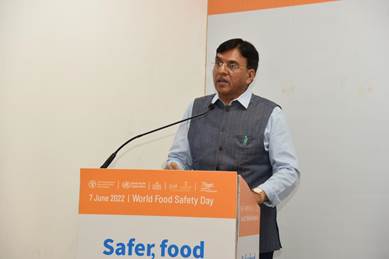
GANDHINAGAR, May 12, 2026 — In a statement that has sparked a significant debate over global health metrics, Gujarat Health Minister Praful Pansheriya claimed Tuesday that the state’s public health system now delivers medical intervention more rapidly than the highly developed systems of Canada and the United States. Speaking to reporters in Gandhinagar, Pansheriya credited Gujarat’s robust “108” emergency ambulance network and aggressive expansion of government hospital capacity for reducing the “structured waiting lists” that often plague Western nations.
The claim highlights a shifting narrative in global healthcare: the idea that emerging economies, through targeted infrastructure investment and streamlined triage, can bypass the bureaucratic and logistical bottlenecks found in the world’s wealthiest single-payer or insurance-based systems. However, medical experts and policy researchers suggest that while the data supports Gujarat’s gains in emergency response, the reality of “speed” in healthcare is far more nuanced than a single headline suggests.
The Core Claim: Emergency Response vs. Elective Waitlists
The Minister’s assertion rests on two primary pillars: the 108 Emergency Management and Research Institute (EMRI) and the rapid throughput of Gujarat’s tertiary government facilities.
“Despite the advanced infrastructure in countries like Canada and the United States, patients there often experience agonizing delays due to rigid, structured waiting lists,” Pansheriya stated. “In Gujarat, our 108 network and government hospitals ensure that in critical cases, the intervention is immediate.”
The evidence regarding Western wait times provides some context for this comparison. In Canada, the median wait time between referral from a general practitioner to receipt of treatment was reported at over 25 weeks in recent years, a backlog exacerbated by the COVID-19 pandemic. In the U.S., while emergency care is often rapid, access to specialists can be hindered by insurance authorizations and high demand in urban centers.
Conversely, Gujarat has invested heavily in its 108 ambulance service, which operates on a public-private partnership model. The system is designed to stabilize patients in transit and provide seamless handovers to government “Civil Hospitals,” which often lack the formal, multi-month queuing systems found in Canada’s provincial health plans.
Expert Perspective: Not All “Speed” is Equal
While the minister’s comments reflect real improvements in acute care, public health experts caution against broad-stroke comparisons.
“Comparing health systems requires matched indicators,” says Dr. Anjali Mehta, a public health physician unaffiliated with the government. “Emergency response times and hospital door-to-procedure times are one set of metrics; elective surgery waitlists are another. Gujarat may outperform some Western jurisdictions on specific emergency measures, but that does not automatically mean faster access across all types of care, such as oncology or chronic disease management.”
Dr. Mehta notes that while a patient in Ahmedabad might receive an emergency appendectomy faster than a patient in a backlogged Ontario hospital, the Canadian patient might have better access to long-term post-operative rehabilitation and primary care follow-up.
The Data Gap: What the Evidence Shows
To evaluate the minister’s claim, one must look at the three distinct dimensions of “speed” in healthcare:
1. Emergency Response
Gujarat’s 108 service has been a model for other Indian states, consistently reporting response times that rival international standards in urban corridors. According to World Bank reports on Gujarat’s primary health system, the integration of tele-health and GPS-tracked ambulances has significantly lowered maternal and trauma mortality rates.
2. Elective and Specialist Care
This is where the Western systems struggle most. Canada’s single-payer system prioritizes equity over speed for non-life-threatening issues (like hip replacements or cataract surgeries). In Gujarat, the “speed” often comes from a high-volume, high-turnover approach in public hospitals, or the ability of patients to opt for the private sector, which operates with virtually no waitlists for those who can pay out-of-pocket.
3. Diagnostic Timeliness
Reports from the Times of India indicate a growing trend of “reverse health tourism,” where members of the Indian diaspora—and even some Westerners—travel to Ahmedabad for MRIs, CT scans, and biopsies because they can be completed in 24 to 48 hours, compared to weeks in their home countries.
Implications for Public Health and Equity
The political focus on speed has significant implications for how resources are allocated. Gujarat’s success in building “medicity” hubs and expanding cancer radiotherapy—such as recent upgrades at Apollo and government-affiliated centers—has undoubtedly increased the state’s medical throughput.
However, equity remains a pressing concern. “Gains in urban tertiary centers do not necessarily translate into similar access for rural or marginalized populations,” notes a recent World Bank analysis. While the 108 ambulance can reach a rural village, the “speed of care” once the patient arrives at a local primary center may not match the efficiency of the massive Civil Hospitals in Ahmedabad or Surat.
Furthermore, the lack of standardized, peer-reviewed wait-time data in India makes a direct “apples-to-apples” comparison with Canada’s Canadian Institute for Health Information (CIHI) data difficult. Without transparent, third-party audited metrics on median referral-to-treatment times, claims of “faster care” remains partly anecdotal.
Limitations and Counterarguments
Critics of the minister’s statement point out several key caveats:
-
Selection Bias: Those who experience “faster care” in Gujarat are often those navigating the top-tier public hospitals or the private sector.
-
Quality vs. Speed: Speed is only one metric of a health system. Outcomes, patient safety, and long-term survival rates are equally critical, and Western systems often maintain higher standardized scores in post-operative care and infection control.
-
Systemic Backlogs: While Canada and the U.S. have backlogs, they also have robust social safety nets that provide long-term care, which is still an evolving sector in Gujarat.
Practical Takeaways for Consumers
For the average resident or health-conscious traveler, the takeaway is twofold:
-
In Emergencies: Gujarat’s 108 system is a legitimate, high-speed resource. In cases of trauma, heart attack, or stroke, the state’s emergency infrastructure is designed for rapid stabilization.
-
For Elective Care: If you are seeking specialist treatment, do not rely solely on system-level claims. Ask your provider for specific data: What is the average wait time for this specific surgery? What are the post-operative complication rates at this facility?
As Gujarat continues to position itself as a global healthcare hub, the transparency of its data will be the ultimate test of its claims. While the “speed” of the Gujarat system is a point of pride and a functional reality for many, the journey toward a system that is both faster and universally equitable continues.
Medical Disclaimer: This article is for informational purposes only and should not be considered medical advice. Always consult with qualified healthcare professionals before making any health-related decisions or changes to your treatment plan. The information presented here is based on current research and expert opinions, which may evolve as new evidence emerges.
References
-
Source 1: “Gujarat provides quicker treatment than Canada, US: Health Minister,” Lokmat Times, May 12, 2026.