 0
0
 0
0
NEW DELHI — India stands at a critical crossroads in its medical evolution, facing a choice between building more hospital beds or fundamentally changing how it keeps 1.5 billion people healthy. Speaking at the CII Annual Business Summit 2026 on Monday, Dr. Naresh Trehan, Chairman and Managing Director of Medanta, issued a clarion call for a “proactive” shift toward preventive healthcare, arguing that the nation’s current reliance on episodic, late-stage treatment is both medically and economically unsustainable.
As non-communicable diseases (NCDs)—including heart disease, diabetes, and cancer—tighten their grip on the Indian population, health experts and industry leaders warn that the “brick-and-mortar” approach to sick care must give way to a model centered on early detection and wellness.
A $500 Billion Market for Wellness
Dr. Trehan described the current moment as an “inflection point” for Indian healthcare. He highlighted a staggering economic transition: while the global consumer wellness market reached $1.8 trillion in 2024, India’s domestic preventive healthcare segment is projected to soar to $500 billion by 2030.
“We cannot simply treat our way out of this crisis,” Trehan noted, framing prevention as both a public health necessity and a massive economic opportunity. The shift involves moving away from “interventional” medicine—where a patient visits a doctor only when symptoms become unbearable—toward a “longitudinal” model that tracks health markers over a lifetime.
The Rising Tide of Chronic Disease
The urgency behind Trehan’s remarks is supported by sobering data from the World Health Organization (WHO). Globally, NCDs were responsible for approximately 43 million deaths in 2021. In India, the burden is particularly acute; NCDs now account for an estimated 61% to 63% of all deaths.
Unlike infectious diseases, which often have a clear beginning and end, chronic conditions like hypertension and diabetes are “silent killers” that develop over decades.
-
Heart Disease: Remains the leading cause of death in India.
-
Diabetes: India is often cited as the “diabetes capital of the world,” with millions of undiagnosed cases.
-
Economic Impact: A peer-reviewed study indexed on PubMed highlights that these conditions drive high out-of-pocket spending, often pushing middle- and lower-income households into medical debt.
From Hospitals to “Health and Wellness Centres”
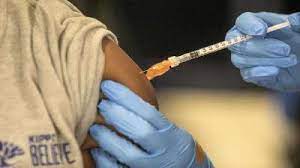
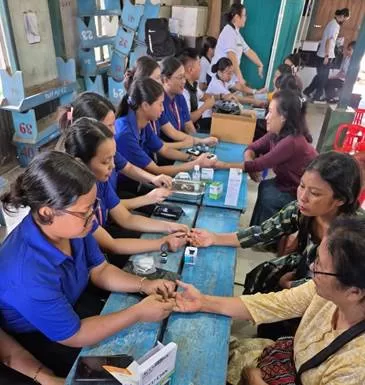
The Indian government has already begun laying the groundwork for this shift. Through the Ayushman Bharat initiative, the country is expanding population-based screening for diabetes, hypertension, and common cancers (oral, breast, and cervical).
According to the WHO India office, these services are being delivered through a network of Health and Wellness Centres (HWCs). The goal is to bring “promotive and preventive” care closer to the community, reducing the burden on overstretched tertiary care hospitals in major cities.
“Prevention is not just a yearly blood test,” says Dr. Arvinder Singh, a public health researcher (not involved in the CII summit). “It is a spectrum that includes tobacco cessation, nutritional counseling, and consistent blood pressure management. The earlier we identify a risk factor, the more tools we have to prevent a catastrophic event like a stroke or heart attack.”
The Rural-Urban Divide and Implementation Gaps
Despite the optimism, significant hurdles remain. Experts warn that a larger “wellness market” does not automatically equate to a healthier public.
Key Challenges Include:
-
Access Equity: While “Tier-1” cities have access to advanced diagnostics, “Tier-2” and “Tier-3” cities—along with rural areas—face chronic shortages of trained staff and reliable screening equipment.
-
The “Marketing” Trap: There is a growing concern that “prevention” could be co-opted as a marketing buzzword for unproven supplements or excessive, unnecessary diagnostic packages that do not improve clinical outcomes.
-
Social Determinants: Medical screening alone cannot solve the crisis if patients do not have access to clean air, affordable nutritious food, and safe spaces for physical activity.
Practical Implications: What This Means for You
For the average citizen, the shift toward prevention requires a change in mindset. Rather than waiting for pain or discomfort, health-conscious individuals should focus on “knowing their numbers.”
-
Baseline Metrics: Regularly monitor blood pressure, fasting blood sugar, and BMI.
-
Family History: Understanding genetic predispositions can trigger earlier screenings for conditions like colon or breast cancer.
-
Lifestyle as Medicine: Small adjustments in salt intake, tobacco use, and daily movement act as “micro-preventions” that compound over time.
“The best surgery is the one that never has to happen,” Dr. Trehan emphasized. By identifying rising blood pressure in a 30-year-old today, the healthcare system avoids a complex cardiovascular intervention twenty years down the line.
The Path Forward
The consensus among leaders at the CII Summit was clear: India’s healthcare infrastructure must scale horizontally, not just vertically. This means strengthening primary care, investing in digital health tracking, and ensuring that the “wellness revolution” reaches the most vulnerable populations, not just those who can afford premium health checkups.
As India navigates this transition, the success of its healthcare system will be measured not by the number of world-class hospitals it builds, but by how many people it keeps out of them.
Medical Disclaimer: This article is for informational purposes only and should not be considered medical advice. Always consult with qualified healthcare professionals before making any health-related decisions or changes to your treatment plan. The information presented here is based on current research and expert opinions, which may evolve as new evidence emerges.
References
-
ET HealthWorld (2026). India needs to focus proactively on preventive healthcare: Naresh Trehan. [Source: health.economictimes.indiatimes.com]