 0
0
 0
0
New Delhi — June 21, 2026
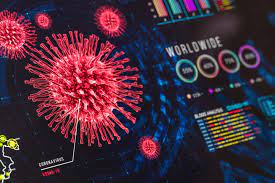
The World Health Organization (WHO) has issued a stark warning to global health authorities: the world remains vulnerable to “Disease X,” a hypothetical but potentially catastrophic pandemic pathogen that experts warn could kill up to 20 times more people than COVID-19. Speaking at the World Economic Forum in Davos, WHO Director-General Dr. Tedros Adhanom Ghebreyesus declared that a new global outbreak is “a matter of when, not if,” urging nations to look past political divisions and finalize a binding global pandemic treaty to avoid the mistakes of the past.
Unmasking the Unknown: What Exactly is Disease X?
To understand the urgency, it helps to realize that Disease X is not an active illness currently spreading among humans. Rather, the WHO adopted the term in 2017–2018 as a conceptual placeholder. It represents the very real certainty that a serious international epidemic could be triggered by an unknown pathogen that hasn’t yet been identified as a human threat.
“There is no virus or bacteria circulating right now that is called Disease X,” clarified Dr. Ana Maria Henao-Restrepo, lead physician for the R&D Blueprint at the WHO’s Emergencies Program. “We are preparing for the future by ensuring our scientific infrastructure can pivot instantly to whatever emerges.”
In many ways, SARS-CoV-2 (the virus that causes COVID-19) was the world’s first real-world example of Disease X. It was entirely unknown to science before it began spreading globally in late 2019, catching global supply chains and healthcare systems off guard.
Four Active Pathogens Raising Flags in 2026
While Disease X itself is hypothetical, infectious disease experts point out that real, existing viruses constantly mutate, presenting blueprints for how the next pandemic might look. Healthcare agencies are tracking four specific pathogens with heightened concern due to changing transmission dynamics and gaps in global immunity:
| Pathogen | Current Situation | Primary Pandemic Risk |
| H5N1 Bird Flu | Spreading globally among wild birds and mammals, with rising human spillover cases. | Severe. If it gains efficient human-to-human spread, its baseline virulence makes it a candidate for the “20x deadlier than COVID” worst-case scenario. |
| Mpox (Clade I) | Persistent outbreaks expanding across multiple continents. | High. Shows increased transmission efficiency and higher severity than previous strains. |
| Oropouche Virus | Widespread outbreaks recorded across the Americas. | Moderate. Spread by midges and mosquitoes; there are currently no approved vaccines or targeted antiviral treatments. |
| Rubella | Endemic transmission continues due to localized vaccine gaps. | Low-Moderate. While preventable, shifting demographics and public vaccine hesitancy create potential for resurgence. |
The Global Defensive Line: Mobilizing Resources
To prevent these threats from fracturing society, the WHO and international partners have quietly built an aggressive, multi-billion-dollar framework designed to compress response times from years to days.
1. The CORC Initiative
Launched in April 2026, the Collaborative Open Research Consortia (CORC) connects over 800 scientific institutions across 80 countries. Rather than working in silos, these laboratories share data in real-time to build universal diagnostic tests and vaccine templates for entire viral families.
2. The 100-Day Vaccine Mission
During the 2020 pandemic, it took an unprecedented 326 days from sequencing the virus to approving the first vaccine. The Coalition for Epidemic Preparedness Innovations (CEPI) is currently funding a $3.5 billion initiative to cut that window to just 100 days using adaptable mRNA and viral vector platforms.
3. Financial and Production Infrastructure
The World Bank-approved Pandemic Fund has actively extended support to 70 nations, reinforcing 41 regional surveillance projects to catch outbreaks at the community level. Simultaneously, a dedicated technology transfer hub in South Africa has been established to decentralize vaccine manufacturing, addressing the steep resource inequities that left developing nations vulnerable during previous health crises.
Strategic Skepticism: Analyzing the “20 Times Deadlier” Figure
While the numbers catch headlines, they also draw scrutiny from independent analysts. Several public health modelers note that the claim of an illness “20 times deadlier than COVID-19″—which would equate to roughly 50 million deaths globally—is a worst-case baseline for simulation, not a concrete statistical prediction.
Furthermore, defensive strategies have met political friction. The initial May 2024 deadline for the WHO Pandemic Preparedness Treaty passed without a full consensus, bogged down by debates over intellectual property rights and national sovereignty. Agencies like the European Centre for Disease Prevention and Control (ECDC) have historically emphasized that strengthening existing localized hospital networks and domestic supply lines is often more practical than creating entirely new international bureaucratic bodies.
Nevertheless, public health scholars emphasize that pre-emptive design saves lives. Dr. Amesh Adalja, a senior scholar specializing in emerging infectious diseases, notes that many candidate pathogens are already circulating quietly in animal reservoirs. They simply haven’t acquired the specific genetic mutations needed to jump effectively to humans. Preparing for an unnamed “X” forces the scientific community to build broad, adaptable countermeasures instead of waiting for a crisis to start.
What This Means for Everyday Health Decisions
For health-conscious individuals, global pandemic preparedness can feel distant and abstract. However, experts highlight that the most effective shield against future threats relies heavily on localized actions:
-
Elevate Health Literacy: Learning to identify credible medical consensus versus speculative online rumors allows individuals to make safer, calmer choices when local health guidelines change.
-
Maintain Routine Immunizations: Keeping up-to-date with seasonal and standard vaccinations reduces the background burden on hospitals, preserving critical care beds for unexpected emergencies.
-
Practice Everyday Prevention: Simple habits—such as staying home during acute respiratory illnesses and supporting local public health reporting—help interrupt initial chains of transmission before they hit vulnerable populations.
Disease X is a sobering reminder that human health is deeply interconnected with ecology and global policy. The objective of current preparations is not to inspire panic, but to ensure that when the next virus emerges, the world responds with a coordinated shield rather than chaotic containment.
Medical Disclaimer: This article is for informational purposes only and should not be considered medical advice. Always consult with qualified healthcare professionals before making any health-related decisions or changes to your treatment plan. The information presented here is based on current research and expert opinions, which may evolve as new evidence emerges.