 0
0
 1
1
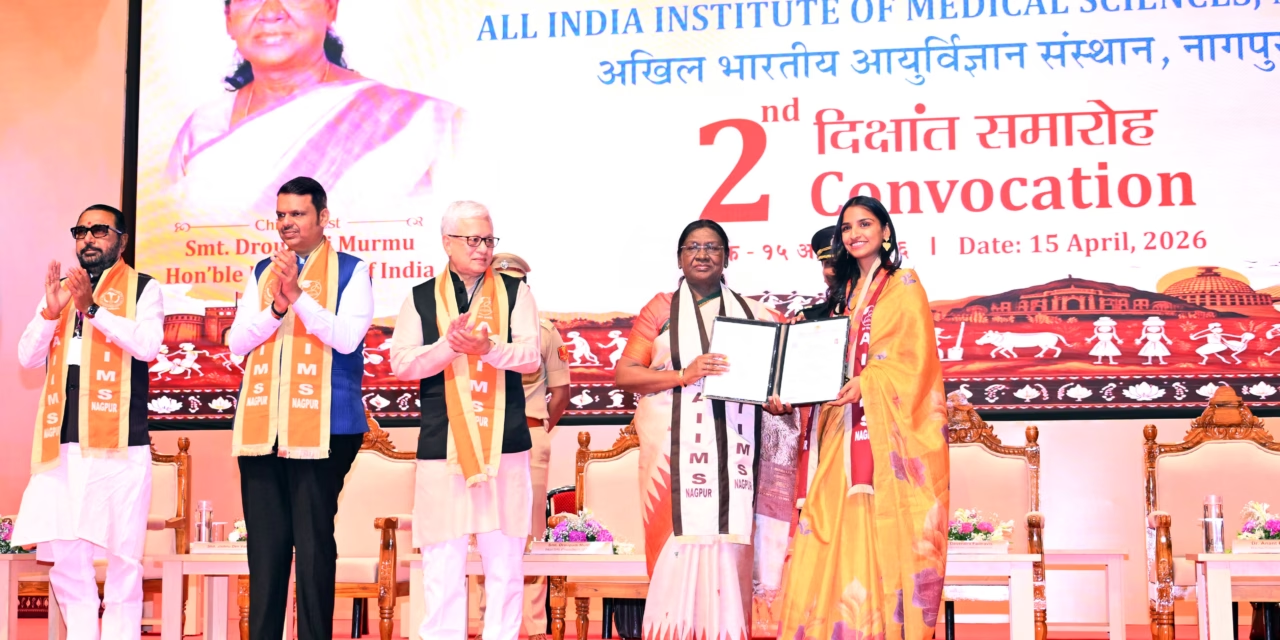
NAGPUR, Maharashtra – In a milestone event that bridged the cutting edge of medical technology with the timeless values of the Hippocratic Oath, President Droupadi Murmu addressed the convocation ceremony of the All India Institute of Medical Sciences (AIIMS) Nagpur on April 15, 2026. Speaking to a new generation of medical graduates, the President delivered a powerful reminder: while Artificial Intelligence (AI) and digital health are revolutionizing the sector, the bedrock of medicine remains the human connection.
“No matter how advanced the technology may become, it can never take the place of compassion, integrity, and a patient-centric approach,” President Murmu told the graduating class, emphasizing that empathy is a clinical tool as vital as any scalpel or algorithm.
A New Era of Healthcare: High Tech Meets High Touch
The President’s address comes at a pivotal moment for Indian healthcare. The last decade has seen a massive expansion of the AIIMS network, aimed at decentralizing specialized care and reducing the burden on premier institutes in New Delhi. AIIMS Nagpur, established to serve the Vidarbha region, has quickly emerged as a hub for research and advanced tertiary care.
However, the rapid integration of AI in diagnostics and robotic surgery has sparked a global conversation about the “depersonalization” of medicine. President Murmu tackled this head-on, noting that a doctor’s role transcends treating biological symptoms.
“A doctor not only treats diseases but also instills hope,” she said. “The empathetic counsel which doctors provide offers strength not only to the patient but also to their family members.”
The Science of Compassion: Why it Matters for Health Outcomes
The President’s emphasis on “patient-centricity” is increasingly backed by clinical evidence. Research consistently shows that the quality of the doctor-patient relationship is a significant predictor of health outcomes.
According to a meta-analysis published in PLOS ONE, patients who perceive their clinicians as empathetic report higher satisfaction, better adherence to medication, and even faster recovery times. In chronic disease management, such as diabetes or hypertension—conditions reaching epidemic proportions in India—the “bond of trust” mentioned by the President is essential for long-term lifestyle shifts.
“When a patient feels heard, their physiological stress levels—measured by cortisol—actually drop,” says Dr. Aranya Sen, a medical educator not affiliated with the research but commenting on the President’s speech. “This isn’t just ‘soft’ skills; it’s hard science. A stressed patient has a harder time healing.”
Addressing the Rural-Urban Divide
A key theme of the convocation was the use of technology to democratize healthcare. President Murmu highlighted the role of digital health services in bridging the gap between urban centers and rural hinterlands.
The Government of India’s push for “Viksit Bharat” (Developed India) by 2047 relies heavily on the healthy workforce of the nation. Statistical data from the National Health Authority indicates that teleconsultation services have seen a 40% year-on-year increase in rural Maharashtra, allowing specialists at AIIMS Nagpur to treat patients hundreds of miles away via high-speed digital links.
However, the President warned that technology should be a bridge, not a barrier. She urged graduates to leverage innovation to ensure “quality healthcare reaches everyone,” regardless of their geographic or socioeconomic status.
The Challenge: Burnout and Mutual Respect
In a candid moment, the President acknowledged the “challenging situations” medical professionals face. The healthcare sector has seen rising reports of workplace stress and, in some cases, violence against medical staff.
“Patients and their families, too, should always treat medical professionals with respect,” she stated, calling for a bilateral commitment to maintaining the sanctity of the medical environment.
For the graduates, the President’s advice was clear:
-
Lifelong Learning: Curiosity is the foundation of medical progress.
-
Moral Obligation: Place the patient’s interest above personal gain.
-
Innovation: Internalize the spirit of research to solve uniquely Indian health challenges.
Looking Ahead: Medicine in 2026 and Beyond
As these new doctors enter the workforce, they face a landscape where AI can predict kidney failure 48 hours before it happens and where genomic medicine is becoming a reality. Yet, the President’s message serves as a cultural anchor.
The convocation at AIIMS Nagpur isn’t just a graduation; it is a reaffirmation of the “spirit of service.” As the nation moves toward its centenary of independence, the success of the Indian healthcare system will likely be measured not just by the number of AIIMS buildings, but by the integrity and compassion of the doctors within them.
Key Statistics: The Expansion of AIIMS
| Category | 2014 Status | 2026 Status (Projected/Current) |
| Total Functional AIIMS | 7 | 20+ |
| MBBS Seats (Nationwide) | ~51,000 | ~110,000+ |
| Digital Health Adoption | Minimal | Over 500 million ABHA accounts linked |
Reference Section
Sources and Citations:
-
Press Information Bureau (PIB) Delhi: “President of India Graces Convocation Ceremony of AIIMS Nagpur,” published April 15, 2026.
Medical Disclaimer: This article is for informational purposes only and should not be considered medical advice. Always consult with qualified healthcare professionals before making any health-related decisions or changes to your treatment plan. The information presented here is based on current research and expert opinions, which may evolve as new evidence emerges.