 0
0
 0
0
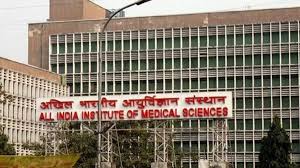
NEW DELHI — The All India Institute of Medical Sciences (AIIMS), New Delhi, has secured the number one position yet again in the annual India Today-MDRA Best Colleges Survey 2026, published on July 8, 2026. Evaluating 62 premier medical institutions across the nation, the comprehensive study reaffirms AIIMS New Delhi’s status as the pinnacle of Indian medical education. However, as lakhs of aspiring physicians navigate a highly competitive admission season, leading health education experts are urging students and families to view institutional rankings as a starting point rather than the final word in selecting a medical school.
The annual survey, conducted jointly by India Today and the Marketing and Development Research Associates (MDRA), goes beyond a simple popularity contest. It evaluates colleges across a rigorous framework of metrics: academic excellence, infrastructure quality, faculty credentials, research output, clinical exposure, and career progression.
The findings carry significant weight for both healthcare professionals tracking institutional development and health-conscious consumers invested in the quality of the nation’s future medical workforce.
Anatomy of a Leader: Why AIIMS Continues to Dominate
AIIMS New Delhi’s persistent dominance across national surveys is deeply rooted in its unique structural ecosystem, which seamlessly fuses massive clinical volume with cutting-edge academic research.
According to recent institutional reporting for the 2024–25 academic cycle, AIIMS New Delhi managed an astonishing 4.84 million outpatient department (OPD) visits and handled over 361,000 hospital admissions. For a medical student, this unprecedented scale translates into direct exposure to an incredibly diverse array of clinical pathologies—ranging from common communicable diseases to rare genetic disorders requiring tertiary care.
This empirical strength is corroborated by other independent evaluation systems. In the Ministry of Education’s National Institutional Ranking Framework (NIRF), AIIMS New Delhi consistently commands the top spot in the medical category, securing a dominant score of 91.80. It outpaces other legendary centers of medical excellence, including the Post Graduate Institute of Medical Education and Research (PGIMER) in Chandigarh and Christian Medical College (CMC) in Vellore.
| Top-Tier Indian Medical Institutions (NIRF Benchmark Comparison) |
| All India Institute of Medical Sciences (AIIMS) — New Delhi |
| Post Graduate Institute of Medical Education and Research (PGIMER) — Chandigarh |
| Christian Medical College (CMC) — Vellore |
| Jawaharlal Institute of Postgraduate Medical Education and Research (JIPMER) — Puducherry |
| King George’s Medical University (KGMU) — Lucknow |
The Expert Perspective: Look Beyond the Prestige
While data matrices showcase the strengths of these elite standard-bearers, medical educators caution against choosing an institution purely based on its numerical rank.
“Rankings are incredibly useful for assessing infrastructure budgets and macro research output, but they cannot measure the micro-environment of everyday learning,” says Dr. S. K. Agarwal, a senior Delhi-based physician and medical education consultant who was not involved in compiling the survey. “A student’s success depends heavily on hands-on bedside learning, accessible mentorship, and their personal mental well-being during five and a half rigorous years.”
Health education experts note that heavy weighting on research publications can sometimes overshadow the day-to-day quality of undergraduate teaching. For an MBBS student, a regional or private institution with a lower national rank might occasionally offer distinct advantages, such as:
-
Favorable Student-to-Bed Ratio: Ensuring direct access to patients without competing with dozens of peers.
-
Localized Language Support: Essential for effective history-taking and patient communication in regional settings.
-
Stronger Peer Mentorship: Dedicated faculty who focus primarily on foundational clinical training rather than laboratory research.
Public Health Implications: Cultivating the Doctors of Tomorrow
The quality of medical education in India has direct, downstream effects on public health. Top-ranked institutions possess the infrastructure and funding required to train specialists capable of managing complex, modern health crises. However, public health advocates point out that India’s broader healthcare challenge lies in rural and underserved areas.
The true test of a medical college’s impact is its ability to produce socially conscious, highly adaptable clinicians. While a top-tier brand name offers excellent career progression and lucrative postgraduate pathways, the core competencies of clinical judgment and empathetic patient care can be forged in any institution that provides adequate case variety and rigorous clinical rotations.
Methodological Limitations and the Human Element
Like all algorithmic evaluations, the India Today-MDRA survey operates within structural boundaries. Traditional methodologies are highly effective at measuring tangible assets—such as the number of smart classrooms, laboratory square footage, and median placement salaries. However, they struggle to capture the qualitative metrics that dictate a student’s daily reality.
Factors such as campus culture, psychological support systems for preventing student burnout, and the approachability of senior residents are entirely absent from standard scorecards. Furthermore, for many students, remaining closer to their home state to understand regional healthcare dynamics and maintain a robust family support system can outweigh the benefits of moving across the country for a slightly higher-ranked college.
The Takeaway for Aspirants and Families
As the 2026 admissions cycle intensifies, AIIMS New Delhi remains the undisputed benchmark of prestige. Yet, the broader lesson for the healthcare community is one of balance.
Prestige is a valuable asset, but a medical education is ultimately defined by what the student extracts from their clinical environment. Aspiring doctors should evaluate colleges holistically—inspecting the active flow of the teaching hospital, the availability of supportive faculty, and the specific postgraduate pathways that align with their long-term medical career goals.
Reference Section
Study and Survey Citations
-
India Today-MDRA Best Colleges Survey 2026: Medical Category, published July 8, 2026. Evaluation criteria managed by Marketing and Development Research Associates (MDRA).
Medical Disclaimer: This article is for informational purposes only and should not be considered medical advice. Always consult with qualified healthcare professionals before making any health-related decisions or changes to your treatment plan. The information presented here is based on current research and expert opinions, which may evolve as new evidence emerges.