 0
0
 0
0
NEW DELHI — In what is being characterized as the most significant structural shift to India’s medical education gateway in over a decade, the Union Ministry of Education is planning a fundamental redesign of the National Eligibility-cum-Entrance Test Undergraduate (NEET UG) for the 2027 academic cycle.
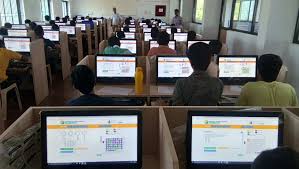
According to high-level administrative reports emerging on July 7–8, 2026, the traditional pen-and-paper, single-day national examination is slated to be replaced by a digital, Computer-Based Test (CBT) model. The proposed framework will see the exam staggered over five to six days across approximately 1,000 certified testing centers in 500 cities nationwide.
The digital transition coincides with an upcoming “top-to-bottom” organizational overhaul of the National Testing Agency (NTA), the autonomous body tasked with administering the high-stakes test. Government sources indicate that this comprehensive restructuring—covering infrastructure, technology protocols, and personnel—is targeted for completion before October 2026.
Restoring Integrity to India’s Doctor Pipeline
The impetus for this systemic shift stems directly from the logistical and security vulnerabilities exposed during the 2026 examination cycle. The original May 3, 2026, paper-based exam, which saw nearly 22 lakh (2.2 million) aspirants compete for roughly 108,000 undergraduate medical seats, was canceled by the Ministry of Education following a highly publicized question paper leak controversy and an ongoing Central Bureau of Investigation (CBI) probe.
While a highly secured re-examination was successfully executed on June 21, 2026, public and political scrutiny led a Parliamentary Standing Committee on Education to review long-term structural remedies.
The decision to transition to a CBT format adopts core recommendations from a seven-member high-level expert committee led by former Indian Space Research Organisation (ISRO) chairman Dr. K. Radhakrishnan, which was tasked with formulating foolproof examination safeguards.
Decoding the Proposed Multi-Day CBT Model
The proposed digital model transforms how the exam scales across India’s massive aspirant population. Rather than distributing millions of identical, physical question booklets simultaneously—a method highly vulnerable to local leaks—the CBT model utilizes encrypted, randomized digital question banks decrypted mere minutes before each testing session.
Anticipated Operational Differences: OMR vs. CBT
| Parameters | NEET UG 2026 (Traditional) | NEET UG 2027 (Proposed CBT) |
| Exam Delivery | Pen-and-Paper (Physical OMR Sheet) | Computer-Based Test (On-Screen Interface) |
| Timeline & Window | Single shift on a single day | Staggered over 5–6 days; multiple shifts |
| Testing Network | Widespread private and public venues | ~1,000 audited centers across 500 cities |
| Candidate Distribution | ~22+ lakh students concurrently | ~5 lakh candidates per day (~500 per center) |
| Primary Venues | Varied educational infrastructure | Government institutions (KVs, Navodaya Vidyalayas) |
The reliance on government infrastructure like Kendriya Vidyalayas (KVs) and Jawahar Navodaya Vidyalayas is intended to provide standardized technical environments and tighter regulatory oversight than commercial testing venues.
Expert Perspectives and the Equity Debate
Education and assessment specialists broadly support the transition to online testing, noting that computer-based models offer superior randomized question delivery, minimize human errors in Optical Mark Recognition (OMR) bubble shading, and drastically accelerate result processing workflows.
However, external experts warn that moving India’s largest medical entrance exam online presents deep socioeconomic hurdles. Unlike the engineering-focused JEE Main, which has successfully run via CBT for years, NEET UG draws a geographically diverse candidate pool, including millions of students from deep rural pockets, smaller provincial towns, and under-resourced public schools who may lack routine exposure to digital testing interfaces.
Members of Parliament have voiced similar concerns during recent briefing sessions, urging the Ministry of Education to incorporate robust digital safeguards for marginalized populations. Assessment experts emphasize that a multi-day testing window necessitates a sophisticated, percentile-based score normalization process to account for minor variations in difficulty across different question sets, a methodology that must be transparently communicated to maintain public trust.
Long-term Public Health Implications
While an entrance exam remains an administrative process, its stability directly affects national public health infrastructure. NEET UG functions as the exclusive feeder pipeline for India’s future healthcare workforce, supplying students for MBBS courses, dentistry, and traditional medicine systems (AYUSH).
When national exam administrations suffer delays, legal gridlocks, or cancellations, the entire academic calendar stalls. This creates a cascading delay in counseling schedules, medical college admissions, and ultimately, the graduation timeline of new doctors into public and private hospital systems.
A reliable, repeatable multi-day exam structure could insulate India’s medical training timeline from unexpected single-point failures, ensuring a steady, predictable flow of medical professionals into a healthcare system that serves over 1.4 billion people.
What Remains Uncertain for Aspirants
Because these developments represent high-level policy directions rather than finalized statutory rules, several crucial implementation details remain unconfirmed:
-
The exact statistical formula to be utilized for cross-shift score normalization.
-
The structural criteria and safety audits required for the “reputed private institutions” designated to support government testing centers.
-
Specific remedial interventions or mock-testing infrastructure intended for students who do not have personal computer access.
The Ministry of Education and NTA are expected to issue a comprehensive, definitive Information Bulletin outlining final shift schedules, test city breakdowns, and technical specifications following the conclusion of the NTA’s internal restructuring this autumn.
Actionable Strategy for Students and Parents
For students preparing for the 2027 exam cycle, academic advisors emphasize that the core syllabus—anchored in NCERT Class 11 and 12 Physics, Chemistry, and Biology—remains entirely unchanged.
Expert Insight: “The biggest adjustment for students moving from OMR to CBT isn’t the difficulty of the questions, but the rhythm of the test interface. On screen, candidates gain the logistical advantage of being able to change an answer instantly or flag a tough question to review later without ruining a paper sheet. However, navigating long passages on a monitor requires dedicated practice.”
Aspirants are advised to transition a portion of their preparation to digital platforms, integrating timed, full-length computer-based mock tests into their study routines early to build visual stamina and comfortable digital interface navigation. Parents and educators should rely exclusively on formal notifications hosted on the official NTA portal rather than speculative secondary reporting during this transition period.
Reference Section
News and Policy Reports
-
Medical Dialogues: “Govt eyes 5-6 day computer-based NEET 2027 across nearly 1,000 exam centres, ‘Top to bottom’ NTA revamp,” published July 8, 2026.
Medical Disclaimer: This article is for informational purposes only and should not be considered medical advice. Always consult with qualified healthcare professionals before making any health-related decisions or changes to your treatment plan. The information presented here is based on current research and expert opinions, which may evolve as new evidence emerges.