 0
0
 0
0
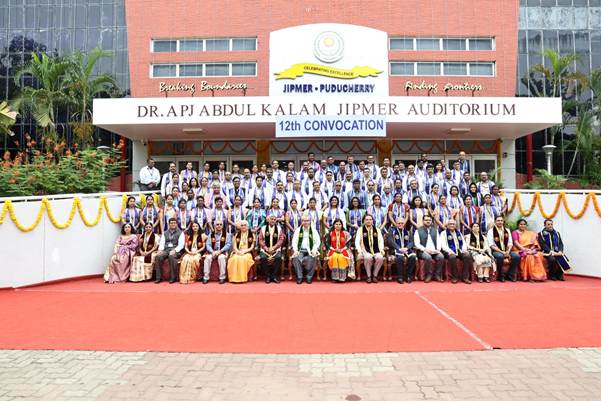
PUDUCHERRY — In a ceremony that underscored the critical role of non-physician medical professionals in India’s evolving healthcare landscape, Union Health Secretary Smt. Punya Salila Srivastava addressed the 12th Convocation of Nursing and Allied Health Sciences at the Jawaharlal Institute of Postgraduate Medical Education and Research (JIPMER) on May 14, 2026.
The event saw 320 students receive degrees across various disciplines, including Nursing, Public Health, and Allied Health Sciences. Addressing the graduates, Srivastava emphasized that the foundation of a “Viksit Bharat” (Developed India) by 2047 is inextricably linked to achieving a “Swasth Bharat” (Healthy India), positioning these new professionals as the primary architects of that future.
A Strategic Shift in Healthcare Delivery
The convocation comes at a pivotal moment for Indian healthcare. The Union Health Secretary’s address highlighted a strategic transition from traditional curative models to a more holistic, preventive approach. Central to this shift is the Ayushman Bharat initiative, specifically the expansion of Ayushman Arogya Mandirs.
With over 1.8 lakh of these centers now operational, the government is moving beyond maternal and child health to tackle the rising tide of non-communicable diseases (NCDs). According to the World Health Organization (WHO), NCDs—including diabetes, cardiovascular diseases, and hypertension—are responsible for nearly 66% of all deaths in India.
“The transition to providing 12 comprehensive service packages, including mental health and palliative care, at the primary level represents a paradigm shift,” Srivastava noted. This infrastructure requires a highly skilled workforce of nurses and allied health professionals capable of early screening and long-term management of chronic conditions.
The Graduation by the Numbers
The 12th Convocation celebrated a diverse cohort of specialists:
-
Nursing: 149 graduates (M.Sc. and B.Sc.)
-
Allied Health Sciences: 135 graduates (M.Sc. and B.Sc.)
-
Master of Public Health (MPH): 36 graduates
-
Academic Excellence: 24 medals and endowment prizes were awarded for top-tier performance.
Strengthening the ‘Backbone’ of the System
For decades, the contribution of nursing and allied health professionals—technicians, therapists, and public health experts—was often overshadowed by clinical medicine. However, the Health Secretary reaffirmed that these professionals are the “backbone” of the system.
To support this claim, she pointed to recent legislative milestones:
-
The National Nursing and Midwifery Commission Act: Designed to modernize education and regulate professional standards.
-
The National Commission for Allied and Healthcare Professions Act: A landmark move to provide statutory recognition to over 50 different allied health professions.
“By standardizing these roles, the government is ensuring that a lab technician in Puducherry meets the same quality benchmarks as one in London or New York,” says Dr. Aranya Sen, a health policy analyst not affiliated with JIPMER. “This is crucial for patient safety and for the global mobility of Indian talent.”
Quality Standards and Digital Frontiers
A significant portion of the address focused on the Indian Public Health Standards (IPHS) and the National Quality Assurance Standards (NQAS). To date, approximately 64,000 public health facilities have achieved NQAS certification. This focus on “quality over quantity” is intended to build public trust in government-run institutions.
Furthermore, the integration of the Ayushman Bharat Digital Mission (ABDM) was highlighted as a tool for “seamless” care. By creating Ayushman Bharat Health Accounts (ABHA), patients can now share their medical history digitally across facilities, reducing diagnostic redundancy and improving emergency response times.
Global Opportunities and the “Ambassador” Role
The Union Health Secretary also touched upon India’s growing role as a provider of healthcare talent to the world. Through bilateral partnerships with the United Kingdom, Italy, and France, Indian-trained nurses and allied health professionals are increasingly filling global labor shortages.
Srivastava described the graduates as “India’s ambassadors,” noting that the Government is committed to developing 1 lakh healthcare professionals over the next five years to meet both domestic and international demand.
Challenges and Considerations
While the expansion of nursing colleges (157 new colleges co-located with medical schools) is a welcome development, experts suggest that retention remains a challenge.
“Increasing the number of graduates is only half the battle,” notes Dr. Rajesh Kumar, a veteran public health educator. “We must ensure that the working conditions, career progression, and pay scales for allied health professionals keep pace with their increasing responsibilities in the digital health era.”
What This Means for the Public
For the average citizen, the graduation of these 320 professionals at JIPMER signifies more than just academic success. It represents an increase in the “human touchpoints” of the health system.
-
Better Access: More MPH graduates mean better community-level disease surveillance.
-
Higher Precision: Allied health specialists ensure that diagnostic tests and rehabilitative therapies are performed to international standards.
-
Empathetic Care: The emphasis on nursing ensures that the “compassion” requested by Secretary Srivastava remains at the heart of the clinical experience.
As the ceremony concluded, the message was clear: The path to a developed India in 2047 is paved by the health and well-being of its citizens today—a task that now rests firmly on the shoulders of these new graduates.
Reference Section
Primary Source:
-
Press Information Bureau (PIB). “Union Health Secretary Smt. Punya Salila Srivastava Addresses 12th Convocation of Nursing and Allied Health Sciences at JIPMER.” Posted May 14, 2026.
Medical Disclaimer: This article is for informational purposes only and should not be considered medical advice. Always consult with qualified healthcare professionals before making any health-related decisions or changes to your treatment plan. The information presented here is based on current research and expert opinions, which may evolve as new evidence emerges.