 0
0
 0
0
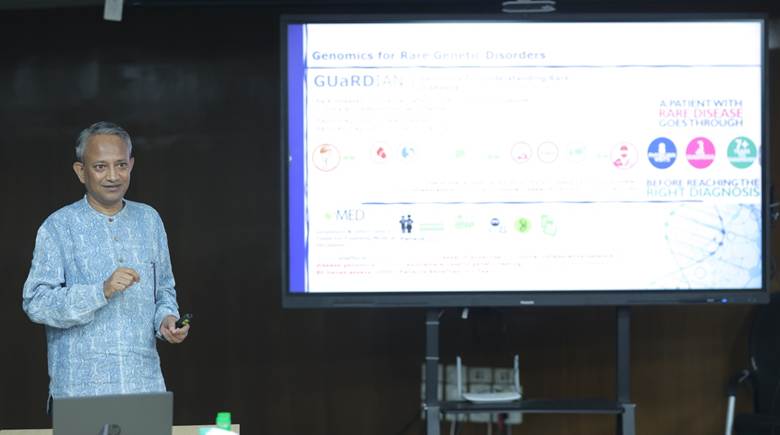
NEW DELHI — In a landmark moment for Indian biotechnology, the Ministry of Tribal Affairs and the Council of Scientific and Industrial Research (CSIR) showcased BIRSA 101, the nation’s first indigenous CRISPR-based gene therapy for Sickle Cell Disease (SCD), during a high-level workshop on May 14, 2026. Held at the CSIR-Institute of Genomics and Integrative Biology (IGIB) as part of the Janjatiya Garima Utsav, the event signaled a shift from managing symptoms to pursuing a permanent, affordable cure for a condition that disproportionately affects India’s tribal populations.
A Sovereign Solution for a Genetic Crisis
Sickle Cell Disease is an inherited blood disorder where red blood cells, normally round and flexible, become rigid and crescent-shaped. These “sickle” cells clog blood vessels, leading to excruciating pain crises, organ damage, and shortened life expectancy.
India bears one of the highest burdens of SCD globally. According to the National Sickle Cell Anaemia Elimination Mission, nearly 1.2 million Indians are affected, with carrier prevalence reaching as high as 35% in certain endemic tribal regions across Madhya Pradesh, Maharashtra, Odisha, and Chhattisgarh.
“BIRSA 101,” named in honor of the tribal folk hero Bhagwan Birsa Munda, represents more than just medical progress; it is a bid for “health sovereignty.” While CRISPR therapies like the US-approved Casgevy have recently emerged as functional cures, their price tag—approximately $2.2 million (₹18–20 crore) per patient—remains an insurmountable barrier for most.
The Science: “Sharper Scissors”
Unlike global counterparts that often use imported technology, BIRSA 101 utilizes a proprietary variant of the Cas9 protein developed entirely within CSIR-IGIB.
“Our scientists have engineered an indigenous Cas9 variant, enFnCas9, which functions like a sharper, more intelligent pair of molecular scissors,” explained Dr. Souvik Maiti, Director of CSIR-IGIB. “It is designed to minimize ‘off-target’ effects—unintended cuts in the DNA—which has been a primary safety concern in gene editing globally.”
The therapy works by extracting a patient’s own blood-forming stem cells, using the CRISPR tool to “correct” the genetic mutation in the HBB gene, and then reinfusing the edited cells back into the patient. Once successful, the body begins producing healthy , round red blood cells instead of the misshapen sickle cells.
From Lab to Last-Mile: The Path to Affordability
A critical highlight of the workshop was the announcement of the technology transfer to the Serum Institute of India (SII). By leveraging the manufacturing prowess of the world’s largest vaccine maker, the government aims to bring the cost of the therapy down to an estimated ₹50 lakh—roughly 1/40th of the cost of international treatments.
The Ministry of Tribal Affairs has provided a financial catalyst of ₹3.75 crores to support the research and infrastructure. Smt. Ranjana Chopra, Secretary of the Ministry of Tribal Affairs, emphasized that scientific innovation is meaningless if it doesn’t reach the “last mile.”
“We are focusing on creating an ecosystem where advanced precision medicine is not a luxury but a fundamental right for our tribal communities,” Chopra stated.
Clinical Progress and Next Steps
-
Phase I Trials: Safety and dosing trials are slated to begin at premier institutions, including AIIMS Delhi.
-
Infrastructure: A Good Manufacturing Practice (GMP) facility has already been established at IGIB to produce clinical-grade batches.
-
Regulatory Path: The project is undergoing rigorous review by the Central Drugs Standard Control Organisation (CDSCO) to ensure safety protocols meet international standards.
The Human Element: Voices from the Frontline
The workshop featured moving testimonies from “Sickle Cell Warriors.” Shri Gautam Dongre, a patient advocate, shared the daily struggle of living with the disease, highlighting that while gene therapy offers hope, the immediate need remains early diagnosis and access to basic medications like Hydroxyurea.
“For years, we were told there is no cure,” Dongre said. “Knowing that a solution is being built here, in India, specifically for us, changes the narrative from one of despair to one of dignity.”
Limitations and Ethical Considerations
While the mood was celebratory, experts urged cautious optimism. Gene therapy is a complex, multi-stage procedure requiring specialized hospital infrastructure that is currently scarce in rural tribal belts.
Furthermore, independent experts note that long-term monitoring is essential. “The challenge with CRISPR is ensuring that the genetic ‘fix’ remains stable over decades without causing secondary health issues,” says Dr. Arvinder Singh, a geneticist not involved with the study. “Building the diagnostic and follow-up network in remote areas will be as significant a challenge as the science itself.”
Conclusion
As India moves toward its goal of eliminating Sickle Cell Anaemia as a public health threat by 2047, BIRSA 101 stands as a beacon of the “Viksit Bharat” (Developed India) vision. It combines cutting-edge genomic science with a commitment to social equity, proving that the most advanced tools of the 21st century can be harnessed to serve the most vulnerable.
Medical Disclaimer: This article is for informational purposes only and should not be considered medical advice. Always consult with qualified healthcare professionals before making any health-related decisions or changes to your treatment plan. The information presented here is based on current research and expert opinions, which may evolve as new evidence emerges.
References
-
Ministry of Tribal Affairs (May 14, 2026): Official Press Release: “Workshop on BIRSA 101 — India’s First Indigenous CRISPR-Based Gene Therapy.”