 0
0
 0
0
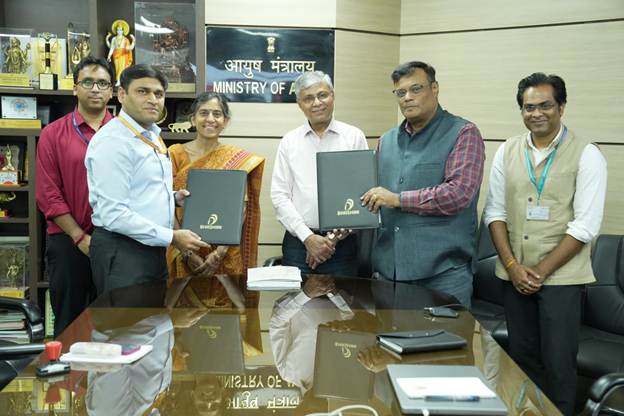
NEW DELHI — In a landmark move to democratize access to traditional medicine, the Ministry of Ayush signed a Memorandum of Understanding (MoU) with the Digital India BHASHINI Division on May 14, 2026. This partnership marks a pivotal shift in India’s digital health strategy, aiming to provide AI-powered, multilingual access to Ayush services across all 22 Scheduled Indian languages. By integrating advanced language technology into the Ayush Grid, the government seeks to ensure that millions of citizens can access healthcare information and services in their native tongues, effectively removing the linguistic barriers that have historically hindered rural and diverse populations.
Breaking the Language Barrier in Healthcare
For decades, India’s traditional medicine systems—Ayurveda, Yoga, Naturopathy, Unani, Siddha, Sowa-Rigpa, and Homoeopathy—have been repositories of vast “civilizational knowledge.” However, much of this information and the digital tools designed to disseminate it were limited by language.
The new initiative, titled “BHASHINI Rajyam – A BHASHINI Sahayogi Program,” will integrate the BHASHINI platform’s translation APIs and voice technologies into the entire Ayush digital ecosystem. This includes everything from research portals and drug administration apps to doctor-patient interaction systems.
“Ensuring that this knowledge becomes accessible in every Indian language is essential for inclusive healthcare delivery,” said Vaidya Rajesh Kotecha, Secretary, Ministry of Ayush, during the signing ceremony. “We aim to build future-ready AI systems that can support citizens seamlessly across linguistic boundaries.”
Key Developments and Technological Integration
The collaboration focuses on several core areas designed to modernize the delivery of traditional healthcare:
-
Multilingual Ayush Grid: Portals such as the Yoga Portal and the master portal MAISP (Medical Assessment and Information System Portal) will now support all 22 scheduled languages.
-
Domain-Specific AI Models: Unlike general translation tools, this project will develop specialized terminology systems for Ayush. This is critical because traditional medical terms—often rooted in Sanskrit, Tamil, or Arabic—require precise contextual translation to maintain clinical accuracy.
-
Voice-Enabled Services: Recognizing that a significant portion of the population may have varying levels of literacy, the initiative emphasizes speech-to-speech interfaces.
-
Real-time Transcription: Tools like Shrutlekh will be used for real-time transcription of medical meetings and clinical consultations.
The Impact on Public Health
From a public health perspective, the implications are significant. In a country where only about 10% of the population speaks English and linguistic diversity is vast, digital health tools often fail if they cannot speak the user’s language.
According to Dr. Kavita Jain, Joint Secretary, Ministry of Ayush, the most transformative potential lies in “doctor-patient interaction systems capable of generating prescriptions” in local languages. This could drastically reduce medical errors caused by miscommunication and improve patient adherence to treatment plans in Ayush-based care.
Statistical Context and Digital Infrastructure
The integration is part of the larger Digital India vision. Recent data highlights the scale of this digital shift:
-
850 million internet users in India currently benefit from low-cost data.
-
The Ayush Grid aims to connect healthcare, research, and education for a sector that serves hundreds of millions of practitioners and patients globally.
-
By leveraging Digital Public Infrastructure (DPI), India is creating a model where health services are not just digital, but “language-inclusive.”
Expert Perspectives and Challenges
While the move is widely praised, medical informatics experts urge a balanced approach. Prof. K. Ganapathy, a pioneer in Indian telemedicine, has previously noted that while technology is a force multiplier, digital literacy remains a hurdle.
Furthermore, clinical translation carries high stakes. A study published in Telehealth and Medicine Today (2024) highlighted that AI models often struggle with “low-resource languages” where datasets are thin. For Ayush, the challenge is even greater: translating a concept like Prakriti (body constitution in Ayurveda) requires more than a literal translation; it requires cultural and medical nuance.
Shri Amitabh Nag, CEO of Digital India BHASHINI, acknowledged this, stating that the focus will be on “strengthening Ayush language datasets” to ensure the AI models are contextually aware and clinically safe.
What This Means for You
For the average consumer, this means the next time you look up a Yoga posture or seek information on Ayurvedic remedies for a chronic condition, the information will be available in your mother tongue—whether that is Marathi, Bengali, Telugu, or Bodo.
More importantly, it paves the way for voice-based healthcare. Imagine a senior citizen in a remote village being able to speak into a mobile app in their local dialect and receiving a verified response or a translated prescription from an Ayush practitioner.
Limitations and the Road Ahead
Despite the optimism, some limitations remain:
-
Dataset Gaps: AI is only as good as the data it learns from. Building robust datasets for all 22 languages, especially for niche medical terminologies, will take time.
-
Human Oversight: Medical professionals emphasize that AI-generated translations and prescriptions should supplement, not replace, human clinical judgment.
-
Connectivity: While digital outreach is expanding, real-time AI translation requires stable internet, which is still inconsistent in some “shadow zones” of rural India.
The Ministry has already seen success with a BHASHINI plugin on the Yoga Portal, and the full rollout across the Ayush Grid is expected to be a phased implementation over the coming year.
Medical Disclaimer: This article is for informational purposes only and should not be considered medical advice. Always consult with qualified healthcare professionals before making any health-related decisions or changes to your treatment plan. The information presented here is based on current research and expert opinions, which may evolve as new evidence emerges.
Reference Section
Primary Sources:
-
Press Information Bureau (PIB) Delhi. (May 14, 2026). Ministry of Ayush Signs MoU with Digital India BHASHINI Division to Strengthen Multilingual Ayush Digital Services. [Link/Source ID: 2261095].