 0
0
 0
0
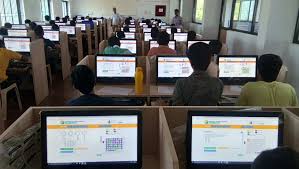
New Delhi — The Supreme Court of India has officially declined to direct the National Testing Agency (NTA) to conduct the upcoming National Eligibility cum Entrance Test (NEET-UG) 2026 re-examination in a Computer-Based Test (CBT) format. This key judicial decision clears the path for the rescheduled June 21 re-test to proceed in its traditional, offline pen-and-paper format. The ruling arrives at a critical juncture for India’s medical education infrastructure, directly impacting the mental well-being, preparation strategies, and future career timelines of hundreds of thousands of aspiring healthcare professionals across the nation.
The Key Development and Court Reasoning
A vacation bench comprising Justice P.S. Narasimha and Justice Aravind Kumar declined to grant immediate relief to petitioners who sought an emergency digital transition for the upcoming test. By deferring the matter to July, the court effectively maintained the status quo for the June 21 examination.
The emergency re-examination was mandated following the unprecedented cancellation of the original May 3, 2026, NEET-UG exam. The NTA nullified that test on May 12 after law enforcement and examination authorities detected widespread paper leaks and systemic breaches that compromised the integrity of India’s largest medical entrance gateway.
In explaining the court’s reluctance to intervene just weeks before the rescheduled test, Justice Narasimha highlighted the immense administrative pressures and practical difficulties faced by examination authorities.
“You know what kind of problems we are having. The examination was cancelled, it is being reconducted,” the bench observed, noting that similar last-minute petitions had already been dismissed to prevent further bureaucratic paralysis.
Background: The NEET 2026 Controversy
The disruption began when millions of students sat for the initial exam on May 3. Following proof of compromised test security, the Ministry of Education enacted an emergency cancellation on May 12, subsequently scheduling the re-test for June 21 and promising application fee refunds.
The legal petition, spearheaded by RJD MP Sudhakar Singh, did not merely request a digital format for the re-test; it called for a sweeping structural overhaul of India’s medical procurement pipeline. The petition’s core demands included:
-
An immediate transition from pen-and-paper testing (PPT) to an encrypted Computer-Based Test (CBT) mode.
-
A binding, time-bound roadmap for a fully digitized national examination framework.
-
Structural reforms replacing the embattled NTA with an independent, statutory National Examination Authority.
-
The creation of a high-level monitoring committee comprising retired Supreme Court judges, cybersecurity authorities, and forensic scientists.
While the court acknowledged the gravity of these systemic vulnerabilities, it ruled that implementing radical structural changes in a six-week window was logistically unfeasible.
The Psychology of Testing: Impact on Aspirants
For the hundreds of thousands of medical aspirants, the ruling provides a bittersweet resolution: absolute administrative certainty paired with the continuation of a vulnerable testing format. Instead of transitioning to digital screens, candidates must once again prepare to manually fill Optical Mark Recognition (OMR) sheets.
From a psychological and educational standpoint, abrupt shifts in testing modalities can induce severe performance anxiety. Dr. Rajesh Kumar, a veteran medical education consultant with 20 years of experience coaching NEET aspirants in Delhi, views the decision as a stabilizing force for student mental health.
“This decision brings vital psychological certainty to students just weeks before they sit for an incredibly high-stakes exam,” says Dr. Kumar, who was not involved in the litigation. “While a transition to CBT is undoubtedly the future of secure testing, forcing students to switch formats at this final stage would have induced severe acute stress and disrupted established time-management strategies.”
The CBT Transition Timeline and Enhanced Security
Although the digital format was rejected for the immediate June 21 re-test, a permanent shift in India’s medical education policy is already underway. The NTA submitted an official affidavit to the Supreme Court confirming its readiness to permanently transition NEET-UG to a CBT framework starting next year, following extensive consultations with the central government.
According to the affidavit filed by the Director (Legal) of the NTA, a High-Level Committee on Examinations (HLCE) has explicitly recommended retiring the pen-and-paper format in favor of a multi-session, multi-stage digital testing model. Education Minister Dharmendra Pradhan reinforced this policy pivot, confirming that the long-standing pen-and-paper system will be permanently retired after the 2026 cycle.
Emergency Security Overhauls for June 21
To safeguard the integrity of the upcoming pen-and-paper re-test, the NTA is deploying advanced, non-digital biometric and identity protocols at all examination centers:
-
Enhanced eKYC Verification: Advanced cryptographic identity verification to prevent proxy candidates.
-
Live Photo Capture: Real-time digital image matching at registration desks to cross-reference with initial application data.
-
AI-Driven Surveillance: Implementation of intelligent CCTV monitoring across centers to detect anomalous behavioral patterns.
Dr. Anjali Mehta, a forensic science and institutional security expert independent of the NEET administration, emphasizes that format alone does not guarantee security. “While CBT offers distinct advantages through digital locking mechanisms and randomized question sequencing, an offline pen-and-paper format backed by rigorous physical chain-of-custody protocols can be highly secure. The critical variable is implementation discipline, not merely the medium of the test.”
Balancing the Scales: Pros and Cons of the Status Quo
The continuation of the traditional format presents distinct trade-offs for the public health educational pipeline:
The Advantages
-
Familiarity and Equity: Standardized pen-and-paper testing remains the format students have trained for over years. It eliminates disadvantages for rural or economically marginalized students who may lack prolonged exposure to computer-based mock environments.
-
Infrastructure Reliability: It bypasses the risk of localized power failures, server crashes, or software glitches across thousands of remote testing centers.
The Remaining Challenges
-
Logistical Vulnerabilities: Physical transportation, storage, and handling of paper bundles maintain inherent vulnerabilities to theft and localized leaks.
-
Delayed Processing: Manual sorting, scanning, and evaluation of OMR sheets prolong the grading timeline, subsequently compressing the medical counseling and academic calendar.
Looking Ahead
The Supreme Court is scheduled to revisit the broader structural aspects of the petition after the summer judicial vacation. At that stage, the bench will review the execution of the June 21 re-test alongside ongoing proposals for comprehensive NTA reforms.
For now, India’s future medical cohort must redirect their focus toward the physical exam centers on June 21, navigating a highly scrutinized pen-and-paper exam that serves as their gateway into the healthcare workforce.
Medical Disclaimer
Medical Disclaimer: This article is for informational purposes only and should not be considered medical advice or an official academic endorsement. Always consult with qualified educational authorities and healthcare professionals before making any health-related decisions or changes to professional training plans. The information presented here is based on current legal proceedings, public policy research, and expert opinions, which may evolve as new evidence and administrative directives emerge.
References
- https://medicaldialogues.in/news/education/no-cbt-for-neet-2026-re-exam-supreme-court-refuses-plea-to-change-test-format-171788