 0
0
 0
0
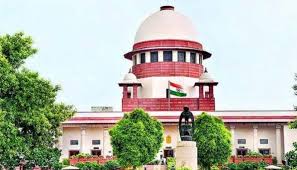
NEW DELHI — In a major victory for medical aspirants and a significant development for India’s healthcare capacity, the Supreme Court of India has cleared the path for admissions to 199 medical seats at the Hamdard Institute of Medical Sciences and Research (HIMSR). The decision, delivered on May 27, 2026, by a bench comprising Justice B.V. Nagarathna and Justice Ujjal Bhuyan, grants a “deemed consent of affiliation” to the institute, effectively resolving months of administrative gridlock that threatened to leave 150 MBBS and 49 postgraduate (PG) seats entirely vacant for the upcoming 2026–27 academic session.
The Breakthrough: Deemed Affiliation Ordered
The apex court’s ruling untangles a complex regulatory knot that emerged from an internal administrative dispute. By declaring that the consent of affiliation shall be deemed to have been granted by Jamia Hamdard Deemed to be University, the Court bypassed an ongoing family feud that had paralyzed the college’s regulatory compliance.
The bench stated explicitly in its order:
“Consequently, in continuation of our earlier order dated 11.02.2026, we observe that the Consent of Affiliation is deemed to have been granted by the first respondent-University in favour of the third petitioner-institution subject to the result of this Special Leave Petition for the academic year 2026-2027. This is particularly in respect of 150 seats of MBBS and 49 post-graduate seats for the very same academic year, namely, 2026-2027.”
Beyond clearing the seats, the Supreme Court issued a comprehensive directive to protect the infrastructure of the medical college:
-
NMC Portal Access: Full and immediate restoration of HIMSR’s access to the National Medical Commission (NMC) portal.
-
Disclosure Acceptance: Mandatory acceptance of the institute’s disclosure reports by the regulatory authorities.
-
Enrolment Fast-Tracking: Immediate issuance of enrolment numbers for the 49 postgraduate students whose academic futures were caught in the crossfire.
Root of the Conflict: A Fractured Institutional Foundation
The legal battle, formally titled Asad Mueed & Ors. v. Jamia Hamdard Deemed To Be University & Ors. (Special Leave to Appeal (C) No. 3280/2026), dates back to structural fractures within the Hamdard organization. Under a Family Settlement Deed (FSD) executed in October 2019, administrative, academic, and financial control of HIMSR was handed over to one branch of the family, while the overarching Jamia Hamdard University remained under the influence of another.
The arrangement deteriorated mid-2025. Citing unauthorized private interference and an inability to exercise direct administrative control over online admission portals, Jamia Hamdard formally withdrew its consent of affiliation. This prompt withdrawal forced the NMC to omit HIMSR’s 150 undergraduate seats from its tentative seat matrix for the 2025–26 session, bringing the intake down to zero and setting off a chain reaction of litigation from the Delhi High Court to the Supreme Court.
[2019: Family Settlement] ➔ Control of HIMSR split from Jamia Hamdard University
[Mid-2025: Affiliation Cut Out] ➔ University revokes consent; NMC blanks out 150 MBBS seats
[Jan-Feb 2026: First Intervention] ➔ Supreme Court forces inclusion of 49 PG seats in Round III Counselling
[May 2026: Full Relief Given] ➔ Supreme Court orders Deemed Affiliation for all 199 seats (2026-27)
This latest ruling expands upon an initial lifeline thrown by the top court on January 27, 2026, when it ordered the Medical Counselling Committee (MCC) to urgently add the 49 PG seats back into the Round III matrix for the current cycle. At that time, the bench noted that allowing highly competitive clinical and non-clinical disciplines—such as general medicine, pediatrics, and radiodiagnosis—to go completely unfilled would be a massive disservice to the public interest.
Public Health Implications: Safeguarding India’s Medical Pipeline
While this case reads as an institutional dispute, healthcare policy experts emphasize that its resolution has profound public health consequences. India is currently undergoing a massive, state-backed expansion of its medical education framework to combat severe, localized workforce deficits.
According to data released by the Ministry of Health and Family Welfare, India’s total pool of MBBS seats reached an unprecedented 137,600 for the 2025–26 academic period—marking an addition of more than 48,000 undergraduate seats since 2020. This historic ramp-up aligns with a central policy mandate to add 75,000 new seats over a five-year horizon.
| Medical Education Metric | Status / Milestone Value |
| Total National MBBS Seats (2025-26) | 137,600 seats |
| Net Growth in Intake Since 2020 | +48,563 seats |
| Total Active Medical Colleges in India | 816 institutions (up from 387 pre-2014) |
| FAIMA Manpower Deficit Reporting Rate | 55.2% of medical staff reporting shortages |
However, an expansion of this scale faces critical operational headwinds. A recent survey conducted by the Federation of All India Medical Association (FAIMA) revealed that 55.2% of surveyed medical institutions report persistent shortages in clinical instruction staff and structural manpower.
“Every single medical seat preserved represents a vital component of India’s long-term healthcare safety net,” says Dr. Aranya Sen, an independent healthcare policy consultant based in New Delhi, who was not involved in the litigation. “When internal administrative or estate disputes disrupt medical college intakes, it isn’t just an institutional problem—it directly impacts our ability to deploy doctors to underserved communities five years down the road. The court’s willingness to prioritize student intake over administrative gridlock sets an vital precedent.”
Important Caveats: A Temporary Academic Shield
Despite the major breakthrough, legal and educational consultants advise a cautious approach for incoming applicants. The Supreme Court’s declaration of a “deemed affiliation” acts strictly as an interim shield designed to prevent institutional stagnation; it does not represent a final determination of ownership or absolute statutory permanence.
The arrangement is bound entirely to the final disposition of the ongoing Special Leave Petition. Because the structural governance of the institute continues to be heavily litigated under the Family Settlement Deed, the long-term recognition of the college beyond the 2026–27 academic term remains highly fluid. Candidates participating in upcoming national counseling rounds are advised to continuously monitor official updates from the National Medical Commission and verify institutional compliance through direct channels using HIMSR’s official academic desk ([email protected]).
Medical Disclaimer
Medical Disclaimer: This article is for informational purposes only and should not be considered medical advice. Always consult with qualified healthcare professionals before making any health-related decisions or changes to your treatment plan. The information presented here is based on current research and expert opinions, which may evolve as new evidence emerges.
References
Legal & Judicial Sources
-
Supreme Court of India: Asad Mueed & Ors. v. Jamia Hamdard Deemed To Be University & Ors., Special Leave to Appeal (C) No. 3280/2026. Order dated May 27, 2026. Bench: Justices B.V. Nagarathna and Ujjal Bhuyan.