 0
0
 0
0
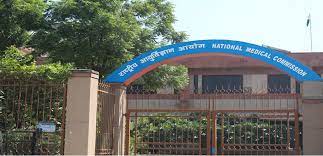
NEW DELHI — In a major development altering the landscape of healthcare accountability and patient rights in India, the country’s apex medical regulator, the National Medical Commission (NMC), has officially transferred the responsibility of deciding whether patients can appeal state-level medical rulings to the Union Health Ministry. For over five years, the regulator’s Ethics and Medical Registration Board (EMRB) has systematically rejected hundreds of patient-filed complaints against doctors. This sudden shifting of responsibility raises urgent questions regarding due process, institutional vacancies, and the legal recourse available to individuals affected by medical malpractice.
Shifting the Regulatory Burden
On May 20, 2026, the EMRB issued an office memorandum stating that because the National Medical Commission (NMC) Act was enacted by the central government, “any interpretation relating to the provisions of the said Act may appropriately be undertaken by the ministry.”
This administrative pivot follows more than a half-decade of policy where the EMRB summarily dismissed patient appeals. Since September 2020, the board maintained that only medical professionals possessed the statutory right to challenge decisions made by state medical councils.
The regulatory shift comes after years of persistent advocacy and Right to Information (RTI) filings led by Dr. KV Babu, an ophthalmologist and healthcare activist from Kerala, who has been drawing the Health Ministry’s attention to the systemic rejection of patient grievances since 2022.
The Legal Tug-of-War: Statutes vs. Ethics
The crux of the controversy lies in a direct conflict between historical patient protections and the NMC’s rigid interpretation of its founding 2019 statute.
For nearly two decades, patient rights were anchored in Section 8.8 of the Medical Council Ethics Code 2002. Introduced following a landmark Supreme Court ruling, the clause explicitly states:
“Any person aggrieved by the decision of the State Medical Council on any complaint against a delinquent physician, shall have the right to file an appeal to the MCI within a period of 60 days…”
However, when the NMC replaced the Medical Council of India (MCI) in 2020, regulators began prioritizing Section 30(3) of the new NMC Act, 2019. The text states: “A medical practitioner or professional who is aggrieved by any action taken by a State Medical Council may prefer an appeal to the EMRB.”
In October 2021, the NMC passed a unanimous internal interpretation concluding that this clause restricted the appellate window exclusively to doctors. Activists strongly contest this logic.
“The word ‘only’ was introduced by the NMC; it did not exist in Section 30(3),” says Dr. KV Babu. “There is absolutely nothing in the text of the NMC Act or the specific section that bars patients from filing appeals.”
Stark Disparities in Numbers
Data obtained through multiple RTI inquiries highlights a stark imbalance in how complaints have been managed over the last five years. While doctors regularly utilized the national appellate system to contest state council rulings, patients seeking the exact same oversight found the doors closed.
Appeals Handled by the EMRB (Sept 2020 – June 2026)
| Category of Appellant | Appeals Processed | Appeals Rejected |
| Medical Practitioners | 185 | 0 |
| Patients / Aggrieved Individuals | 0 | 256+ |
This regulatory gridlock occurs against a backdrop of rising medical disputes nationwide. Legal and healthcare databases indicate that India saw approximately 65,000 medical negligence cases filed across consumer forums and traditional courts in 2025 alone. Furthermore, peer-reviewed estimates published in the Indian Journal of Medical Ethics project an annual incidence rate of roughly 5.2 million medical malpractice occurrences across the country’s vast healthcare ecosystem, emphasizing the critical need for clear, accessible administrative remedy.
A Vacant Board Raising Process Questions
Compounding the legal confusion is a severe institutional crisis within the regulatory body itself. According to the NMC’s official directory, the five-member EMRB is operating almost entirely vacant.
EMRB BOARD ROSTER (JUNE 2026)
├── President: VACANT (Since Sept 2022)
├── Whole-Time Member 1: VACANT (Since Sept 2022)
├── Whole-Time Member 2: VACANT (Since Jan 2025)
├── Part-Time Member 1: Dr. Surinder Pal Singh (Serving)
└── Part-Time Member 2: VACANT
With four out of five seats empty, Dr. Surinder Pal Singh of the Punjab Medical Council remains the board’s sole functioning part-time member. The vacant status of the board has prompted sharp criticism from patient advocacy groups, who question how a legally binding office memorandum transferring statutory interpretation to the Ministry could be validly executed by an empty board.
Chronicling the Dispute
The escalation of this regulatory impasse has developed over more than two decades of legal updates and policy reversals:
The Public Health and Consumer Impact
For the average healthcare consumer, the regulatory gridlock strips away a crucial layer of safety and accountability. When a state medical council dismisses a claim of severe medical negligence, an elite national review is effectively unavailable without launching an expensive, multi-year court battle.
Speaking at the 18th Annual MedLegal Review, Supreme Court Advocate Mahendra Bajpai emphasized the delicate balance required to manage medical disputes objectively. “Public trust in healthcare systems is fragile; courts and regulators must guard it safely without crushing the very hands that heal,” Bajpai noted, reiterating that transparent, institutional review boards protect both well-intentioned physicians and injured patients.
Institutional Defense and Counterarguments
The NMC’s legal counsel has consistently defended its positioning by citing a standard principle of statutory interpretation: when an older regulation conflicts with a newly enacted parliamentary statute, the newer law takes precedence. Because the NMC Act of 2019 explicitly outlines appeals for “medical practitioners,” the commission’s ethics division maintains that the historical 2002 guidelines were superseded.
In response to legislative questions regarding oversight, Minister of State for Health Anupriya Patel clarified that the central government maintains institutional transparency by directly appointing the chairperson and leadership of the four autonomous regulatory boards. Furthermore, legal analysts note that the 2002 Ethics Code was never formally repealed or replaced in its entirety by Parliament, meaning Clause 8.8 remains technically active.
Looking Ahead: The Search for Clarity
The ultimate decision now rests with the Union Health Ministry, which must issue a definitive framework clarifying whether the original spirit of consumer protection laws extends into the modern NMC era.
A legislative remedy has been drafted since December 2024 in the form of an amendment bill to the NMC Act. If enacted, the bill would explicitly restore the right of “patients, their relatives, or complainants” to prefer appeals directly before the EMRB. However, the finalization of this bill remains stalled in the legislative pipeline. Until the Ministry delivers its formal statutory interpretation or Parliament votes on the amendment, millions of Indian healthcare consumers remain in legal limbo, waiting to see if their right to national regulatory recourse will be restored.
Medical Disclaimer
Medical Disclaimer: This article is for informational purposes only and should not be considered medical advice. Always consult with qualified healthcare professionals before making any health-related decisions or changes to your treatment plan. The information presented here is based on current research and expert opinions, which may evolve as new evidence emerges.
References
- https://health.economictimes.indiatimes.com/news/policy/after-stonewalling-patient-appeals-for-years-nmc-lobs-ball-to-health-ministrys-court/131457791?utm_source=latest_news&utm_medium=homepage