 0
0
 0
0
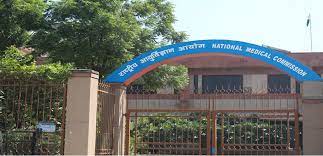
NEW DELHI — In a major regulatory update that directly impacts thousands of Indian students holding foreign medical degrees, the National Medical Commission (NMC) has issued a vital clarification regarding the eligibility of Foreign Medical Graduates (FMGs) who completed portions of their medical education through online classes.
The newest directive, issued by the NMC’s Under Graduate Medical Education Board (UGMEB), establishes that FMGs who underwent online learning will only be eligible for the standard one-year mandatory internship in India if they have fully compensated for those virtual sessions with verifiable, physical, on-site clinical training and have successfully passed an MBBS-equivalent examination.
This latest announcement modifies the practical execution of a highly restrictive notice issued just weeks prior, introducing a rigorous, documentation-heavy pathway for foreign-trained doctors seeking registration in India.
The Regulatory Pivot: From Blanket Rejection to Conditional Eligibility
The regulatory landscape for FMGs shifted rapidly. The UGMEB issued a strict public notice stating that certificates compensating for online theory classes with offline practical or clinical training would not be accepted under any circumstances. According to that directive, any FMG who attended online classes during their medical course would be barred from the standard route. Instead, they would be required to clear the Foreign Medical Graduate Examination (FMGE) and subsequently undergo an extended Compulsory Rotating Medical Internship (CRMI) spanning two to three years—effectively repeating a 12-month internship schedule multiple times to make up for lost clinical hours.
The strictness of the initial notice caused widespread anxiety among the FMG community, many of whom were forced into online education due to unprecedented global disruptions, including the COVID-19 pandemic and geopolitical conflicts.
Recognizing the severe logistical and professional bottlenecks this would create, the NMC issued a crucial clarification. While the commission maintained its stance against standalone retrospective “compensation certificates,” it softened the practical impact for a specific subset of students. The updated directive specifies that students who have “sufficiently compensated” their virtual classes through physical, on-site clinical training at their foreign institutions, and subsequently passed an MBBS-equivalent examination, will be eligible for the standard one-year mandatory internship under the CRMI Regulations.
The Core Shift: The regulatory focus has moved away from a blanket penalization of online learning. Instead, the NMC is enforcing a strict evaluation of whether missing clinical exposure has been legitimately remedied in person.
Balancing Public Safety with Professional Integration
From a public health perspective, the NMC’s strict oversight addresses a foundational truth in medical education: clinical competence cannot be learned through a screen. Medical training relies fundamentally on hands-on patient interaction, the development of tactile diagnostic skills, and supervised real-world decision-making.
Regulators argue that maintaining a rigid baseline for clinical hours is essential to reassure patients, hospital systems, and the public that any practicing physician possesses the minimum competencies required for safe, independent medical practice. In a country managing a massive healthcare infrastructure, standardizing these entry requirements prevents downstream risks to patient safety.
However, public health experts also note the counter-arguments regarding workforce optimization. Imposing multi-year internship penalties or complex bureaucratic hurdles on foreign-trained doctors can create severe bottlenecks, delaying the entry of qualified professionals into a healthcare system currently facing a shortage of doctors, particularly in rural and semi-urban sectors.
Expert Perspectives and Operational Challenges
Independent medical education analysts and healthcare administrators emphasize that while the clarification provides a lifeline for many students, it introduces substantial administrative complexity.
“The primary challenge now lies in execution and standardization,” says Dr. Aranya Sen, a medical education consultant not involved in the drafting of the guidelines. “The NMC states that online classes must be ‘sufficiently compensated’ physically, but the public notices do not explicitly define the exact mathematical threshold or the precise format of documentation required to satisfy ‘sufficiency’ across borderline cases.”
This ambiguity places a heavy administrative burden on State Medical Councils, medical colleges, and the graduates themselves. State councils must now meticulously audit diverse academic calendars, transcripts, and clinical logs originating from dozens of different countries—each maintaining unique curriculum structures and evaluation systems. Without uniform national criteria for what constitutes “sufficient compensation,” there is a distinct risk of uneven interpretation and varying eligibility timelines from one state to another.
What This Means for FMGs and Healthcare Employers
For foreign medical graduates, the practical takeaways are clear and immediate. The pathway to practicing medicine in India is no longer dictated solely by obtaining a degree; it is strictly dependent on proving physical training compliance to the satisfaction of regulatory bodies.
Actionable Advice for Graduates:
-
Exhaustive Documentation: FMGs must secure and compile meticulous records detailing the exact timelines of online instruction versus physical, on-site clinical postings.
-
Verifiable Institutional Proof: Transcripts, logbooks signed by clinical supervisors, and official institutional letters confirming the physical completion of compensated training hours are vital.
-
Framework Compliance: All other baseline conditions from the NMC’s comprehensive framework remain firmly in force, meaning graduates must still successfully clear the rigorous FMGE testing protocols.
For healthcare employers and hospital administrators, the update provides a reinforced screening mechanism. It guarantees that incoming interns and junior residents entering Indian hospitals have met standardized thresholds of physical clinical exposure, regardless of the disruptions their foreign universities may have faced over the last several years.
As medical education continues to navigate the balance between modern digital learning and indispensable bedside training, the NMC’s evolving policies demonstrate that clinical exposure remains a non-negotiable benchmark for public health safety in India.
References
- https://medicaldialogues.in/health-news/nmc/nmc-issues-12-point-faq-on-fmg-online-classes-compensation-rules-clarifies-registration-internship-clerkship-172630
Medical Disclaimer: This article is for informational purposes only and should not be considered medical advice. Always consult with qualified healthcare professionals before making any health-related decisions or changes to your treatment plan. The information presented here is based on current research and expert opinions, which may evolve as new evidence emerges.