 0
0
 0
0
April 9, 2026
NEW DELHI — In a move set to transform the landscape of infectious disease control, the World Health Organization (WHO) has officially endorsed near-point-of-care (NPOC) molecular tests using simple tongue swabs to diagnose tuberculosis (TB). Announced in early 2026, this diagnostic shift addresses one of the most stubborn barriers in global health: the difficulty of collecting sputum samples. For India—which bears 25% of the global TB burden—these innovations from domestic firms like Molbio Diagnostics and partnerships involving Huwel Lifesciences offer a vital lifeline to the National TB Elimination Programme (NTEP) as it races to close detection gaps in the country’s most vulnerable populations.
The Evolution of TB Diagnostics: Moving Beyond the Microscope
For over a century, the frontline defense against TB was sputum smear microscopy. While reliable in high-resource settings, the method offers only about 50% sensitivity, meaning it misses nearly half of all active cases. Furthermore, it requires specialized laboratory staff and the “coughing up” of deep lung mucus (sputum), a process many patients find difficult or impossible.
The last decade saw the rise of rapid molecular tests, such as the WHO-approved GeneXpert and India’s homegrown Truenat by Molbio Diagnostics. These Nucleic Acid Amplification Tests (NAATs) revolutionized care by detecting Mycobacterium tuberculosis (MTB) DNA and drug resistance in under two hours with up to 98% sensitivity.
Under the NTEP, upfront molecular testing in India surged from less than 5% in 2013 to approximately 65% by 2023. However, even with 11,000 Truenat machines deployed across India’s primary health centers, the “sputum barrier” remained.
Breakthrough: The Power of a Simple Swab
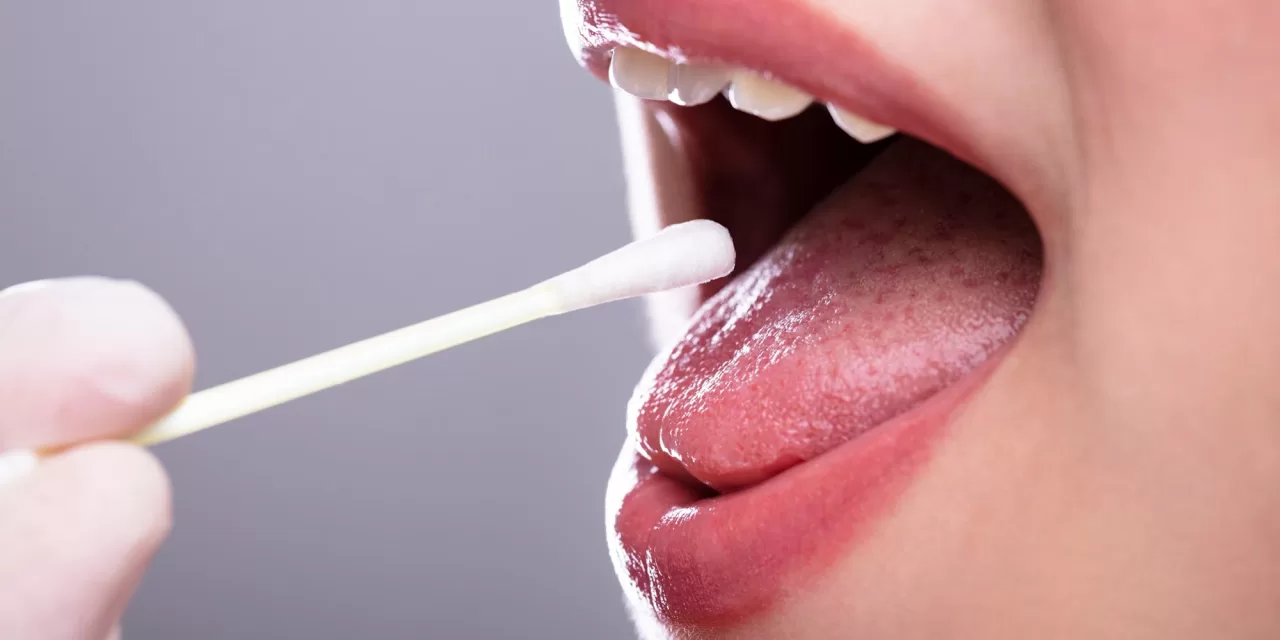
The newly endorsed NPOC tests allow healthcare workers to collect samples by simply swabbing a patient’s tongue. This non-invasive method is particularly revolutionary for those who cannot easily produce sputum: children, the elderly, individuals living with HIV, and patients in the very early stages of infection.
“Truenat was designed as a point-of-care solution for primary health centers,” said Sriram Natarajan, founder and CEO of Molbio Diagnostics. “This tongue swab adaptation will help scale up testing on people who can’t produce sputum, ensuring no one is left behind in the diagnostic net.”
Recent studies validated by the WHO indicate that tongue swab NAATs, such as the Truenat MTB Ultima, achieve roughly 72% sensitivity and 100% specificity when compared to traditional sputum standards. While the sensitivity is slightly lower than sputum-based molecular tests, the ease of collection allows for much broader screening.
Leading Innovations in the Field
-
Pluslife Biotech & Huwel Lifesciences: Their MiniDock MTB test provides PCR-level results with over 95% sensitivity in just 30 minutes using a tongue swab.
-
Molbio Diagnostics: The Truenat platform is currently undergoing final regulatory clearances for its tongue-swab-specific kits to be used in the field.
Expert Validation: Democratizing Healthcare
Global health experts view the shift toward “Global South” manufacturing as a turning point for equity. Dr. Madhukar Pai, Chair of Global and Public Health at McGill University, emphasized the significance of local innovation.
“With affordable NPOC tests now being manufactured in the global south, it is exciting to see Indian innovations that can be used with tongue swabs,” Dr. Pai noted. “India can now scale them up to replace the old, inefficient smear microscopy.”
Sarang Deo, a member of the WHO Strategic and Technical Advisory Group, pointed out that while India has the largest rapid molecular network globally, only 45% of centers use these tools upfront due to lingering logistical and cost hurdles. The tongue swab’s dry-protocol—which simplifies transport and storage—could significantly lower these barriers.
Public Health Implications: A Faster Path to Elimination
India’s TB incidence dropped by 21% to 187 per lakh population by 2024—the steepest decline in the world—yet the goal of total elimination remains elusive. Undiagnosed “silent carriers” continue to fuel community transmission.
By enabling same-day diagnosis at peripheral clinics, tongue swab tests could:
-
Reduce Community Spread: Faster diagnosis means patients start treatment days or weeks earlier.
-
Protect Vulnerable Groups: Children, who often have “paucibacillary” TB (low bacterial load), are much easier to test via swab.
-
Curb Drug Resistance: Early molecular testing identifies Rifampicin resistance immediately, preventing the spread of Multidrug-Resistant TB (MDR-TB).
Additionally, the integration of Artificial Intelligence (AI) is boosting these efforts. Companies like Qure.ai are pairing portable digital X-rays with molecular confirmation, allowing for “screen-and-treat” camps in high-burden states like Maharashtra and Delhi.
Challenges and Limitations: The Road Ahead
Despite the optimism, medical experts urge caution. The primary limitation of tongue swabs is their lower sensitivity compared to sputum in patients with very low bacterial counts.
Médecins Sans Frontières (MSF) issued a factsheet warning that “tongue-swab-based testing is likely to miss TB in people with a low bacillary load.” Because a negative swab result cannot 100% rule out TB, clinicians must still rely on clinical judgment and chest X-rays for symptomatic patients who test negative.
Furthermore, full national integration requires:
-
Regulatory Speed: Swift approval by Indian regulators for wide-scale commercial use.
-
Logistics: Establishing district-level supply chains for the specific swab kits.
-
Training: Educating thousands of community health workers on standardized swabbing techniques to ensure sample quality.
The Path Forward
As India enters the final stretch of its TB elimination mission, the transition from “blunt” diagnostic tools to precision molecular swabs marks a new era. The technology is no longer confined to high-tech hospitals; it is reaching the village level. While execution and equitable scaling remain the primary hurdles, the tools to find every case are finally within reach.
References
-
WHO. (March 2026). WHO recommends near point-of-care tests, tongue swabs, and sputum pooling for TB diagnosis. WHO News Room
-
Economic Times Health. (April 2026). New molecular tests to change how TB is detected.
Medical Disclaimer: This article is for informational purposes only and should not be considered medical advice. Always consult with qualified healthcare professionals before making any health-related decisions or changes to your treatment plan. The information presented here is based on current research and expert opinions, which may evolve as new evidence emerges.