 0
0
 0
0
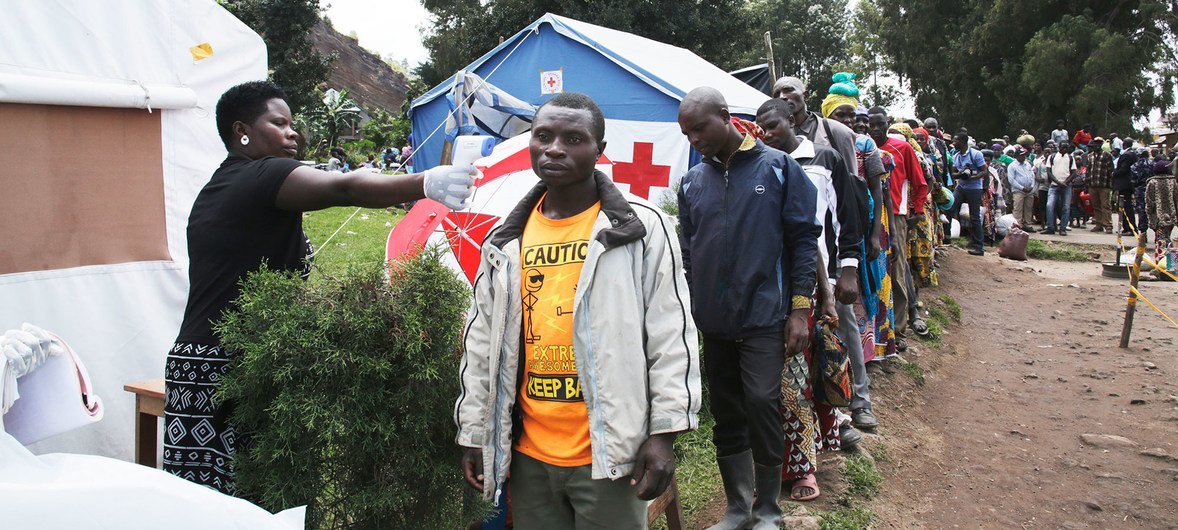
KINSHASA, Democratic Republic of Congo — A rapidly expanding Ebola outbreak in the eastern region of the Democratic Republic of Congo (DRC) has escalated into a global health crisis. As of June 12, 2026, health authorities confirmed that the number of infected individuals has surged to 689, with the death toll rising to 139. Triggered by the rare Bundibugyo species of the virus, the outbreak has spread across 29 health zones spanning three eastern provinces. The situation has prompted the World Health Organization (WHO) to declare a Public Health Emergency of International Concern (PHEIC), citing a critical lack of specific medical countermeasures and an escalating humanitarian crisis in the affected region.
The Scale of the Surge: Epidemic Epicenter in Ituri
The DRC Ministry of Public Health released an updated situation report indicating that 17 new laboratory-confirmed cases and five deaths were documented in a single 24-hour window. Transmission remains heavily concentrated in the eastern province of Ituri, though active chains of transmission have also been confirmed in North Kivu and South Kivu provinces.
Beyond the confirmed data, epidemiologists are tracking 168 suspected cases, which include 64 deaths currently awaiting laboratory verification. The crisis is disproportionately impacting highly vulnerable populations. The United Nations High Commissioner for Refugees (UNHCR) separately verified two Ebola-related fatalities within an overcrowded camp for internally displaced persons (IDPs) in Ituri, raising fears of catastrophic spread within congested humanitarian settlements.
Understanding the Bundibugyo Strain: The Danger of a Subtype
Unlike the highly publicized Zaire strain responsible for the massive 2018–2020 West African epidemic and subsequent DRC outbreaks, this epidemic is driven by Bundibugyo ebolavirus. First identified in Uganda in 2007, the Bundibugyo strain is historically less common but remains highly lethal.
Preliminary data from current clinical cases indicates a case fatality rate (CFR) swinging between 30% and 50%.
“The rate of people who died among those confirmed to have the infection is between 30% and 50%,” explained Dr. Anais Legand, a member of the High Threat Pathogens Team within the WHO Health Emergencies Program. “It’s huge. It means that up to five out of 10 people are likely to die.”
Dr. Legand noted that these figures remain preliminary, and ongoing surveillance is required to map the exact clinical trajectory of the virus.
The Critical Countermeasure Gap: No Vaccines or Therapeutics
The most significant operational challenge in managing this outbreak is the absolute absence of approved, strain-specific medical tools. While the global health community successfully deployed the Ervebo vaccine to curb previous outbreaks, that vaccine specifically targets the Zaire strain.
The WHO explicitly stated that existing recommended vaccines offer only low to modest cross-protection against the Bundibugyo virus in non-human primate models and are not licensed for this species. Currently, there are no approved vaccines, targeted therapeutic drugs (such as monoclonal antibodies), or rapid point-of-care diagnostics available for the Bundibugyo strain.
Supportive clinical management remains the sole therapeutic approach. This includes:
-
Intravenous or oral rehydration therapies
-
Electrolyte maintenance
-
Symptomatic treatment of secondary infections
-
Rigorous monitoring of blood pressure and oxygen levels
Medical experts emphasize that early supportive care significantly increases survival rates, even in the absence of an absolute cure.
International Standstill and Operational Bottlenecks
Following the declaration of a PHEIC by WHO Director-General Dr. Tedros Adhanom Ghebreyesus, international agencies launched a coordinated containment plan. However, response teams face severe operational bottlenecks on the ground:
-
Community Resistance: Local containment teams report widespread reluctance among community members to permit post-mortem swabbing, which is critical for identifying hidden clusters of the disease.
-
Infrastructure Deficits: Ebola Treatment Centers (ETCs) across the eastern provinces are rapidly reaching maximum capacity.
-
Supply Shortages: Health facilities in North Kivu report acute shortages of basic infection prevention and control (IPC) materials, including personal protective equipment (PPE).
-
Funding Shortfalls: Despite a joint continental response plan launched by the Africa Centres for Disease Control and Prevention (Africa CDC) and the WHO, responders face an immediate $21.5 million financial deficit.
To stabilize operations, the United States government mobilized an initial $13 million allocation to fund 50 localized treatment clinics, while South Africa pledged $2.5 million to assist frontline medical teams.
Historical Context and Origins
Though officially declared by the DRC Health Ministry on May 15, 2026, phylogenetic analysis and retroactive epidemiological tracing indicate the virus was quietly circulating much earlier. The earliest suspected fatality linked to the cluster occurred on April 20, 2026.
The geographic focus complicates containment. The eastern DRC is a zone characterized by long-term conflict, dense populations, rapid trade transit, and porous international borders. While laboratory testing has identified two cases in neighboring Uganda among individuals traveling from the DRC, health authorities confirm there is currently no active, sustained transmission occurring within Ugandan borders.
Public Health Implications and Global Outlook
For the broader public health community, the Bundibugyo outbreak exposes significant vulnerabilities in global pandemic preparedness. The rapid mutation and re-emergence of neglected filovirus strains highlight the limits of strain-specific vaccine stockpiles.
While candidate multivalent vaccines—designed to provide broad protection across the Zaire, Sudan, Bundibugyo, and Marburg strains—are under development by institutions such as the University of Oxford and Moderna, they remain in early preclinical stages. Specialists estimate that deploying experimental candidate vaccines under compassionate-use protocols during this current crisis could take anywhere from three to nine months.
For global travelers and health-conscious readers, the WHO emphasizes that Ebola is not an airborne pathogen; it transmits exclusively through direct contact with the blood, secretions, organs, or other bodily fluids of infected individuals, or surfaces contaminated with these fluids. Standard health guidelines advise avoiding non-essential travel to high-transmission health zones in eastern Africa and strictly adhering to local travel advisories.
Medical Disclaimer
This article is for informational purposes only and should not be considered medical advice. Always consult with qualified healthcare professionals before making any health-related decisions or changes to your treatment plan. The information presented here is based on current research and expert opinions, which may evolve as new evidence emerges.
References
- https://ddindia.co.in/2026/06/ebola-cases-in-dr-congo-rise-to-689-death-toll-reaches-139/