 0
0
 0
0
March 22, 2026
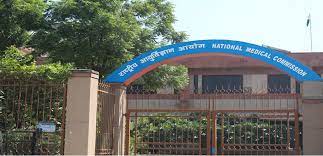
NEW DELHI — In a decisive move to fortify the quality of specialist medical education in India, the National Medical Commission (NMC) has issued updated mandates requiring all standalone postgraduate (PG) medical institutes to maintain a minimum of 220 beds and several core functional departments. Announced via a public notice on March 11, 2026, by the Post-Graduate Medical Education Board (PGMEB), these amendments to the Post-Graduate Medical Education Regulations (PGMER) 2023 became effective February 20, 2026. The new standards aim to ensure that the next generation of super-specialists—including cardiologists and neurologists—receives rigorous, hands-on clinical training amid a national push to bridge the critical gap in specialized healthcare providers.
Strengthening the Foundation of Specialization
The latest guidelines specifically target institutions established under Section 3.1(iii) of PGMER-2023—standalone PG colleges that operate without an affiliated undergraduate (MBBS) program. For years, the Indian medical education landscape has been dominated by large teaching hospitals that handle both tiers of education. However, the rise of standalone centers necessitated a clearer regulatory framework to prevent the dilution of training quality.
Under the new rules, these institutes must not only provide 220 beds but also ensure a consistent 80% bed occupancy rate year-round. This requirement is designed to eliminate “ghost facilities”—hospitals that exist on paper or maintain empty wards but fail to provide residents with the diverse patient load necessary to master complex clinical skills.
Mandatory Departments: The “Backbone” of Care
To support advanced medical training, the NMC has identified several non-negotiable functional departments that every standalone PG institute must house. These include:
-
Biochemistry
-
Pathology
-
Microbiology
-
Radio-Diagnosis
Furthermore, Anaesthesiology is now mandatory for any institute offering surgical specialties. Beyond clinical departments, the NMC has made teaching facilities for basic sciences—Anatomy, Physiology, and Pharmacology—compulsory.
“Think of these departments as the central nervous system of a hospital,” explains Dr. Sanjay Pai, a former head of medical education at a premier Mumbai institute. “You cannot train a world-class cardiologist or a neurosurgeon in a vacuum. They need immediate access to high-quality diagnostics and pathology to make real-time clinical decisions. Mandating 220 beds ensures that the volume of cases is high enough that a trainee isn’t just reading about a condition, but actively managing it.”
Bridging the Specialist Gap
The timing of these regulations is critical. India currently faces a significant deficit in specialized care. While the World Health Organization (WHO) recommends a 1:1,000 doctor-to-population ratio, many Indian regions struggle with a ratio of roughly 2.5 doctors per 1,000 people—a figure that looks better on paper than it does in practice, as the majority of these are general practitioners concentrated in urban hubs.
The Ministry of Health estimates that India will require an additional 25,000 cardiologists and neurologists by 2030. Standalone PG institutes were envisioned as a way to fast-track this production by allowing specialized hospitals to become teaching hubs. By setting high infrastructure bars, the NMC hopes to ensure that “fast-tracking” does not lead to “under-training.”
A Balanced Perspective: Quality vs. Accessibility
While many in the medical community laud the move, it is not without its critics. Public health consultants and some private stakeholders have raised concerns about the “one-size-fits-all” nature of a 220-bed mandate.
“We must be careful that these high barriers to entry don’t inadvertently stall the expansion of PG seats, which currently stands at about 70,000 annually,” says Dr. Meera Reddy, a public health consultant. “Small, highly specialized boutique hospitals may provide excellent care but might struggle to hit the 220-bed mark. There is also a risk that these institutes will cluster in metropolitan areas where they can guarantee 80% occupancy, leaving rural and semi-urban populations further behind.”
Additionally, there are concerns regarding the financial implications. With some private PG seats already costing upwards of ₹50 lakhs per year, the overhead of maintaining a 220-bed facility and five mandatory departments could lead to further fee hikes, potentially limiting specialization to the wealthiest students.
Accountability and Enforcement
The NMC’s Medical Assessment and Rating Board (MARB) will be responsible for enforcing these standards through phased assessments and the review of annual returns. Institutions found in non-compliance face severe penalties, including the barring of new seat approvals or total derecognition.
This move follows a series of refinements to the PGMSR (Post-Graduate Medical Requirement) since 2023, which have gradually tightened faculty-to-student ratios—currently set at one faculty member per two PG seats in broad specialties.
What This Means for Patients and Students
For the general public, the long-term implications are largely positive. Stricter training standards generally correlate with a reduction in medical errors and higher surgical success rates. When a patient visits a specialist graduated from an NMC-compliant standalone institute, they have a higher level of assurance that the provider has undergone rigorous clinical exposure.
For Aspiring Specialists:
-
Due Diligence: Prospective residents should verify that their chosen standalone institute meets the updated 220-bed and departmental mandates before applying.
-
Quality of Training: While the curriculum remains standardized, the “hands-on” experience in a high-occupancy hospital is an invaluable asset for future practice.
For Healthcare Consumers:
-
Standardized Care: These regulations aim to create a more uniform level of expertise across the country.
-
Infrastructure Growth: The mandate encourages hospitals to invest in better diagnostic facilities (Radio-Diagnosis and Microbiology), which benefits the general patient population, not just the students.
The Road Ahead
As the academic year 2026-27 approaches, the medical education sector will be under intense scrutiny. The NMC’s focus on “quality over quantity” marks a pivotal shift in India’s strategy to become a global hub for medical tourism and specialized care. While the transition may be challenging for smaller institutions, the ultimate goal remains clear: a healthcare system where every specialist is backed by a foundation of robust, verifiable clinical experience.
References
-
National Medical Commission (NMC). Public Notice: Minimum Standards of Requirements for Post-Graduate Courses-2023 (PGMSR-2023, Amended as on 20.02.2026). Released March 11, 2026. [DOI/Link: nmc.org.in/MCIRest/open/getDocument?path=/Documents/Public-Notice-11-Mar-2026.pdf]
-
Medical Dialogues News Bureau. “NMC specifies bed strength, mandatory depts for standalone PG institutes.” Published March 21, 2026.
Medical Disclaimer: This article is for informational purposes only and should not be considered medical advice. Always consult with qualified healthcare professionals before making any health-related decisions or changes to your treatment plan. The information presented here is based on current research and expert opinions, which may evolve as new evidence emerges.