 0
0
 0
0
SEOUL — In a potential watershed moment for regenerative medicine, an international research team has identified a specific protein that acts as a “shield” for joint cartilage, successfully halting the progression of osteoarthritis in preclinical models. The study, published this week in Nature Communications, reveals that a protein known as Small Heterodimer Partner (SHP) is essential for maintaining joint integrity. By restoring levels of this protein through gene therapy, researchers were able to significantly reduce cartilage breakdown and alleviate chronic pain, offering a glimmer of hope for the more than 500 million people worldwide living with the debilitating joint condition.
The Silent Erosion: Why Osteoarthritis Remains a Global Challenge
Osteoarthritis (OA) has long been the “Achilles’ heel” of aging. Unlike a broken bone that knits itself back together, the hyaline cartilage that cushions our knees, hips, and fingers has a notoriously poor ability to self-repair. Once it begins to fray and thin—a process often driven by age, injury, or obesity—the resulting bone-on-bone friction leads to chronic inflammation and loss of mobility.
For decades, the medical community has been limited to “management” rather than “cure.” Standard treatments typically involve a ladder of interventions: starting with acetaminophen or ibuprofen, moving to corticosteroid injections, and eventually culminating in total joint replacement surgery.
“We have been very good at masking the smoke, but we haven’t been able to put out the fire,” says Dr. Sarah Emerson, a rheumatologist not involved in the study. “The discovery of a molecular ‘brake’ like SHP could change the trajectory of how we treat joint decay.”
The Discovery: SHP as the Body’s Natural Cartilage Sentry
The breakthrough came from a joint effort led by Dr. Chul-Ho Lee and Dr. Yong-Hoon Kim at the Korea Research Institute of Bioscience and Biotechnology (KRIBB), alongside Professor JinHyun Kim of Chungnam National University Hospital.
The team began by examining cartilage samples from human patients undergoing joint surgery and compared them to healthy samples. They noticed a striking pattern: as the severity of osteoarthritis increased, the presence of the SHP protein vanished.
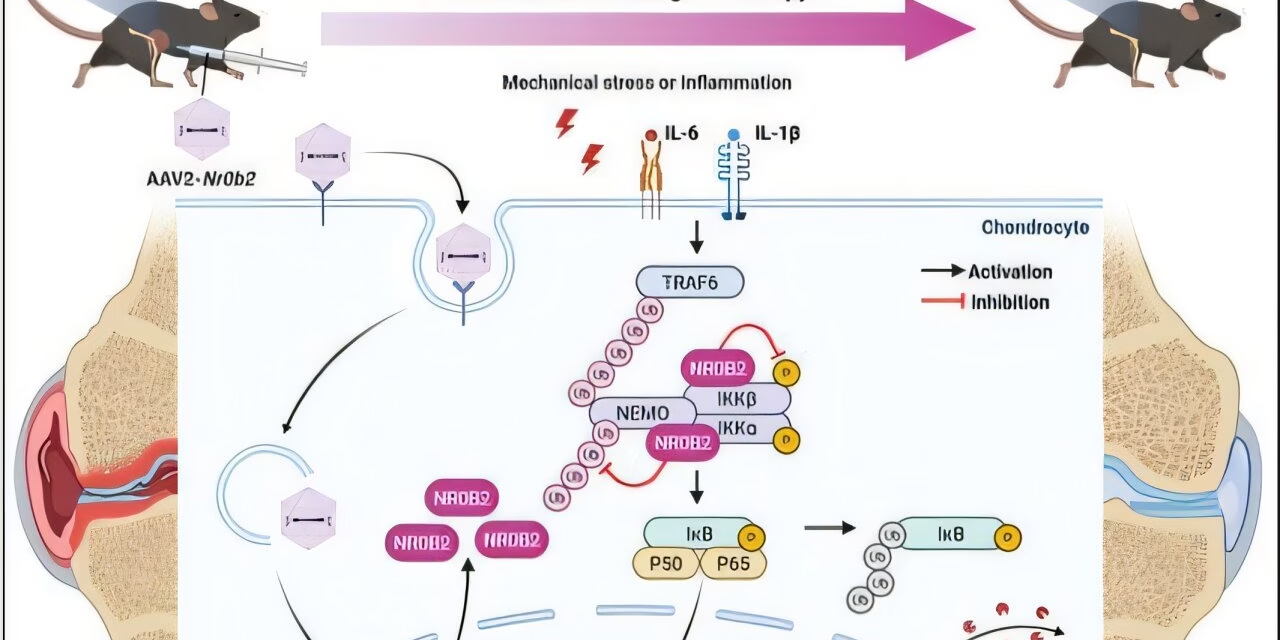
To test whether this was a mere coincidence or a direct cause of the disease, the researchers utilized “knockout” mice—animals genetically engineered to lack the SHP protein. The results were definitive. Without SHP, the mice developed aggressive, accelerated joint destruction and exhibited significantly higher pain markers. Conversely, when the team used a viral vector to “re-insert” the SHP gene into the joints of mice with established OA, the degradation slowed dramatically.
The Biological “Security Guard”
The study identified exactly how SHP protects the joint. In a healthy joint, cartilage is constantly balanced between “building up” and “breaking down.” In osteoarthritis, enzymes called MMP-3 and MMP-13 act like biological “scissors,” cutting through the collagen matrix of the cartilage.
The researchers found that SHP acts as a regulator for the IKKβ/NF-κB signaling pathway—a major inflammatory highway in the body. By keeping this pathway in check, SHP prevents the overproduction of those destructive “scissors,” effectively preserving the cartilage’s structural integrity.
Moving Toward “One-and-Done” Therapy
Perhaps the most promising aspect of the KRIBB study is the delivery method. The researchers employed a gene delivery approach, injecting a viral vector directly into the joint.
In the animal models, a single injection provided long-lasting protection. This “bio-factory” approach—where the body’s own cells are reprogrammed to produce the protective SHP protein—could eventually replace the need for frequent, painful injections or daily medication.
“This study is the first to demonstrate that the SHP protein plays a critical role in protecting cartilage,” said Dr. Chul-Ho Lee, the study’s lead investigator. “Therapeutic strategies targeting SHP may offer a new approach to slowing or preventing osteoarthritis progression, rather than just managing the symptoms.”
Statistical Context and Public Health Impact
The urgency for such a treatment is underscored by global health statistics:
-
Prevalence: According to the World Health Organization (WHO), osteoarthritis is the leading cause of disability among older adults.
-
Economic Burden: In the United States alone, the annual cost of arthritis (including lost wages and medical expenses) exceeds $300 billion.
-
Aging Population: By 2050, the number of people aged 60 and over is expected to double, suggesting an impending “tsunami” of joint-related disability.
A Balanced Perspective: The Long Road to the Clinic
While the results are scientifically rigorous, experts urge a note of cautious optimism. There are several hurdles to overcome before this reaches your local pharmacy:
-
Species Gap: Success in mice does not always translate to success in humans. Human joints are larger, bear more weight, and have different metabolic rates.
-
Safety of Gene Therapy: While viral vectors are increasingly used in medicine (such as in certain cancer treatments and vaccines), the long-term safety of injecting them into joints requires years of clinical trials.
-
Timing: For patients who have already reached “end-stage” osteoarthritis, where the cartilage is entirely gone, restoring SHP may be too late. The therapy likely holds the most promise for early-to-mid-stage patients.
“It is a beautiful piece of mechanistic work,” says Dr. Emerson. “The next step will be to see if this protein can be stabilized in a more traditional drug form, or if the gene therapy approach can meet the high safety bars required by the FDA.”
What This Means for Patients Today
For those currently struggling with joint pain, this research reinforces the importance of early intervention. Protecting the cartilage you still have is significantly easier than replacing it once it is lost.
Current evidence-based recommendations for joint health include:
-
Low-impact exercise: Strengthening the muscles around the joint (like the quadriceps for the knee) reduces the mechanical load on the cartilage.
-
Weight management: Every pound of body weight lost can result in a four-pound reduction in knee joint pressure.
-
Anti-inflammatory diet: While not a “cure,” diets rich in Omega-3 fatty acids may help dampen the inflammatory pathways that SHP naturally regulates.
As the scientific community watches the development of SHP-based therapies, the goal of “disease-modifying” osteoarthritis drugs—once thought impossible—now seems to be within reach.
References
-
Primary Study: Kang, E. J., et al. (2026). “Small heterodimer partner protects against osteoarthritis by inhibiting IKKβ/NF-κB-mediated matrix-degrading enzymes in chondrocytes.” Nature Communications. DOI: 10.1038/s41467-026-69864-5.
Medical Disclaimer: This article is for informational purposes only and should not be considered medical advice. Always consult with qualified healthcare professionals before making any health-related decisions or changes to your treatment plan. The information presented here is based on current research and expert opinions, which may evolve as new evidence emerges.