 0
0
 0
0
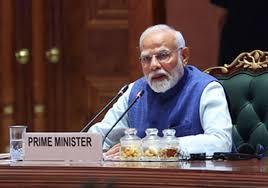
NEW DELHI — In a significant move to reshape the nation’s medical landscape, Prime Minister Narendra Modi has positioned homeopathy as a cornerstone of India’s journey toward becoming a developed nation by 2047. Sharing an authoritative blueprint authored by Union Minister of State for AYUSH, Prataprao Jadhav, on April 9, 2026, the Prime Minister emphasized that homeopathy’s “strong community connect” and “sustainable approach” are vital to achieving the health sovereignty goals of Viksit Bharat.
The endorsement comes as India celebrates World Homeopathy Day 2026 under the theme “Homeopathy for Sustainable Health.” This vision advocates for a pluralistic healthcare model that blends traditional wisdom with modern clinical needs to serve India’s 1.4 billion citizens through affordable, preventive care.
A Pillar for Post-Pandemic Resilience
The Prime Minister’s spotlight on homeopathy follows a period of rapid institutional growth. Minister Prataprao Jadhav’s article details how the system has evolved from its 19th-century roots into a structured powerhouse. Today, India boasts one of the world’s largest homeopathic workforces, featuring:
-
3.6 lakh+ registered practitioners.
-
291 homeopathic medical colleges.
-
Thousands of AYUSH-integrated Primary Health Centres (PHCs).
“Homeopathy offers a pathway to achieving the goal of Viksit Bharat by offering a holistic and patient-centric approach,” PM Modi posted on X (formerly Twitter). The government’s push is backed by an booming market; India’s homeopathic medicine sector was valued at USD 847 million in 2025 and is projected to reach USD 1,580 million by 2034, growing at an annual rate of 8.1%.
The Science: A Landscape of Debate
Homeopathy operates on two primary theories: the “Law of Similars” (like cures like) and the “Law of Minimum Dose” (extreme dilution). While these principles are widely embraced in India, they remain a focal point of global scientific debate.
Evidence in Favor
Proponents point to a century of clinical data. A landmark 1997 meta-analysis published in The Lancet by Linde et al. found that the clinical effects of homeopathy were not solely due to the placebo effect, reporting an odds ratio of 2.45 in favor of the treatment. More recently, a 2014 review suggested that individualized homeopathy is 1.5 to 2 times more likely to show benefit than a placebo.
The Skeptical Counterpoint
Conversely, international bodies like Australia’s National Health and Medical Research Council (NHMRC) released an updated technical report in 2024–2025, maintaining that there is “no reliable evidence” for the effectiveness of homeopathy in treating specific health conditions. Critics argue that high-potency dilutions often result in the absence of original molecules, a concept often dubbed “water memory,” which lacks a proven biophysical mechanism.
“The best evidence does not support homeopathy’s use in clinical practice as a primary treatment for serious illness,” states Dr. Edzard Ernst, a prominent researcher in complementary medicine.
Public Health Implications: Affordability and Access
For a nation facing a rising tide of chronic diseases—including an estimated 101 million cases of diabetes—the “sustainable” aspect of homeopathy is a major policy driver.
-
Cost-Effectiveness: Homeopathic remedies often cost a fraction of conventional pharmaceuticals, easing the financial burden on the public health system.
-
Preventive Care: The system emphasizes immunity-building and long-term wellness, aligning with the Ayushman Bharat mission to provide last-mile connectivity in rural areas where 70% of the population resides.
-
Antimicrobial Resistance (AMR): With global concerns over antibiotic overuse, homeopathy is being explored as an adjunctive tool to manage minor infections, potentially slowing the development of superbugs.
Balancing Tradition with Evidence-Based Safety
While the government promotes homeopathy’s growth, medical experts urge a balanced approach. The Central Council for Research in Homoeopathy (CCRH) has been tasked with rigorous scientific validation, receiving increased funding to conduct double-blind, placebo-controlled trials.
The primary concern among the medical community is the risk of “delay of care.” Relying on alternative therapies for acute infections, cancer, or surgical emergencies can be life-threatening. Therefore, the Viksit Bharat vision promotes integrative medicine—using homeopathy alongside allopathy (conventional medicine) rather than as a replacement.
Practical Takeaways for Consumers
As homeopathy becomes more integrated into the national health grid, consumers should navigate their choices with informed caution:
-
Consult Licensed Professionals: Only seek treatment from practitioners registered with the National Commission for Homoeopathy.
-
Treat as Complementary: Use homeopathy for mild conditions like seasonal allergies, stress, or minor digestive issues, but do not discontinue life-saving medications (e.g., insulin or inhalers) without consulting an MD.
-
Monitor Symptoms: If symptoms persist or worsen, seek immediate conventional medical intervention.
By 2047, India aims to prove that a multi-system medical approach is not just a cultural preference, but a pragmatic solution for universal health coverage.
Reference Section
Study Citations:
PM Modi underscores homoeopathy’s role in Viksit Bharat vision
Medical Disclaimer: This article is for informational purposes only and should not be considered medical advice. Always consult with qualified healthcare professionals before making any health-related decisions or changes to your treatment plan. The information presented here is based on current research and expert opinions, which may evolve as new evidence emerges.