 0
0
 0
0
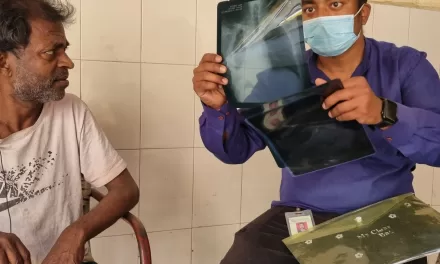
ERNAKULAM, Kerala — In a landmark ruling reinforcing the boundaries between patient expectations and clinical decision-making, the High Court of Kerala has held that patients cannot insist on specific diagnostic tests, such as Computed Tomography (CT) or Magnetic Resonance Imaging (MRI) scans. Disposing of a writ petition filed by a retired Indian Air Force veteran, the court affirmed that the choice of medical investigation lies firmly within the diagnostic discretion of the treating physician.
The judgment addresses a growing global trend in modern medicine: consumer-driven requests for advanced, costly, and sometimes unnecessary diagnostic imaging.
The Legal Dispute Behind the Scans
The petitioner, Arun P.K., approached the General Hospital in Ernakulam on June 4, 2026, complaining of persistent head pain and unusual physical sensations. Asserting that attending medical staff failed to perform a thorough examination, he requested advanced imaging—specifically CT or MRI scans—to uncover the root cause of his symptoms. When hospital staff declined to order the tests, the veteran filed a writ petition in the High Court under Article 226 of the Constitution, seeking a court mandate to compel health authorities to perform the requested scans.
Opposing the plea, Government Pleader Anirudh Kadavil, representing the State of Kerala, pointed out that beyond an outpatient ticket, the petitioner offered no evidence of a formal doctor-patient consultation or the identity of a physician who allegedly refused treatment. The State maintained that diagnostic tests are prescribed only after a qualified doctor conducts a clinical evaluation and forms a provisional diagnosis.
Justice Bechu Kurian Thomas dismissed the petition, ruling that no justiciable cause had been established due to a lack of evidence of a proper consultation. More importantly, the court issued a clear directive on clinical autonomy:
“A patient has to go by the advice of the doctor and not the doctor to abide by the ‘directions’ of the patient. Whether any particular type of scan is required or not is a matter within the diagnostic prerogative of a doctor. A patient cannot dictate to the doctor that a particular scan ought to be prescribed.”
The court recorded the hospital’s willingness to examine and treat the veteran whenever he visits, leaving the door open for him to undergo clinical evaluation in accordance with medical advice.
Medical Discretion vs. Consumer-Driven Healthcare
The Kerala High Court ruling strikes at the core of a dilemma facing healthcare systems worldwide: the transformation of patients into health consumers. With the widespread availability of online medical information, patients frequently arrive at clinics requesting specific tests, procedures, or prescriptions.
While informed patient participation improves overall health outcomes, medical experts emphasize that diagnostic tools are designed to answer targeted clinical questions, not simply to fulfill a request.
“Advanced imaging is an extension of the physical examination, not a starting point,” explains Dr. Aris Thorne, a senior health policy scholar and practicing internist not involved in the case. “A physician collects history, checks physical signs, and establishes a differential diagnosis. Ordering an MRI or CT scan without those preliminary steps is like searching for a needle in a haystack without knowing which room the stack is in.”
                 Clinical Workflow for Diagnostic Imaging

  [ Patient History ] ──> [ Physical Exam ] ──> [ Provisional Diagnosis ]
                                                          │
                                                          ▼
  [ Targeted Scan ] <── [ Unclear / Red Flag ] <── [ Is Scan Justified? ]
         │                                                │
         ▼                                                ▼
  [ Actionable Plan ]                             [ Rest & Reevaluate ]
The Public Health Impact: The Real Risks of Over-Imaging
From a public health perspective, limiting tests to those that are medically necessary is vital for safety and resource allocation.
Radiation Exposure and Cancer Risk
While MRI scans use strong magnetic fields and carry no ionizing radiation, CT scans utilize X-rays. The effective radiation dose from a single diagnostic CT scan ranges from 1 to 10 millisieverts (mSv)—equivalent to several years of natural background radiation.
A landmark epidemiologic modeling study published in JAMA Internal Medicine analyzed radiation exposure from 93 million CT scans performed in the U.S. in 2023. Researchers estimated that if current utilization patterns persist, radiation from CT scans could eventually account for approximately 103,000 future cancer cases—roughly 5% of all annual new cancer diagnoses in the country. While the risk to any single individual receiving a clinically necessary scan remains very low (often under 1 in 2,000), population-wide overuse creates a measurable cancer burden.
The Trap of “Incidentalomas”
Excessive imaging frequently reveals harmless, asymptomatic anatomical variations—known medically as incidentalomas. These benign brain, lung, or renal nodules often lead to:
-
Unnecessary follow-up scans and biopsies.
-
Patient anxiety and medical stress.
-
Increased financial burden on health systems and out-of-pocket spending.
Healthcare Resource Bottlenecks
In public health environments, every unnecessary scan performed on a low-risk patient delays critical diagnostic appointments for high-risk patients who urgently require imaging to direct emergency care or oncology treatments.
Shared Decision-Making: How Patients Should Navigate Medical Advice
The court’s ruling does not mean patients must accept medical care passively. Instead, health advocates urge patients to shift from demanding specific procedures to practicing shared decision-making.
When experiencing unresolved symptoms like chronic headaches or pain, consider asking your physician four key questions:
-
“What is our working diagnosis based on my physical exam?”
-
“Why is advanced imaging not indicated at this stage?”
-
“What specific ‘red flag’ symptoms should prompt me to seek immediate re-evaluation or emergency care?”
-
“What conservative management or alternative evaluations can we try first?”
If symptoms persist, worsen, or new warning signs emerge (such as sudden neurological changes, severe fever, or unexplained weight loss), patients retain the right to seek secondary clinical evaluations or formal second opinions.
Limitations and Legal Scope
Because this ruling originates from a constitutional writ petition rather than a clinical trial or updated medical guideline, it does not imply that physician choices are infallible. Doctors remain legally and ethically bound by accepted standards of medical care. Discretion must be exercised with competence, and failure to perform necessary diagnostic steps when clinically indicated can still constitute medical negligence.
Furthermore, public legal reporting on this matter relies on courtroom summaries rather than full epidemiological studies. Nevertheless, the ruling establishes an important legal baseline: in the clinic, evidence-based medical judgment—not consumer demand—governs diagnostic care.
Medical Disclaimer: This article is for informational purposes only and should not be considered medical advice. Always consult with qualified healthcare professionals before making any health-related decisions or changes to your treatment plan. The information presented here is based on current research and expert opinions, which may evolve as new evidence emerges.
References
-
Kerala High Court Judgment: Arun P.K. v. State of Kerala & Ors. (WP(C) No. 22119 of 2026). Decided July 13, 2026; legal summaries published July 22, 2026.